Staying up late might help you finish your work or clear your inbox, but it could be affecting more than just your productivity. While many people see sleep loss as a mental challenge, research shows that your waistline could suffer the most from missed sleep. The effects may show up in ways you don’t expect.
A recent small study found that people who don’t get enough sleep tend to eat more. Even worse, those extra calories often end up right where most people don’t want them: around the belly.
“Our work focused on people who chose to sleep less,” explains study author Dr. Virend Somers, a professor of cardiovascular medicine with the Mayo Clinic College of Medicine in Rochester, Minnesota “It wasn’t about insomnia, so much as, say, a student in college who decides they find it necessary to sleep less for a while in order to get their work done.
“But what we found is that when a relatively young, healthy and lean person is sleep-deprived and has unrestricted access to food, he or she eats 300 more calories per day,” Somers adds.
The researchers noted that the extra food did not cause large weight gains. However, it did lead to a “stunning” 11 percent increase in what is called “visceral fat,” according to Somers.
“That’s the fat that wraps around the belly and the internal organs,” he notes. “The fat which you really can’t see. But it’s actually the most dangerous fat.”
This is because visceral fat deep inside the body “produces all kinds of toxic things that cause heart and blood vessel disease,” including high blood pressure, high blood sugar, and high cholesterol. All of these can raise the risk of developing diabetes.
RELATED: 7 Bad Sleeping Habits That Cause Weight Gain
Somers and his colleagues reported their findings in the Journal of the American College of Cardiology.
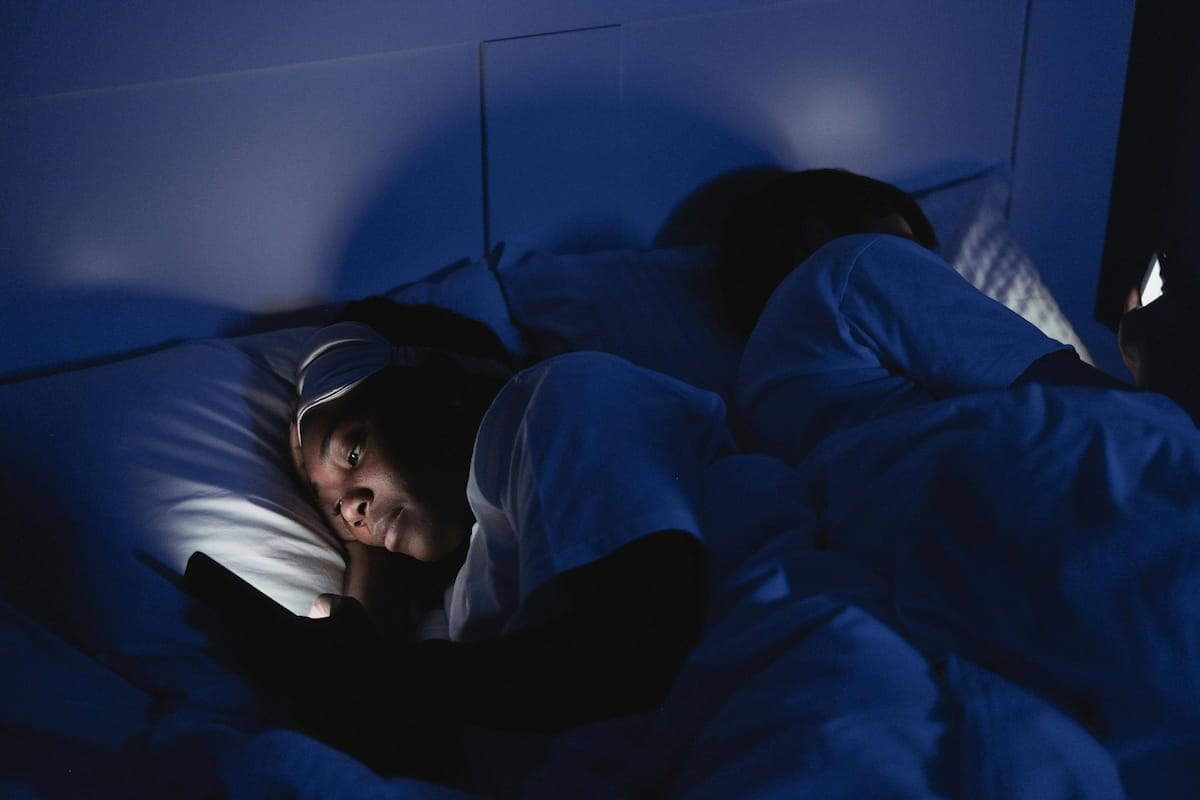
They point out that more than a third of American adults often do not get enough sleep due to lifestyle choices, such as working night shifts or spending too much time on social media.
To explore the impact of sleep loss on fat accumulation, investigators enlisted 12 healthy people aged 19 to 39 between 2013 and 2018.
None of the participants was obese. All were asked to complete two in-laboratory study phases, each lasting three weeks.
In one phase, two weeks of significant daily sleep restriction led to nighttime sleep of just four hours. The other phase involved no sleep restriction.
Throughout each phase, “we monitored all the food they had,” Somers shares. “But they could eat or order anything they wanted.”
The team found that during the sleep restriction phase, people ate 13 percent more protein and 17 percent more fat, while their activity levels remained about the same.
Still, “the interesting thing is that when sleep restriction occurred, they only gained about a pound in weight over the study time frame, which is not a large increase,” Somers shares.
“But what really surprised us,” he adds, “is that even after sleep restriction was stopped and eating levels fell back [down], visceral fat continued to increase.
“We don’t know why this happened. We also don’t know what this might mean for people who are already obese. Or for people who struggle with insomnia that they can’t control. That will be for future research,” Somers shares.
“But what we can tell already is that even for healthy people who lose sleep by choice, this is not a switch you can readily turn off once you turn it on,” he says. “And what’s really important to understand here is that catch-up sleep — after sleep loss — will not necessarily bring you back to normal.”
Somers’ advice: “If you are going to be sleep-deprived for a prolonged period you should pay particular attention to how much food you eat and what your food choices are. And be more conscientious about exercising.”
Also, since visceral fat rises even if the scale barely budges, “know that measuring your weight alone is not going to tell you if things are good or bad,” he says.
The thought was seconded by Dr. Harold Bays, medical director and president of the Louisville Metabolic and Atherosclerosis Research Center, and author of an accompanying editorial.
“Abnormal sleep patterns — especially when due to stress — are likely to worsen body fat function, increase visceral or belly fat, and worsen body composition, even without much change in body weight,” Bays adds. But the solution, he suggests, is simple: Get enough sleep.
If you have to stay up late, you don’t have to let your metabolism suffer. Here are some ways to reduce the effects of sleep loss on your body:
The most surprising finding from Dr. Somers’ research is not just that we eat more when we’re tired, but that our bodies keep storing harmful fat even after we go back to a normal routine. This shows that sleep is not just a luxury; it is essential for our metabolism. While social media or deadlines may seem important right now, the long-term “toxic” effects of visceral fat are much harder to fix than a missed post or unfinished task. If you want to protect your heart, sometimes the best thing you can do is simply turn off the light.


By subscribing, you consent to receive emails from BlackDoctor.com. You may unsubscribe at any time. Privacy Policy & Terms of Service.