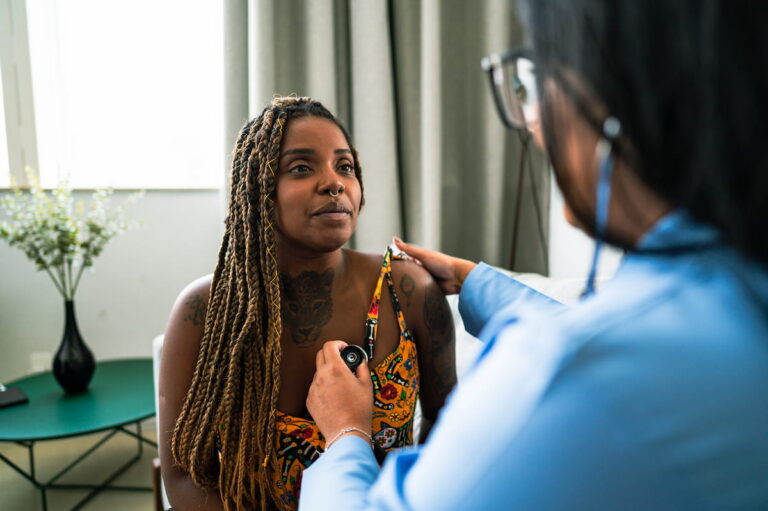
Psoriatic arthritis (PsA) is a complex and chronic form of arthritis that goes well beyond normal arthritis pains. In fact, PsA affects the skin, causing red, scaly patches all over. Different from other forms like osteoarthritis or rheumatoid arthritis, PsA often impacts the nails and joints as well.
In Black populations, PsA presentation is especially unique.
In fact, variations in joint damage, diagnosis, and symptom profiles are especially pronounced among Black sufferers. These symptoms also carry with them a higher risk of other diseases and disorders, such as hypertension and diabetes.
So let’s get into it.
In this article, we’ll discuss the distinct traits of PsA in Black patients, and the various environmental and genetic factors at play. Hopefully, by better understanding these differentiations, Black patients and doctors can better manage their condition and improve their overall health.
RELATED: 5 Ways PsA Can Affect Your Eyes
Joint damage from PsA in Black patients is a problem for various reasons. Firstly, it causes something called enthesitis, which is the inflammation of the tendons and ligaments attached to the bones. This is a distinct form of arthritis, and primarily affects joint surfaces. Unfortunately for Black patients, enthesitis is usually more severe and may contribute to painful, swollen, and less mobile joints.
In particular, studies show that Black patients with PsA often experience greater damage in their smaller joints, such as the fingers and toes. Over time, this may cause dactylitis, which changes the appearance of appendages, giving them a sausage-like look.
When this happens, Black sufferers may struggle to perform daily activities. This is why timely and proper diagnosis is so critical.
Unfortunately, proper diagnosis is often hard to achieve. Many people with PsA, especially Black patients, are misdiagnosed with other dermatological conditions. Many Black patients don’t even receive the right referrals to rheumatologists, meaning they may never actually see specialists in this area.
Then there is the issue of unique presentation. On darker skin, psoriasis is usually not red like it is on lighter skin. This further complicates a correct diagnosis, occasionally leading to irreversible impacts on quality of life.
RELATED: 3 Lifestyle Tips To Help Manage PsA Fatigue
Many Black patients with PsA cite symptoms that are different from those of other arthritis forms. Whereas rheumatoid arthritis impacts joints symmetrically (same on both sides of the body), PsA does not. It is asymmetric, and often more severely asymmetric in Black sufferers. This makes it harder for doctors to readily diagnose, given the lack of predictable patterns.
Black patients also more often have axial symptoms, in which the spine and pelvis are affected, contributing to lower back aches and stiffness. If these PsA symptoms are left untreated, they can lead to intense pain, and in some cases crippling consequences.
It’s important to note that Black patients also have higher risks of comorbidities commonly associated with PsA, such as high blood pressure, diabetes, and other cardiovascular conditions. The reason for this is complex. Genetics, environmental factors, and socioeconomic struggles are all part of this problem.
In many cases, the inflammation from PsA can also make preexisting conditions worse. For instance, it may lead to arterial stiffness and plaque, which raises one’s risk of heart disease. Over time, inflammation can also contribute to numerous other diseases and disorders, making PsA more than just an arthritic disease.
And unfortunately, thanks to genetic variants in Black patients, the body may struggle to manage inflammatory responses. In other words, not only are Black patients with PsA at higher risk of inflammatory issues, but they’re also often unable to regulate that inflammation.
Fortunately, there are ways to manage these problems.
RELATED: Psoriatic Arthritis: Tips To Manage Foot Problems Caused By PsA
Turns out, healthcare providers can tailor many treatment protocols specifically to Black patients. However, this first requires an understanding of the science behind disease progression in the Black population. With PsA, it’s all about managing both the physical and social factors influencing how the condition develops.
Consider the following:
At the end of the day, managing PsA can be challenging. For Black patients, who face distinct and more severe disease progression, these challenges may be particularly severe. Fortunately, there are many resources out there to help.
Consult your healthcare provider and speak to others who are living with the condition as well. By increasing awareness, pushing for early diagnosis, and catering personalized treatment plans, Black patients with PsA can live the wholesome, fulfilling lives they deserve.


By subscribing, you consent to receive emails from BlackDoctor.com. You may unsubscribe at any time. Privacy Policy & Terms of Service.