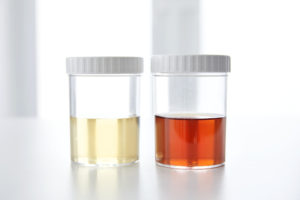
Did you know men are about 3 to 4 times more likely to get bladder cancer during their lifetime than women? According to the American Cancer Society, the estimate for new cases of bladder cancer in the United States is about 81,400. Of that number, 62,100 are men. Although bladder cancer is found twice as often in caucasians, Black men and women actually have the lowest survival rate.
The sight of blood in your urine – the toilet water turned a shade of red – is understandably an alarming one. The good news is that it’s usually not serious. In fact, even something as innocent as exercise can cause it. But there’s a possibility it may also be a symptom of a more serious problem such as cancer, so you should always see a doctor about it.
Red blood cells (RBCs) in the urine (called hematuria) can be hard to ignore when they turn your toilet bowl pink, bright red, or the color of cola. Intermittent spots of blood in the water may be also be seen. This overt form of blood in the urine is called “gross” or “frank” hematuria. It doesn’t take much blood – or about a fifth of a teaspoon – to turn a half-quart of urine an obvious shade of red.
In other cases, the presence of blood may be so minute that it’s not visible to the eye. This is called microscopic hematuria, and doctors usually detect it during a routine urine test. Sometimes, what you assume to be blood in the urine may be something else altogether: women may mistake menstrual blood for blood originating in the urine; men may confuse blood in the urine with blood in an ejaculation (which usually suggests a prostate problem).
Blood in the urine can have a variety of causes. As a rule, blood visible to the eye is caused by a problem in the lower urinary tract (ureter, bladder, or urethra), and microscopic blood in the urine usually originates in the upper tract (kidneys).
Here’s a list of possible causes:
The biggest worry with blood in the urine is bladder cancer – the classic patient is an older person who is a smoker and notices blood in their urine but has no other symptoms. These folks need aggressive evaluation.
People with blood in their urine should ALWAYS consult their doctors. If you have a urinary tract infection or a kidney stone, you should drink a lot of water; blood in the urine also means that you should avoid acidic drinks such as coffee, tea, or citrus juices, all of which can irritate the bladder. Depending on the symptoms, a referral to a specialist such as a urologist may be necessary. In addition to blood that may or may not be visible in the toilet, other potential signs of infection may include:
Although these symptoms may be caused by another health problem, you should consult a physician to find out what the problem is and what needs to be done to treat it.
A doctor may order a series of tests to find the cause. These tests may include:
Other tests that may be necessary include urine culture; a 24-hour urine collection to measure creatinine, protein, and calcium levels; a test for strep throat; a test for the blood disease lupus; an abdominal ultrasound; a computerized tomography (CT) scan of the abdomen; a magnetic resonance imaging, or MRI, of the kidneys and lower urinary tract.
Typically, the patient gets a urinalysis, CT scan, and cystoscopy (done by a urologist). More studies may be added depending on the particular situation and on the findings of these first three studies.
Treatment depends on the cause. In some cases, the origin is not serious, and treatment may not be necessary. If the cause is kidney stones, your doctor may tell you to take pain relievers and drink plenty of water to help pass the stone; sometimes surgery to relieve the blockage is needed. For urinary tract infections, your doctor will prescribe antibiotics for up to two weeks. If it’s cancer, early treatment has a chance of a good outcome.
You’ll typically be asked to go in for a follow-up appointment one to two weeks later when you’ll have your urine tested again. If the problem hasn’t cleared up, your doctor may send you to see a specialist.
Pay close attention to your body, although there is no sure way to prevent bladder cancer, there are definitely things you should avoid that could potentially put you at a higher risk. Smoking, common workplace chemicals (i.e. rubber, leather, printing, textiles, and paint), diesel and certain hair dyes all contribute to bladder cancer. Our recommendation, drink plenty of liquids and eat lots of fruits and vegetables!



By subscribing, you consent to receive emails from BlackDoctor.com. You may unsubscribe at any time. Privacy Policy & Terms of Service.