While the coronavirus took most of us by storm during 2020, we have learned a number of things to slow it down and even stop it in its tracks: Of course, wearing a mask and practicing social and keeping your hands clean by using hand sanitizer or washing your hands.
While washing your hands with soap and water for 20 seconds can remove 97% of germs, household cleaners have proven better disinfectants for surfaces.
That’s because for soap to be effective, it has to be rubbed and worked into a lather, while disinfectants kill germs on contact, says Mary Schmidt, MD, an infectious disease specialist in Virginia.
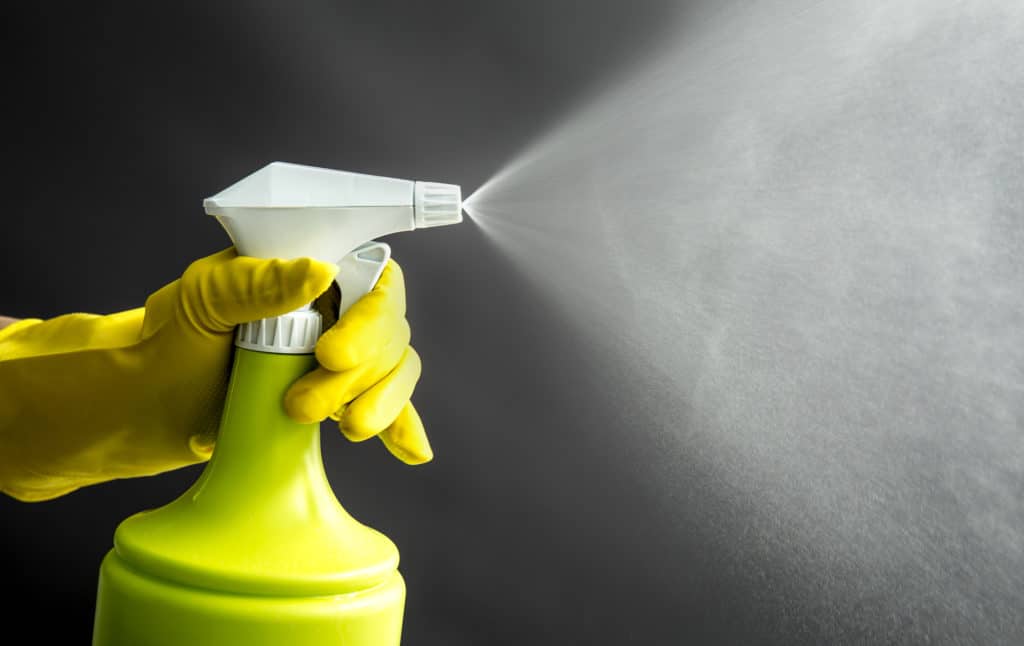
Here’s a breakdown of the different active ingredients in household cleaners and what to look for to make sure you’re using an effective disinfectant.
According to Melissa Homer, chief cleaning officer at home-cleaning franchise MaidPro, sanitizing removes 99.9% of germs and disinfecting kills more than 99.999%, if done correctly.
An antibacterial product means it contains ingredients that can help kill or slow the growth of bacteria, though be careful of these, as antibacterial soap is no better than regular soap.
“If you want to kill COVID-19, you need a true disinfectant, not a sanitizer or something antibacterial,” Homer says.
So what makes a “true” disinfectant?
Well, thanks to the CDC, we know what’s not true.
Consumers are being warned that certain locally sold sanitizers and disinfectants may also not work against COVID as advertised. The main issue? How much residual protection these products claim to offer.
The new warning comes from the Utah Department of Agriculture and Food (UDAF), which is responsible for the regulatory oversight of all disinfectants and sanitizers (other than hand sanitizer and wipes) in the state.
Since the start of the pandemic, with increasing numbers of people using these products, UDAF inspectors have been monitoring the claims made by brands about the efficacy of their products.
In a statement, the department detailed how they “have found numerous improperly labeled or repackaged sanitizers, the improper use of sanitizers, and a number of fraudulent claims.”
The department advises that in most cases, a product will require a “wet time” of up to 10 minutes after application, and will not be effective if wiped away sooner. “The fact is, painfully few disinfectants will last beyond the time they’re wet,” UDAF Pesticide Program Manager Henry Nahalewski said in a statement.
The safest advice is to ignore any claims made on packaging or advertising and to instead
check whether or not a product has been EPA-certified by looking for an EPA Registration Number.
This is usually found on the back of a product’s label close to the manufacturer’s address. You can then check that number against the EPA’s “List N,” which includes all products certified as being effective against coronavirus.
New research from the Penn State College of Medicine, which was published in the Journal of Medical Virology, tested various household products to see if they could have any effect on “deactivating” the coronavirus, including a neti pot, peroxide sore-mouth cleansers, mouthwashes, and a 1% solution of baby shampoo.
While the neti pot and peroxide proved to be no match for COVID, the results showed that the baby shampoo solution—which is often used by head and neck doctors to rinse out sinuses—killed 99.9 percent of coronaviruses within two minutes of contact time, while mouthwash did the same in just 30 seconds.
In addition to the cleansers on the list we published during the summer of 2020, we also share these disinfectants below that have been proven to help:
Isopropanol or Ethanol (Alcohol) are effective disinfectants when used at a high enough concentration. Most cleaning products that contain alcohol have at least a 70% solution, and hand sanitizers should contain at least 60% alcohol to be effective.
They become less effective over time because the alcohol will evaporate.
Quaternary Ammonium Compounds are widely used as surface disinfectants and can be found in many household cleaners including disinfectant wipes and sprays. Research has shown quaternary ammonium compounds to effectively kill most bacteria, viruses, and fungi.
Sodium Hypochlorite (Bleach). The active ingredient in bleach is sodium hypochlorite, which can kill viruses, bacteria, and fungi.
Bleach can be used on frequently touched surfaces like doorknobs and countertops but it must air dry for at least 10 minutes before wiping to effectively kill pathogens. Because bleach can irritate the skin, you should wear gloves when using it.


By subscribing, you consent to receive emails from BlackDoctor.com. You may unsubscribe at any time. Privacy Policy & Terms of Service.