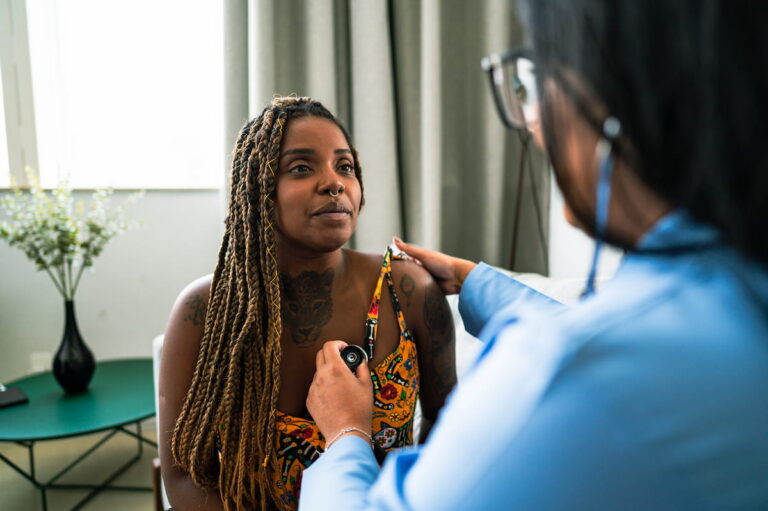
Clinical trials are crucial for testing new drugs and medical treatments, but a lack of demographic diversity among trial participants can lead to dangerous knowledge gaps. In a recent interview on the National Minority Quality Forum‘s For Your Health podcast, Dr. Andrew Friedson from the Milken Institute highlighted the need for better representation in clinical research.
The key issue, according to Friedson, is the lack of publicly available data on who is enrolled in trials. “We really don’t have a good grasp on where or even if we have a problem within clinical trials,” he explained, because the government website ClinicalTrials.gov lacks comprehensive demographic details. “Only about half of the trials that are registered on clinicaltrials.gov upload their results or have up-to-date uploading. And then of those half that upload them, only about another half includes any demographic information beyond gender of the participants.”
This data blind spot is deeply concerning from both an ethical and scientific perspective. As Friedson stated, “If you have treatments that have different types of presentation based on some demographic factor…and your clinical trial isn’t capturing that population that has a different effect of the treatment, then you’re going to be engaging in medical practice based on imperfect information.”
There are also troubling fairness implications when certain groups are systematically underrepresented in trials that guide mainstream medical care. “You just don’t want to be leaving people out when you have a social contract that says that we’re going to be giving money to help the population,” Friedson said.
So how can we address this issue? A critical first step, according to the Milken Institute, is “we need to do better with data collection” by improving demographic reporting requirements for clinical trials.
But comprehensive data is just the start. Friedson highlighted innovative approaches to boost participation, such as “decentralized clinical trials” that bring research opportunities directly into community health centers instead of requiring travel to major academic medical centers.
He also recommended that patients get involved with advocacy groups focused on their specific health conditions. “If you are part of a disease community…then getting involved in the patient community is a good way to help lower these costs because you don’t have to do these things by yourself,” Friedson advised.
Additionally, individuals can sign up for patient databases to get matched with relevant trials more easily. As Friedson summarized, “If you’re worried about being left behind, then one of the things you can do is get yourself registered with a patient database for things that you know that you’re affected by.”
Increasing demographic diversity in clinical trials is a complex challenge, but one that is vital for scientific progress and health equity. By prioritizing comprehensive data, decentralized trials, patient engagement, and database registries, we can ensure new medical advances benefit all communities.


By subscribing, you consent to receive emails from BlackDoctor.com. You may unsubscribe at any time. Privacy Policy & Terms of Service.