Menu

8 Banned Ingredients that Are Legal in the United States

Table of Contents
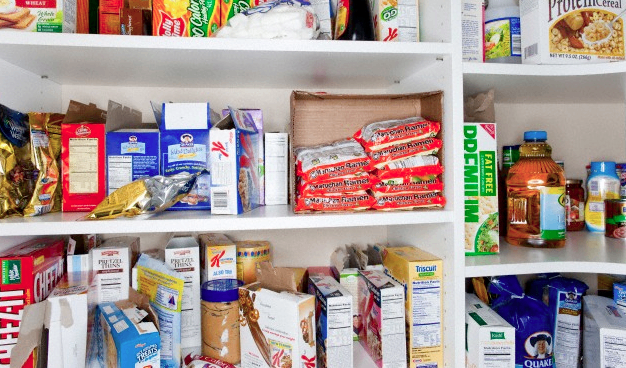
Different processed foods sitting in a kitchen cabinet

Americans really do love unhealthy food. In fact, eight ingredients considered unhealthy and dangerous are banned in countries around the world. But not here.

Why These Regulation Differences Still Exist

There are several major reasons why some ingredients are accepted in the U.S. but banned elsewhere. From your marketing and strategy lens, these regulatory differences also present positioning and communications opportunities (and risks). Here’s how I’d break the reasons down.

Different Philosophies (For Example: “Permissive until proven harmful”)

  • In the EU (and many other jurisdictions) the approach is more precautionary: an additive must show it is safe before approval.

    In the U.S., the approach tends to be more permissive: many additives remain authorised unless there is clear evidence of harm, under the “Generally Recognized as Safe” (GRAS) framework.
  • As a consequence, the same scientific evidence may lead to a ban in the EU but continued approval in the U.S., simply because the burden of proof or risk tolerance is different.

Scientific Uncertainty & Risk Tolerance

  • Many of the ingredients have animal‐study evidence of risk (e.g., high doses causing cancer in rats), but human data is weak or inconclusive. That makes regulatory decisions challenging.
  • For example: Potassium bromate shows cancer risk in animals → banned by many countries. But the U.S. still permits it under limits.

    Wikipedia
  • Regulators must decide: is the exposure level in real life plausible to cause harm? Does the additive accumulate? Is there a safer alternative? How big is the benefit (e.g., cost, shelf life) vs. potential harm?
  • Because these judgments are value‐based as well as scientific, jurisdictions diverge.

Legacy Uses and Industry Inertia

  • Some additives have been in use for decades, with entrenched supply chains, formulations, consumer expectations, cost considerations. That makes changing or banning them more difficult.
  • Companies require time and investment to reformulate products, find substitutes, change labelling, update manufacturing.
  • Regulatory agencies may also proceed more slowly when the additive is widely used, unless there is a crisis or strong public pressure.

Regulatory Process, Lobbying & Economic Factors

  • The regulatory cost of proving a substance is safe (e.g., industry having to provide data) may differ. In the U.S., many GRAS additives rely on industry self‐determination (or past use) rather than full prospective study.
  • Countries with large exports/imports may face trade implications — some bans relate to export markets rather than purely public health.
  • Some U.S. regulators may weigh the economic benefit (lower cost, shelf life, consumer preference) versus the hypothesised risk.

Public Perception and Political Pressure

  • Consumer sentiment, NGO advocacy, and media coverage can drive regulatory change — sometimes faster in countries with more precautionary regulations.
  • For example, U.S. states (California, etc.) are increasingly moving to ban additives that federal regulation still allows.

8 U.S. Ingredients Banned in Other Countries

Ingredients: Coloring agents (blue 1, blue 2, yellow 5, and yellow 6)

Found in: Cake, candy, macaroni and cheese, medicines, sport drinks, soda, pet food, and cheese
Health hazards: Back in the day, food coloring came from natural sources, such as saffron and turmeric. In the 20th century, most artificial colors are made from coal tar, which is also used to seal-coat products to preserve and protect the shine of industrial floors. It also appears in head lice shampoos to kill off the small bugs.

Featured on BlackDoctor

Ingredient: Olestra (aka Olean)

Found in: Fat-free potato chips
Health hazards: This fat substitute appears to cause a dramatic depletion of fat-soluble vitamins and carotenoids, robbing us of the vital micro-nutrients. The U.K. and Canada, have banned it.

Ingredient: Brominated vegetable oil (aka BVO)

Found in: Sports drinks and citrus-flavored sodas
Health hazards: It competes with iodine for receptor sites in the body, elevated levels of the stuff may lead to thyroid issues, such as hypothyroidism, autoimmune disease, and cancer. And BVO’s main ingredient, bromine, is a poisonous chemical that is considered both corrosive and toxic. It’s been linked to major organ system damage, birth defects, growth problems, schizophrenia, and hearing loss, which explains why it’s been nixed in more than 100 countries.

Ingredient: Potassium bromate (aka brominated flour)

Found in: Rolls, wraps, flatbread, bread crumbs, and bagel chips
Health hazards: Made with the same toxic chemical found in BVO (bromine), this additive has been associated with kidney and nervous system disorders as well as gastrointestinal discomfort.

Ingredient: Azodicarbonamide

Found in: Breads, frozen dinners, boxed pasta mixes, and packaged baked goods
Health hazards: It’s not enough to just ban this product in Singapore. You can get up to 15 years in prison and be penalized nearly half a million dollars in fines for using this chemical that’s been linked to asthma and is primarily used in foamed plastics, like yoga mats and sneaker soles.

Ingredients: BHA and BHT

Found in: Cereal, nut mixes, gum, butter, meat, dehydrated potatoes, and beer
Health hazards: California is the only state that recognizes the U.S. National Institute of Health’s report that BHA is may be a human carcinogen, a cancer-causing agent.

Ingredients: Synthetic hormones (rBGH and rBST)

Found in: Milk and dairy products
Health hazards: Cows treated with these synthetic hormones often become lame, infertile, and suffer from inflamed and infected udders. Humans, who consume these cows byproducts, are in no better shape. The milk is supercharged with IGF-1 (insulin growth factor -1), which has been linked to breast, colon, and prostate cancers.

Ingredient: Arsenic (yes, it’s still on the list)

Found in: Poultry
Health hazards: The European Union has outlawed the use of arsenic since 1999 and the Environmental Protection Agency classifies inorganic arsenic as a “human carcinogen.” Take matters into your own hands by sticking to organic birds only.


SHARE
Related Stories
Answer the question below

Gout Survey

People with gout often have sudden, painful flares of joint swelling and redness. How many gout flares have you experienced in the last 12 months?
Have you ever received intravenous medicine for your gout?

Get our Weekly Newsletter

Stay informed on the latest breakthroughs in family health and wellness. Sign up today!

By subscribing, you consent to receive emails from BlackDoctor.com. You may unsubscribe at any time. Privacy Policy & Terms of Service.

More from BlackDoctor

Where Culture Meets Care

BlackDoctor is the world’s largest and most comprehensive online health resource specifically for the Black community. BlackDoctor understands that the uniqueness of Black culture - our heritage and our traditions - plays a role in our health. BlackDoctor gives you access to innovative new approaches to the health information you need in everyday language so you can break through the disparities, gain control and live your life to its fullest.
✦ AI Search Disclaimer
This AI-powered search tool helps you find relevant health articles from the BlackDoctor.org archive. Please keep the following in mind:
✦ For Informational Purposes Only
The information provided through this AI search is for general educational and informational purposes only. It is not intended as a substitute for professional medical advice, diagnosis, or treatment.
✦ Always Consult a Healthcare Provider
Never disregard professional medical advice or delay seeking it because of something you have read through this search tool. If you have a medical emergency, call your doctor or 911 immediately.
✦ AI Limitations
This search tool uses artificial intelligence to help match your queries with articles in our archive. While we strive for accuracy, AI-generated results may occasionally be incomplete, outdated, or not fully relevant to your specific situation.
✦ No Doctor-Patient Relationship
Using this search tool does not create a doctor-patient relationship between you and BlackDoctor.org or any healthcare provider.
Explore over 35,000 articles and videos across black health, wellness, lifestyle and culture
Full AI Search Experience >
×

Download PDF

Enter your name and email to receive the download link.

BlackDoctor AI Search