In the last 20 years, treatment options have proven so commonplace and effective in treating coronary artery disease (CAD), the most common type of heart disease, that many patients spend little time asking doctors about treatment advances and benefits. They instead limit their questions to economic or logistical matters, but an equally important question that should be asked is how quickly they can get back to their daily lives.
In fact, a recent Harris survey showed that most Americans have little information about stents until they develop CAD. So what are the other questions that patients should be asking? What are the latest developments in stent technology? What benefits do these advances offer patients? Who are the best candidates?
To answer these questions, BlackDotor.org spoke with Dr. Colin Barker of Houston Methodist Hospital and his CAD patient/stent recipient Shawna Dukes. Dukes, who is one of more than 15 million Americans living with CAD, eventually learned the right questions to ask and found the stent to be life saving. Here is what you or your loved one should know to make an informed decision when it comes to heart health.
BlackDoctor.org: What is a stent?
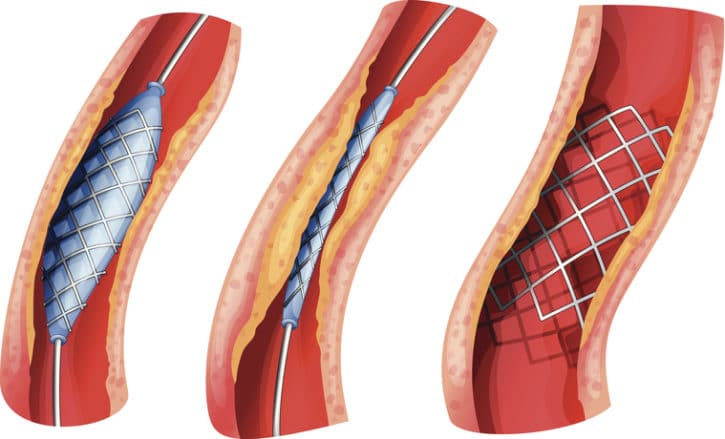
Dr. Barker: A stent is a metal tube that goes inside a blocked artery and keeps it open. Coronary artery disease is blockage in the arteries around the heart that can lead to chest pain and heart attacks and the treatment for that would be putting in a stent. So, a stent is this scaffolding that goes in, props the artery open and keeps it open, and therefore relieving symptoms and also minimizing damage in the setting of patients having heart attacks.
BlackDoctor.org: Who are the best candidates for stents?
Dr. Barker: The two main patient groups that have the most to gain from having a stent would be (1) patients who are having chest pain angina with normal activity despite living a healthy life, taking the medications and doing all the right things. A stent can relieve the obstruction and therefore get rid of the symptoms that can be very troubling and lifestyle limiting. The other group of patients where a stent can be really life saving are those that are having a heart attack. For example, if you develop chest pain or pressure, discomfort, maybe radiates to your arm, your neck or jaw and it really won’t go away, you need to seek out medical attention immediately because the sooner you get the stent inserted the less risk there is for permanent heart damage.
BlackDoctor.org: Shawna, how did you know that a stent was the right option for you?
Shawna Dukes: Well, I think in the beginning I didn’t because I live a very active lifestyle and I workout strenuously everyday and it was during that time that I had symptoms that I’d never experienced before. I had tightness in my throat and chest and numbness down my left arm and obviously it really got my attention because it was something so new and unusual. And through the next several weeks when those symptoms recurred I pursued seeing a doctor and that led me to a couple more doctors and along the way we did several diagnostic tests and it was concluded I had coronary artery disease with the angina. I was given medication for it. There was a part of me it really didn’t sit well with because I just didn’t know the cause of it; I didn’t know where it was coming from and now I was living such a different lifestyle. I couldn’t go do all those things I was doing before without having these symptoms, so it led me to seeing someone else and getting more answers.
On one particular day my symptoms were so severe that thankfully it landed me in Dr. Barker’s office that very day and I was shocked to learn that the cause of all of it was a 90 percent blockage of a major artery. Within hours he had me in a cath lab and he implanted the stent – it’s a synergy stent, a newer stent I was very fortunate to get – and it restored everything. I had very few restrictions afterwards the week after and then several weeks after that I had no restrictions. I was back working out doing really strenuous things, walking miles a day with my dog. It restored my life.
BlackDoctor.org: What questions would you encourage patients to ask their doctor about stents?
Shawna Dukes: Well, I would just encourage patients – because this happened to me and I know a lot of people out there are like me that they don’t think this could happen to them – just listen to their symptoms and start by going to their primary care doctor and that’s the first step. Continue to ask questions. Continue to look things up and research things. I would just say persistence. When you don’t quite get the answers or the outcome that you want because more times than not it will lead you to something else. Seeking a second or third opinion – it’s your right to do. It can save your life. It can get you to the right place.
BlackDoctor.org. What information should doctors share with their patients about their treatment options for CAD?
Dr. Barker: I think they should understand why would a stent help me; what are the benefits I can get out of it. There’s those two patient populations – one with really lifestyle-limiting angina and the heart attack patients – those are the the ones that’ll get a benefit out of this. But you also want to understand and be informed about what are the risks. The procedure and the technology have come a long way. They’re very safe and effective, but still there’s a 1 percent inherent risk to any invasive procedure having a complication, so you want to make sure you understand there’s a benefit there and if there’s an acceptable risk you can make an informed decision as a patient because it’s your body and sort of take charge of your own health and move forward as you see appropriate.
BlackDoctor.org: What are some of those latest advancements in stent technology that CAD patients should be aware of?
Dr. Barker: The latest has really come a long way whereas years ago we were putting in very basic sort of metal scaffolding, metal tubes, that would go in and keep the artery open but develop scar tissue about 25 percent of the time. So we started putting medicine on the stents to prevent scar tissue from building up. That worked well, but there was a risk of heart attacks actually from the stents. So the current technology includes the synergy stent by Boston Scientific who we’re partnering with today which has all the advantages of a thin, metal tube with medication on it to prevent scar tissue formation as well as coating to prevent heart attacks and allow for a nice, smooth healing. After several months you’re back to a normal artery with scaffolding in place keeping the artery propped open.


By subscribing, you consent to receive emails from BlackDoctor.com. You may unsubscribe at any time. Privacy Policy & Terms of Service.