The delta variant, as predicted, has quickly become the dominant variant in the United States and the world. But so far, the vaccines continue to work very well when it comes to preventing severe illness and death—which is what they were designed to do. The Food and Drug Administration and Centers for Disease Control and Prevention (CDC) have not recommended COVID-19 booster shots yet, but that has not stopped some from seeking them out.
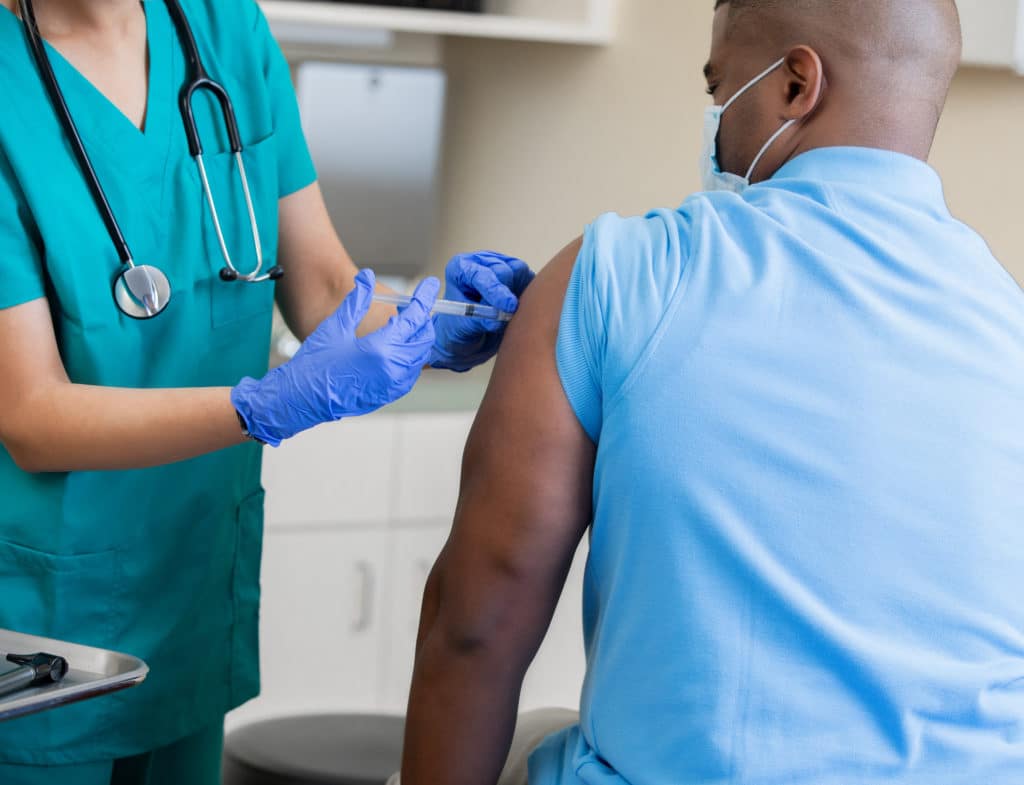
The CDC estimates that more than 1 million people who have received the Moderna or Pfizer vaccine have gone back for an unauthorized third booster shot.
Florida is among the states reporting the highest number of people opting for a booster shot, followed by Ohio, California, Illinois and Tennessee.
The estimated 1.1 million, included in an internal CDC briefing document reviewed by ABC News, likely is an undercount because although it counts Moderna and Pfizer shot recipients it ignores people who may have received the one-shot Johnson & Johnson vaccine and got another shot.
It’s also unclear whether people who received a third shot did so under the direction of a doctor. The Food and Drug Administration hasn’t authorized a third shot to boost immunity, although there are reports of some physicians encouraging severely immunocompromised patients to do so.
But is it safe?
To answer that question, we look at what both sides are saying.
As the world battles coronavirus and the Delta variant, pharmaceutical giant and creator of one of the popular COVID vaccines, Moderna, believes the stronger form of the virus—combined with waning immunity for early vaccine recipients—will lead to breakthrough infections in the months to come. That’s what company president and R&D chief Stephen Hoge told analysts last week. The company expects a third dose of mRNA vaccines will “likely be necessary” before the winter to keep people “as safe as possible,” Hoge added.
Moderna also released data on Thursday showing that its vaccine remains 93% effective six months after the second dose. While those data look solid, the Delta variant has “taught us to be incredibly humble in the face of the virus’ ability to fight back and increase transmission,” Hoge said.
For potential boosters, Moderna is exploring a three-pronged strategy. First, the company is testing a third dose of its original shot, dubbed mRNA-1273 or Spikevax. In addition, the company is testing variant-specific boosters and multivariant shots.
The follow-up shots are intended to act as a safeguard against viral mutations and waning immunity, Hoge explained. While Delta is posing serious challenges right now, the company is anticipating future mutations that will serve as moving targets.
Still, U.S. authorities haven’t yet recommended boosters, as experts debate whether lower neutralizing antibodies will translate into lower protection. In one of its vaccine studies, Moderna said that “neutralizing antibody titers had waned significantly” prior to boosting at six months.
Pfizer released early results showing that a third dose of its Covid-19 vaccine with BioNTech can dramatically increase antibody levels several months after vaccination, particularly among older people. A third Pfizer-BioNTech vaccine shot, in other words, could help some people fight off the delta variant, the pharmaceutical company told investors. Pfizer plans to file for an emergency use authorization for a third dose in “coming weeks,” a spokesperson told me.
The news followed the revelation from U.S. health officials on Tuesday that some fully vaccinated people who become sick with the delta variant may be just as infectious as unvaccinated people.
Dr. Nancy Pook, Attending Emergency Physician with Kettering Health, is warning against getting a third shot for a couple of reasons.
“It is best to stick with the guidelines under the Emergency Use Authorization. Stick with the science as it’s been tested,” she said.
Her reasoning: there is still research to be finalized.
“None of these vaccines went out without significant research. So to go outside of any of those protocols is really not recommended because you don’t have any of that important data to tell you; maybe you’ll be better protected from the virus, but maybe you potentially have a higher risk of some other side effect,” explained Dr. Pook.
“In immunocompromised populations … we do see breakthrough infections in people who are considered well-vaccinated,” Dr. Camille Kotton, the clinical director of transplant and immunocompromised host infectious diseases at Massachusetts General Hospital and an associate professor at Harvard Medical School, told New Republic. “We have seen numerous immunocompromised hosts have significant hospitalizations and major morbidity and mortality from Covid-19.”
In the meantime, it’s important for everyone else not to rush out and get a third shot, Kotton said. “I know that people are taking matters into their own hands, which I find somewhat daunting because they aren’t doing it under any kind of medical monitoring, and if anything were to happen to them—they’re just not being monitored,” she said. “It’s a challenging situation.”


By subscribing, you consent to receive emails from BlackDoctor.com. You may unsubscribe at any time. Privacy Policy & Terms of Service.