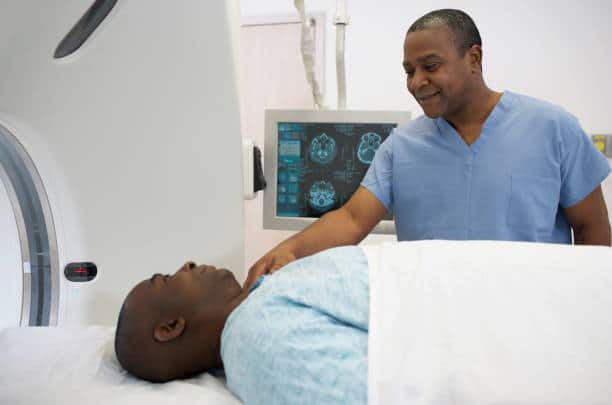
The treatment plan for multiple sclerosis (MS) isn’t the same for everyone. Doctors often personalize your care to include different types of medication, physical therapy, medical procedures, and counseling. If you have significant tremors, one procedure your doctor may discuss with you is deep brain stimulation. Since not everybody with MS is a good candidate for the procedure, it’s good to know what it entails and if it’s an option for you.
Deep brain stimulation is a surgical procedure in which an electrode is placed in the part of the brain known as the thalamus and a battery is placed near the collarbone. When necessary, the battery sends pulses to the electrodes so they can block messages to the nerves that are believed to cause tremors.
The procedure was originally developed to help people with Parkinson’s disease but some studies have shown that it can be helpful with long-term MS as well.
Some of the symptoms that can be helped with deep brain stimulation include tremors, stiffness, slow movements, spasms, and involuntary movements.
While the procedure can be helpful, it also carries certain risks. These include infections, hemorrhaging, worsening balance problems, and developing issues with speech or swallowing.
Generally, anyone who has had MS for more than five years, has disabling tremors, has motor function issues that haven’t responded to medication, and has experienced significant involuntary motions throughout the day can be a good candidate for deep brain stimulation.
Some other factors that your doctor may consider include how well you responded to previous surgeries, and having a good support system at home.
However, not everyone who meets those criteria will be recommended for the procedure. If you haven’t responded well to certain medications, have poor overall health, have chronic depression, or have severe dementia; the procedure might not be the right fit for you.
The deep brain stimulation procedure is usually a two-part surgery. The first part entails brain surgery where your head is placed in a stereotactic head frame to keep it still during the procedure.
Your head will likely be shaved before that happens as pins will be needed to keep the frame in place. The surgeon will then use an imaging test such as a CT or MRI to map your brain and determine where to put the electrodes.
You’ll usually be under general anesthesia while the surgeon makes an incision in your scalp and drills into your skull. However, once the electrodes are in place, they will use medication to wake you up for what is known as awake testing. While you won’t feel any pain, doctors will be able to assess whether or not the electrode placement is correct.
The next stage is chest wall surgery where the doctors will place the pulse generator under the skin and close to the collarbone. The electrical leads will also be connected to the generator, which also contains the batteries.
You’ll be under general anesthesia for this surgery as well. Unlike the first part of the procedure, the doctors won’t test the pulse generator at that point. You’ll need to visit the doctor a few weeks after the procedure to have it programmed. It can take up to six months to find your ideal setting.
After the procedure, you may stay in the hospital for a few days depending on your doctor’s assessment. Once you’re discharged to recuperate at home, your doctor will give you detailed instructions on what to avoid.
Some of the things you may not be able to do until you’re fully recovered include lifting anything heavier than five pounds, intense exercise, and stretching your hands over your head.
As with all surgery, the deep brain stimulation procedure can have complications. Though it’s normal to have a slight headache and some swelling at the incision sites after surgery, you should let your doctor know if the headaches get worse or if you see signs of infection. You should also contact your doctor immediately if you have seizures, confusion, or show signs of a stroke.
Deep brain stimulation isn’t for everyone but you might be a good candidate if you meet all the criteria. Once your MS is causing severe tremors, it’s a good idea to discuss the procedure with your doctor. They’ll be able to give you all the details of the procedure and what your personalized recovery will look like.


By subscribing, you consent to receive emails from BlackDoctor.com. You may unsubscribe at any time. Privacy Policy & Terms of Service.