| Age | 50% of Max (Beginner) | 70% of Max (Intermediate) | 85% of Max (Advanced) |
| 20-29 | 100 | 140 | 170 |
| 30-39 | 95 | 133 | 162 |
| 40-49 | 90 | 126 | 153 |
| 50-59 | 85 | 119 | 145 |
| 60-69 | 80 | 112 | 136 |
| 70-79 | 75 | 105 | 128 |

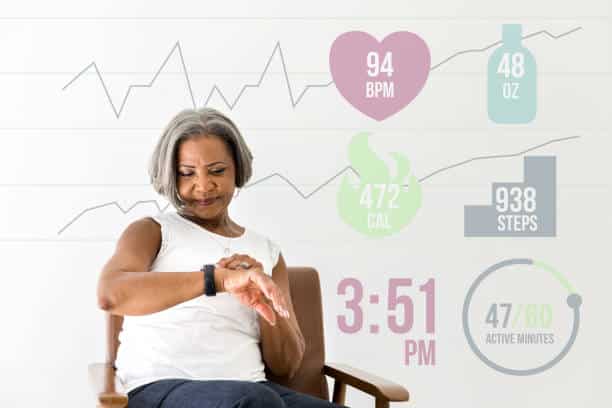
Many of us probably don’t know what our resting heart rate is, however, it is a key component of our heart health that is often overlooked. Knowing your heart rate is important because the higher your resting heart rate, the greater your risk of death is.
“Many people are walking around with a resting heart rate that is too high, due to factors such as too much caffeine, dehydration, inactivity and persistent stress. Those extra heartbeats over time can be taking years off your life,” says Ronesh Sinha, M.D., an internal medicine physician at the Palo Alto Medical Foundation.
The good news is, however, that this important number is fairly easy to monitor and will tell you a lot about your health. It can give you insight into your fitness level, heart health, and emotional health. It can even help with stress management.
So how do you know what a normal heart rate is?
If you’re an adult, your heart should beat somewhere between 50 and 90 times per minute when you’re resting, regardless of your age or sex. If you’re a super-fit athlete, your heartbeat may be as low as 40 or 50 beats per minute. If you’re overweight, if you’re a smoker, or if you have high blood pressure, your heart rate may be a little on the fast side.
The easiest way to measure your heart rate, or pulse, is to use a heart-rate monitor. This is a band that goes around your chest and displays your heart rate on a wristwatch-like gadget. You can find these monitors, which cost $50 to $200, at most sporting-goods stores and many specialized websites that sell sports equipment.
Of course, if you don’t have a heart-rate monitor, you can measure your pulse the old-fashioned way. First, find your pulse in your wrist or neck.
Hold one hand (preferably the one without a watch) in front of you, with your palm turned upward. Press the first two fingertips (index and middle) of your other hand on the outer edge of your upturned wrist (under the thumb, just below the place where your hand meets your wrist), until you can feel a strong beat. Don’t use your thumb to feel for your pulse, because you can often feel a pulse in it as well.
Press your first two fingertips against the side of your neck, just below your jawbone and about halfway between your ear and your chin, until you feel a strong beat. Make sure you press gently; some experts believe that pressing hard on your neck can slow down your pulse.
Once you know how to take your pulse, look at your watch or put a clock in clear view and wait for the second hand (or the second display on a digital watch) to reach the next quarter-minute. Count your pulse beats for 15 seconds; then take that number and multiply by four to get your heart rate (the number of times your heart beats in a minute).
If you’re beginning an exercise program, try to stay within your target heart-rate zone so that you get a good cardiovascular workout without overexerting yourself. The zone is ordinarily 50 to 70 percent of your maximum heart rate. Keep to the lower end of this range for a few weeks if you’re starting a new fitness routine and gradually ramp up to 70 percent of your maximum heart rate. Only very fit people should aim for more than 70 percent of their maximum heart rates while exercising.
Remember, a heart rate table can only give you a rough estimate of your heart rate while exercising. If you feel that the heart rate on the table is too hard or too easy for you, use the “talk test.” If you’re at the lower end of your target zone, you should be able to talk easily but still feel like you’re putting some effort into your workout. At the upper end of your zone, it should start to become difficult to carry on a conversation or sing a song. To double-check, take a short break halfway through your workout and measure your pulse as described above.
This table can give you a rough idea of what to shoot for. It assumes that you are upright and your feet are touching a level surface while you work out (that is, that you’re walking, running, or using a treadmill or similar machine). If you’re bicycling or spinning, subtract five beats from the target number; if you’re swimming, subtract 10.
| Age | 50% of Max (Beginner) | 70% of Max (Intermediate) | 85% of Max (Advanced) |
| 20-29 | 100 | 140 | 170 |
| 30-39 | 95 | 133 | 162 |
| 40-49 | 90 | 126 | 153 |
| 50-59 | 85 | 119 | 145 |
| 60-69 | 80 | 112 | 136 |
| 70-79 | 75 | 105 | 128 |
It’s best to tailor your exercise heart rate to how you feel while exercising. If you’re a smoker or if you have hypertension or heart disease, talk to your doctor or a certified trainer about a target heart rate that’s right for you.
If you over-exert yourself, you can definitely get your heart racing too fast. Your maximum heart rate is a guideline that tells you how hard your heart can possibly beat. The rule of thumb: Subtract your age from 220. If you’re a 35-year-old, for example, your maximum heart rate is about 185. This is an estimate of how fast your heart is capable of going.
Not all cases of a racing heartbeat are dangerous. Certain everyday situations may cause an elevated heart rate:
Although an elevated heart rate may be concerning, it will help to ask yourself the following questions:
These questions along with keeping a diary of your symptoms will help you get to the root of what is going on with you. If you notice that your heart is racing a lot and you’re not exercising or stressed, it’s time to see your doctor.
Sometimes a fast or irregular heartbeat can be a sign of a serious heart condition. These conditions include the following:
If your doctor thinks you may have one of these conditions, he or she may give you an EKG, a chest X-ray, or an echocardiogram (echo test) to diagnose what’s wrong.


By subscribing, you consent to receive emails from BlackDoctor.com. You may unsubscribe at any time. Privacy Policy & Terms of Service.