 (Photo by Theo Wargo/Getty Images for Roc Nation)
Two-time Grammy Award-winning singer, 36, announced on Instagram that her mom, Pamela, passed away on Saturday at age 64.
“I don’t have the words yet mommy. So for now I’ll say thank you thank you thank you. Rest now butterfly 🦋 10/26/58- 07/22/23 💔,” Sullivan wrote, alongside a throwback photo of her mother.
Tributes quickly poured in from stars like Sheryl Lee Ralph, Bruno Mars and Issa Rae, who commented, “I know she was so proud of you. Sending you love and wishing her eternal peace. 🤍.”
“I am so sorry. But, it is a wonderful thing for a mother to know she has a daughter who loves her so much. Praying for you and your heart,” added actress Uzo Aduba.
Pamela was a beloved presence in Sullivan’s life, and even joined her onstage at the 2021 BET Awards as the singer accepted her win for album of the year.
“My mom was my biggest supporter since I was a child,” she told Shondaland.com shortly after. “She believed in me when I didn’t believe in myself, so this was a full-circle moment of finally getting the payoff that we worked hard for. Not only that, but her being in a healthy state and being able to experience it with me, it was really beautiful and let her know that I love her and appreciate her. I wouldn’t even have been here without her.”
While it was not shared what her cause of death was, Jazmine has opened up in the past about her mother being diagnosed with breast cancer in 2019, and noted that Pam’s sister and a few of her aunts had previously battled with the same diagnosis. Mother and daughter both went vegan to take care of their health in the wake of the news. Jazmine also joined in the effort to get other Black women to get screened for breast cancer by getting behind the initiative More Than Just Words with Novartis.
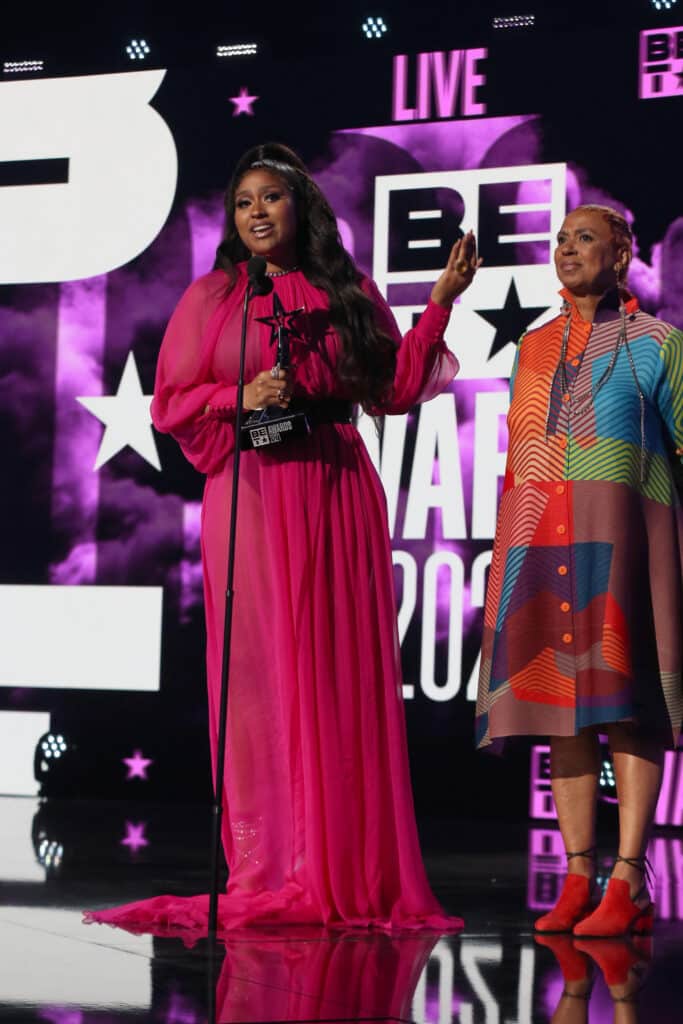 (Photo by Bennett Raglin/Getty Images for BET)
The American Cancer Society reports that Black women in the United States are 40% more likely to die from breast cancer than white women. These disparities are multi-faceted, stemming from a combination of social, economic, and healthcare-related factors.
Efforts to address breast cancer disparities among Black women require a multi-faceted approach:
Increased Awareness: Raising awareness about breast cancer risks, prevention, and early detection is crucial. Public health campaigns targeted towards Black communities can help dispel myths and encourage regular screenings.
Improved Access to Healthcare: Enhancing access to quality healthcare for underserved communities is vital. Initiatives like mobile health clinics, community health centers, and telemedicine can bridge the gap in healthcare access.
Diversity in Clinical Trials: Encouraging diversity in clinical trials ensures that medical research reflects the population’s diverse genetic makeup. This can lead to more tailored and effective treatments for all racial and ethnic groups.
Culturally Sensitive Support: Providing culturally sensitive and empathetic support networks can help address the stigma and mistrust surrounding breast cancer within Black communities.
Through increased awareness, improved healthcare access, and culturally sensitive support, we can strive to make breast cancer a conquerable adversary for all women, regardless of their race or ethnicity.
In 2021, Sullivan spoke with ESSENCE about her mom and makes this moment even more surreal:
“I found myself actually yesterday, I was a little irritated at her because…and I caught myself,” Jazmine added. “I was like, ‘Jazmine, your mom is on this earth with you. She’s alive right now. You could touch her, you could speak to her, you could talk. She could be irritating, she’s still here to even be that.’ I appreciate the fact that she even is still here. There’s a lot of people who just don’t even have that access to their people. They wish they could have those moments where they feel a little perturbed with their loved ones, and I still have that. So it makes you really just appreciate the people that God put in your life and just appreciate every moment. And I really do.”
Warm hugs and love to Jazmine Sullivan and the whole family.


By subscribing, you consent to receive emails from BlackDoctor.com. You may unsubscribe at any time. Privacy Policy & Terms of Service.