Have you ever looked in the mirror and felt like a complete stranger was staring back?
For many women with triple-negative breast cancer, life after surgery is not only difficult; it feels entirely different. Whether they’ve had a mastectomy, a lumpectomy that significantly changed the breast shape, or reconstruction, that new chest area can simply feel… foreign.
Loss of sensation, altered sensations, or the absolute absence of sensation – all are uncharted territory for women following surgery.
Then there’s the issue of modification. Thanks to scars, tightness, and asymmetry, modifications are often required. From implants to expanders, old clothes no longer fit, and the way women move, feel, and see themselves may be totally changed.
But here’s the thing. These feelings are common and valid.
Although body image concerns affect a substantial portion of breast cancer survivors, impacting their emotional well-being and self-confidence, there are several ways to address these issues.
Are you seeking compassionate, practical ways to feel better and boost your confidence? Ready to bring the physical and emotional aspects of recovery back into closer alignment?
Let’s get right to it…
RELATED: Nipple Reconstruction Surgery: What Black Women can Expect Before, During, and After
It’s not uncommon, after surgery, for the chest wall, scars, or reconstructed tissue to feel numb. Many women report hypersensitivity as well, where the area is painful to the touch, while others have this lingering feeling that their current body just “isn’t theirs.”
Why does this happen? In a sense, because the brain’s map of the body has been disrupted.
Fortunately, gradual, gentle touch can help. For some people, gradual, comfortable touch may help the area feel more familiar over time and can help you adapt to changes in sensation.
To begin, ensure your hands are clean and apply very light pressure. Using the flat of your fingers or a soft cloth, stroke the skin surrounding the scars and across the chest. Proceed in a slow, predictable motion to enhance the therapeutic effect.
Warning: Do not proceed if you experience significant pain, swelling, skin changes, or other symptoms of concern. Every woman’s body is different, and thus will respond differently. Heed your doctor’s instructions and discuss any desensitization techniques before implementing, especially if you have postoperative wounds, radiation changes, infections, drains, or reconstruction.
Again, every woman’s body is different. Some women prefer to wear a soft camisole or post-surgical bra first, and then later transition to direct skin contact. In most cases, sessions don’t take long. Short daily sessions may be more tolerable than longer ones.
For some people, short, comfortable sessions may be easier to tolerate than longer ones. There’s no need to push through significant discomfort. After all, there is no formal timeline and no reason to unnecessarily force the process. While one woman may find it helpful to combine touch with calming self-talk, another woman may simply enjoy a warm (not hot) shower, combined with some mindful self-awareness.
Myofascial manual therapy with a licensed professional is an additional option to consider, especially for women with post-mastectomy scars. However, as always, discuss with your cancer care team before engaging in any formal therapies.
Again, it’s your body, and your choice.
Not all women elect to undergo reconstruction, and some may feel in limbo, waiting for delayed reconstruction and feeling restless and helpless.
This is natural, and the good news is there are various options to explore, including prosthetics. Research indicates an appropriately fitted external breast prosthesis can provide symmetry under clothing and may improve comfort, body confidence, or a sense of physical balance for some women.
The type of prosthetic, of course, depends on your body type, the surgery you underwent, and other factors. For instance, some women use soft, lightweight foam forms, while others need weighted silicone prostheses secured in pocketed bras.
A professional mastectomy fitter can help you explore different shapes, weights, and bra options and find what feels comfortable. Oftentimes, breast cancer survivors will use the lighter, softer option for home and sleep, and a weighted prosthesis for work, church, or formal outings.
Just remember, this isn’t about hiding or pretending nothing happened. Rather, it’s about giving your body improved evenness and symmetry.
For some women, achieving a comfortable fit can make asymmetry less noticeable in everyday activities and clothing.
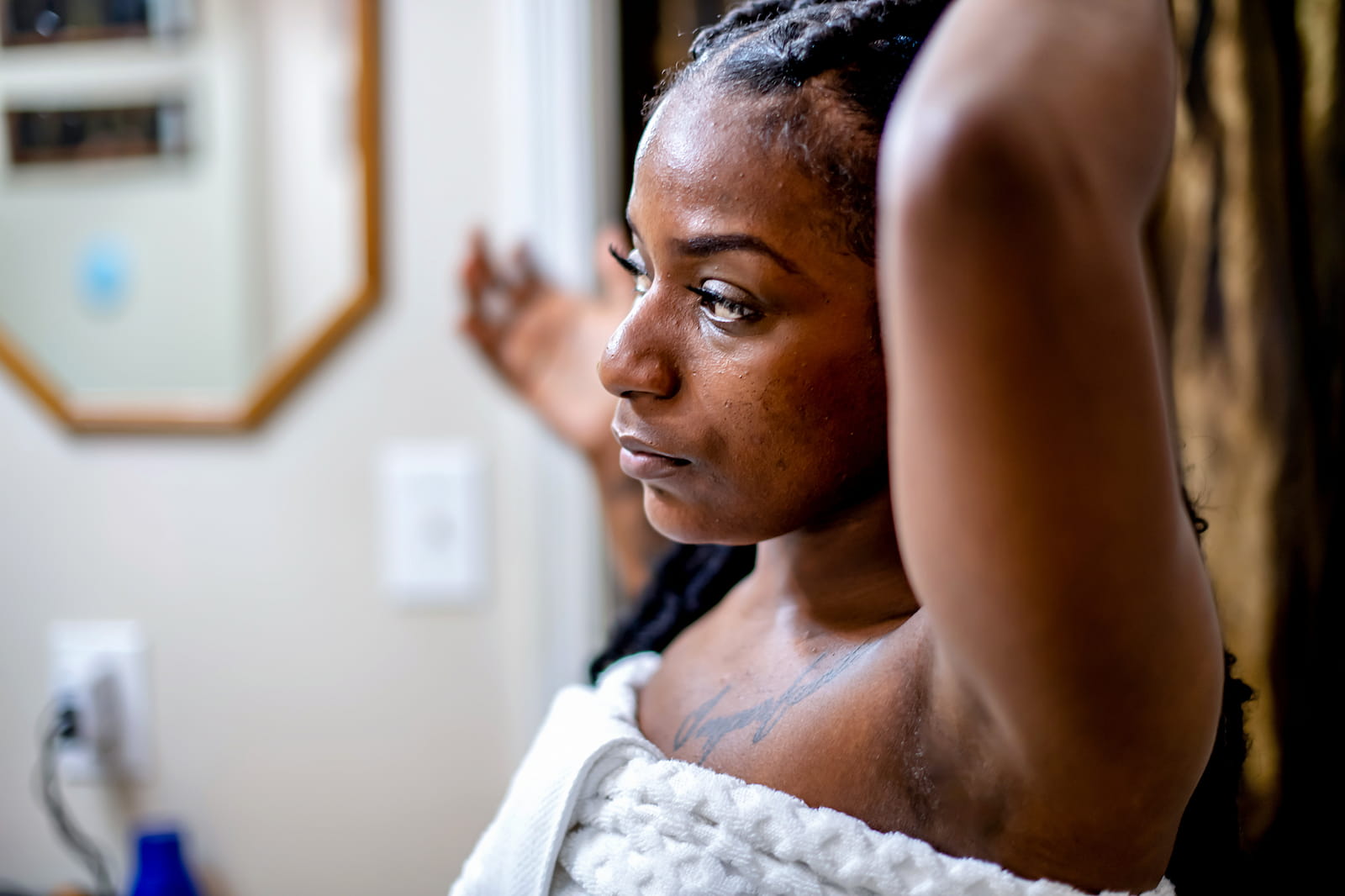
Let’s face it. Sometimes, we don’t want to face what we see in the mirror.
Avoiding the mirror is an understandable protective response, especially when seeing a new figure for the first time.
This is why brief, intentional mirror time may be worth trying. Consider mirror time an optional experiment. While it is not necessarily part of actual recovery, it can help you adjust to your new appearance.
And it doesn’t take much. Simply stand in front of a mirror in comfortable clothing or partially undressed – whatever you’re feeling at that time. As you look in the mirror, do so with curiosity rather than immediate judgment.
Progress slowly. Gradually raise and lower your arms, turn gently from side to side, or pretend you’re putting on a shirt or securing a seatbelt.
The point here is not to force positivity or acceptance, but instead, to practice familiar movements and slowly but surely regain your self-image. It may even help to add a short neutral or affirming observation, such as “I can still move my shoulders like I used to” or “That’s me, I’m still here.”
If that’s not your style, simply breathing and noticing without commentary is perfectly fine too. Over weeks and months, you may find the mirror shifts from adversary to neutral tool.
Of course, if you’re having a difficult day, there’s no shame in skipping mirror time for that period. Alternatively, you could change your starting point. For instance, you might start your first mirror times in comfortable clothing or with partial exposure. This way, you’re not forcing yourself to immediately confront the most difficult aspects of your appearance.
However you’re feeling, whatever you’re thinking, know that you don’t have to do this alone.
Physical therapy, occupational therapy, and counseling are all readily available, and they’re not signs that you are failing at recovery. Think of them as resources. Many women find them valuable, and it’s undeniable that a physical therapist experienced in breast cancer rehabilitation can address many common issues.
Whether it’s scar tightness, changes in posture, limited range of motion – you name it – the appropriate specialist can tailor techniques to your specific surgery.
Meanwhile, an occupational therapist can help with other aspects that affect quality of life, such as clothing adaptations, ways to conserve energy, and daily tasks that are now difficult.
Finally, don’t neglect your mental health! Counseling or structured support groups are a great way to develop a new relationship with your body, and may even help you navigate persistent feelings of grief, anger, loss of identity, or even struggles with intimacy.
Overall, research indicates that cognitive-based interventions can reduce negative body image and help with other lingering issues.
Although getting comfortable in your body again after TNBC surgery is rarely straightforward or rapid, it’s certainly achievable. Some days are tougher than others – much tougher – but if you can embrace the tools and techniques at your disposal, while leaning on professionals and non-professionals alike, you can improve your life.
Your body has been through a lot. Give it the time, kindness, and understanding it needs, and you may just be surprised how much of a difference you can make…


By subscribing, you consent to receive emails from BlackDoctor.com. You may unsubscribe at any time. Privacy Policy & Terms of Service.
Enter your name and email to receive the download link.