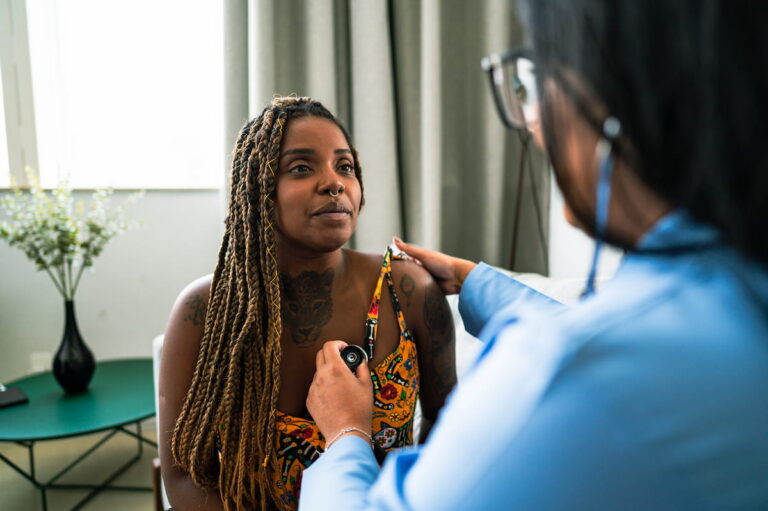
Multiple Sclerosis (MS) is an autoimmune disease that affects the central nervous system, potentially causing various symptoms including vision problems, numbness, and weakness. However, recent insights from a Genentech survey reveal that MS can present more aggressively in Black and Hispanic communities, with unique challenges for diagnosis and treatment access.
BlackDoctor.org spoke with neurologist and MS specialist Dr. Mitzi Williams to discuss why MS gets overlooked in the Black community and what can be done to improve MS outcomes.
While MS symptoms are generally consistent across populations—affecting vision, sensation, and mobility—severity and presentation can vary in Black and Hispanic communities. For instance:
“Most people with MS start with one symptom that sends them to the doctor, but Black patients may be more likely to experience multiple symptoms at once, which may delay seeking care for an initial relapse,” Dr. Williams shares.
Seeking prompt medical evaluation for neurological symptoms is important. Minor symptoms, such as numbness or tingling, can be easily overlooked, often dismissed as temporary issues like stress.
“I think the most important thing is to listen to your body and not ignore symptoms. Often, people will dismiss things, saying, ‘My arm went numb, and I thought it was a pinched nerve; I thought it would go away.’ If you have neurological symptoms, especially if they last for a period of time, like days or weeks, you should be evaluated by a medical professional to make sure it’s not something more serious,” Dr. Williams notes.
“Additionally, there’s a big issue with symptom management—disease-modifying treatments help prevent further damage but don’t address symptoms that are already present. If symptoms are ignored or not managed effectively, it can severely impact quality of life,” Dr. Williams adds.
RELATED: Life as a Black Woman With MS: “The Lack of Access is Still Prominent”
Access to MS diagnosis and treatment can be challenging for Black and Hispanic patients, often due to systemic issues. Some of the most common barriers include:
“Access to specialty care is definitely an issue. Many people reported in the survey that they had delays in diagnosis, which is something we commonly see in minority communities. There’s still a prevailing belief that MS primarily occurs in young white women, but statistics suggest the risk may actually be higher in Black women, at least in the United States. This misconception can lead to delayed diagnoses,” Dr. Williams notes.
Dr. Williams notes that the availability of neurologists and neuroimmunologists who specialize in MS is often limited in underserved communities.
“In underserved areas, patients may not know to look for an MS specialist or may not have one nearby, which means they miss out on optimal treatment,” Dr. Williams says.
As MS treatment options expand rapidly, general neurologists may rely on outdated medications. Minority patients without access to MS specialists might not receive optimal treatment, increasing the risk of complications and diminished quality of life.
“There’s also a lack of support for necessary services like physical and occupational therapy, which are significant barriers as well,” Dr. Williams adds.
“Financial barriers can also impact a person’s ability to start disease-modifying therapy, which we know slows disease progression,” Dr. Williams shares.
The lack of representation in clinical trials further impacts MS treatment in minority communities. Without sufficient data on the effectiveness of therapies among Black and Hispanic patients, treatment plans might be less tailored. Dr. Williams suggests increasing minority participation in clinical trials to address this gap and create evidence-based treatment regimens for these populations.
Family planning is a significant consideration for Black patients with MS, especially given the high rates of maternal health complications in this community.
“Adding a chronic illness like MS can complicate this further. Fortunately, we now have better data to help us navigate treating people who are planning to start families. However, patients need a specialist with expertise. In the past, we would just stop MS treatments during family planning, but now we can often continue certain medications safely with the right specialist guidance,” Dr. Williams notes.
RELATED: Breaking Barriers: Dr. Mitzi Joi Williams on Pioneering MS Clinical Trial for the Black Community
Seeking specialized care is key. Dr. Williams advises doing your research.
“We research everything from cars to schools, and healthcare should be no different. There are resources like the National MS Society and MS-focused organizations that list specialists by area. Also, I encourage people to reach out to local MS communities, such as ‘We Are Ill,’ an organization for Black women with MS. These communities can be invaluable for finding specialists nearby or understanding what questions to ask during appointments. Even if someone doesn’t have easy access, seeing a specialist at least once can help ensure their treatment is on the right path,” she shares.
Living with MS presents unique challenges, but actively participating in your care can make a significant difference in your experience and outcomes. As Dr. Williams notes, it starts with empowerment.
“Be an active part of your healthcare team—take notes, prepare for appointments, and ask questions. Being proactive can lead to better outcomes, especially when patients and providers work as a team on decision-making rather than just following instructions,” Dr. Williams concludes.


By subscribing, you consent to receive emails from BlackDoctor.com. You may unsubscribe at any time. Privacy Policy & Terms of Service.