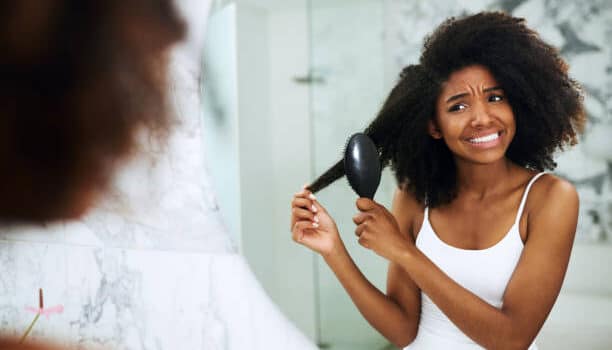
Do you ever feel like your hair just won’t drink up moisture, no matter how many conditioning products you try? That’s a sure-fire sign of low porosity hair, and trust me, I know the struggle firsthand.
My 4b hair falls on the lower end of the porosity scale, so it has a tough time absorbing moisture. But once I learned a few tricks, I passed low porosity hair onto my daughter, so we’ve been through it—our hair has never looked or felt better.
In this article, we’re breaking down what low porosity hair is, how to care for it, and the best products for low porosity hair to bring out your hair’s shine and strength.
Hair porosity refers to your hair’s ability to absorb and retain moisture. If you have low porosity hair, according to Medical News Today, the cuticle layers are tightly packed, which makes it hard for water and hair products to penetrate.
“Under a microscope, the cuticle looks flat and tightly packed, similar to shingles on a roof or scales on a fish,” explains Ladosha Wright, trichologist, salon owner, and RevAir’s Resident Expert. “Because of this compact structure, it’s harder for water, conditioners, and other hair treatments to absorb into the hair shaft.”
Natural hair expert Darrius Peace, salon owner and master barber at Hayah Beauty, explains it this way: “Low porosity hair isn’t a texture—it’s about how your hair handles moisture,” he says. “Low porosity refers to the low absorption of moisture in the hair strands, while normal to high porosity strands will soak moisture in like a sponge.”
People with low porosity hair often notice that:
Hair looks shiny but still feels dry
Products sit on top instead of soaking in
Build-up happens faster than you’d expect
This type of hair is common among Black women with naturally textured hair, though anyone, even those with relaxed hair, can have low porosity hair.
The good news? Once you understand your hair’s needs, you can give it the care it needs to thrive.
RELATED: Natural vs Relaxed Hair: Pros & Cons
If you’re not sure whether your hair is low porosity, it’s time to try a low porosity test. There are a few simple ways to check right at home:
The water test: Drop a strand of clean, dry hair into a glass of water. If it floats for a while before sinking, your hair is likely low porosity.
Spray bottle test: Spray a small section of hair with water. If the water beads up or takes a while to soak in, that’s another clue.
Product absorption test: Low porosity hair often resists heavy butters and creams, leaving your hair feeling sticky or weighed down, no matter how much product you add.
Peace notes that the structure of low porosity strands makes water bead on top instead of soaking in. “That thicker outer-layered cuticle can make it easier for the strands to split or break,” he explains.
Other signs include slow drying, minimal frizz in humid weather, and a tendency for product buildup. If your hair fits that description, you’re officially in the low porosity club—welcome, sis.
For comparison, high porosity hair has cuticles that are very open and lifted and quickly absorbs moisture, but it struggles to retain the moisture. This leads to dryness and frizz.
RELATED: 5 Reasons Your Hair Isn’t Growing in Protective Styles

Here’s where things get good and juicy. Low porosity hair can drink up moisture, but it needs a little encouragement.
Moisturizing is all about getting water into the hair shaft. I learned that applying leave-in conditioner on damp hair under a warm cap, hair dryer, or using a steamer works wonders. Maybe you’ve had this step done to your hair when you visit a salon. Warmth helps open the cuticles just enough to let moisture in.
Peace also suggests timing treatments right: “Protein treatments, oils, and leave-ins can all help low porosity hair,” he says, “but they should be applied on very damp hair and left on for about 15 minutes to allow for proper absorption.”
Let’s talk about the best low porosity hair products for Black women and anyone with textured hair.
Lightweight oils: Argan, jojoba, castor oil and grapeseed oils absorb better than heavier options like shea butter or coconut oil.
Moisturizing conditioners: Choose formulas with humectants like glycerin, honey, or aloe vera to pull water into your hair.
“Incorporating proteins, natural oils, and conditioners into your hair routine will help improve the appearance, elasticity, and overall feel of the hair,” suggests Wright. “These ingredients coat and protect the cuticle layer, enhancing shine and manageability.”
Clarifying shampoos: Once every few weeks, use a clarifying shampoo to remove buildup so your products can actually do their job.
Leave-ins and sprays: Water-based products with light consistency are your go-to products.
“While these ingredients can definitely enhance the hair’s feel or appearance, they don’t have the chemical strength needed to lift or swell the outer cuticle layer to create that kind of change.”
Wright explains that the best care practice for maintaining healthy, low-porosity hair begins with regular cleansing of the scalp and hair. “Keeping the scalp free of buildup allows moisture and nutrients from products to reach the hair more effectively.”
A clarifying shampoo once every 2–3 weeks prevents residue that can block moisture.
Protective styles like twists, braids, and bantu knots are perfect.
“For textured hair, traditional styles such as braiding, plaiting, twisting, or tying the hair down with a satin or silk scarf at night will help reduce friction, minimize tangling, and preserve moisture,” says Wright. “These practices collectively maintain the integrity and strength of low porosity hair over time.”
And while heat styling works, always use a heat protectant to avoid damage.
Satin or silk bonnets and pillowcases help retain moisture and reduce friction. Trust me—your hair will thank you in the morning.
RELATED: Best Clarifying Shampoo for Black Hair: Expert Tips You Need
Even after years of learning, we all make mistakes. Here’s what happens most often:
Overloading on heavy products: You think more is better, but it just sits on your hair.
Skipping heat or steam: Without a little warmth, conditioners can’t penetrate.
Neglecting to clarify: Build-up blocks moisture absorption.
Excess protein: Too much can make your hair stiff, dry, and prone to breakage.
Over time, consistent care can actually change your hair’s porosity, according to Peace. “Low-porosity hair can become higher-porosity with consistent weekly treatments that help soften the outer cuticle layer,” he says.
While Wright offers that low porosity hair only changes when it’s exposed to chemicals.
“Treatments like relaxers, perms, hair color, or other texturizing services can alter the structure of the outer keratin cuticle layer, making it easier for the hair to absorb moisture and products,” she explains.
RELATED: 6 Things Black People Should Stop Doing to Our Hair

What is the best way to moisturize low porosity hair?
Use water-based leave-in conditioners and seal with a light oil. Warmth helps products penetrate, so try a heat cap, steamer, or even a warm towel.
How often should I wash low porosity hair?
Once a week or every two weeks is usually enough. Too much washing can dry your hair and strip natural oils.
What’s the best low porosity test?
The floating hair test is the easiest; just drop a clean strand in water. If it floats for a while before sinking, your hair is likely low porosity.
What are the best low porosity hair products for African American hair?
Lightweight oils, water-based leave-ins, and conditioners with aloe vera or honey work great. Avoid thick butters or waxy creams that sit on top of the hair.
Is low porosity hair more prone to breakage?
It can be if moisture is never absorbed. Consistent hydration, gentle detangling, and protective styling help minimize breakage.
RELATED: The Best Natural Oils for Your Hair Type
Low porosity hair isn’t “hard” or “unmanageable,” it just needs the right TLC. Consistently using the right products and techniques, like warming your conditioner or using lightweight oils, can make a big difference.
The thing that made the biggest impact on my 4b hair is using a heat cap after washing and lighter oils weekly. My hair actually soaked up moisture for the first time in a while.
Your hair can thrive—low porosity just means you’ve got to be strategic. Try, test, and tweak—whatever your porosity, your hair can thrive.

By subscribing, you consent to receive emails from BlackDoctor.com. You may unsubscribe at any time. Privacy Policy & Terms of Service.