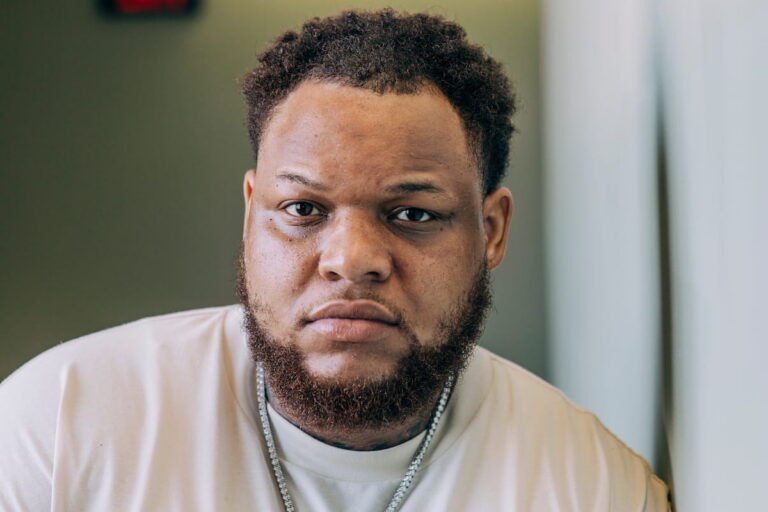
When Dr. Lauren Powell talks about health equity, it’s not just theory—it’s lived reality. Her mother’s lupus diagnosis during Powell’s high school years lit a fire that would guide her career. Now, as the Head of Health Equity in Drug Development at Biogen, Powell is working from the inside to change a system that failed her family.
Powell didn’t discover health disparities in textbooks. She watched them unfold in her own home. Her mother’s lupus diagnosis came as a surprise. They had only vaguely heard of the disease through an extended family member. “There wasn’t much information,” Dr. Powell tells BlackDoctor.org. “It was only once we were in it that we realized how complex and serious lupus is.”
That early experience revealed a healthcare system that was poorly equipped, uncommunicative, and inequitable, especially for Black women. As Powell pursued education and a career in public health, her mother’s experience stayed front and center. “It wasn’t just a data point. It was—and still is—a call to action,” she says.
RELATED: Living with Lupus: “It May Look Different, But Life Goes On”
Addressing health equity starts with acknowledging systemic harm. “We cannot talk about trust without talking about past and present harms,” Dr. Powell adds. “There are justified reasons for mistrust. And it’s not on the communities to fix that—it’s on us.”
At Biogen, Dr. Powell champions a “trustworthiness first” model. Instead of asking communities to trust the system, institutions must earn that trust through transparency, consistency, and meaningful partnerships.
“We’re engaging not just with top academic institutions, but with HBCUs and community health leaders. Trust is built when care is culturally sensitive and consistent,” she notes.
Even with social media, many diseases like lupus still lack recognition. Dr. Powell highlights how visibility drives urgency. “The visibility of lupus continues to grow, and I hope it grows even more,” she says. “It needs a platform so it’s taken seriously and recognized for who it impacts most.”
At the Lupus Foundation of America’s National Advocacy Day, Dr. Powell was struck by how far lupus research has come in 30 to 40 years—but also by how much work remains. “The momentum has to continue—we can’t give up until we’ve truly met the unmet needs of patients,” she adds.
Dr. Powell is embedding health equity into every phase of drug development. That includes rethinking inclusion beyond participant demographics.
“Lupus is a complex disease, and it often hides in plain sight,” she says. “Black women may normalize chronic pain or fatigue until it becomes debilitating.”
She is pushing for protocols and outcome measures that reflect real-world barriers: transportation, caregiver responsibilities, language, and stigma. “Diversity in trials is not the finish line. It’s the starting point,” she notes.
Only three drugs have been approved in the U.S. to treat lupus over the last six decades. Dr. Powell underscores how the disease’s invisibility, combined with the higher risk and severity faced by Black women, demands a new approach, which the company is pursuing with dapirolizumab pegol and litifilimab, both being developed for different forms of lupus.
“We’ve traditionally thought of engagement through separate silos: patients, providers, advocacy groups,” she explains. “But what if a disproportionately affected group doesn’t fit neatly into any of those boxes? What if they’re not connected to advocacy groups? What if we aren’t reaching the providers who serve the most marginalized?”
Personal stories carry power. Powell remembers a patient on a Biogen panel who first learned about lupus from a subway ad. Years later, he was diagnosed.
“That ad planted a seed of awareness,” she says. Her own story mirrors his: “My mom was diagnosed when I was in high school. We had only heard about lupus through one family member. That was it.”
She emphasizes that while social media is useful, word-of-mouth and face-to-face communication remain vital, especially in Black communities.
Biogen is testing that strategy by attending the Essence Music Festival this July, bringing lupus awareness directly to where people gather. “We’re going to be on the ground, sharing information with thousands of people,” she says.
Dr. Powell believes effective communication starts with listening. “We don’t always have to be the messenger,” she says. “It’s often more powerful when the message comes from someone in the community.”
Biogen is partnering with trusted organizations like the National Medical Association to amplify health messages through recognizable and credible voices.
Dr. Powell adds: “People want to know: Why are you here? Why do you care about this disease? Storytelling helps us answer those questions—and the storyteller matters just as much as the story.”
RELATED: A Black Doctor Shares Why Lupus Trials Need REAL Representation
Dr. Powell wants people, especially Black women, to understand their power.
“Lupus is serious. It doesn’t always look the same, and it’s often invisible. But it’s real. And if something feels off in your body, listen to it. Keep pushing. Don’t stop until you get answers.”
At a recent advocacy event, she was inspired by patients who shared their stories of resilience and strength. “They don’t want to be seen as helpless—because they’re not. They want better treatment. They want to live full lives,” she adds.
For those entering public health, Dr. Powell offers this advice: “Start where you are. You don’t need permission to lead. Your lived experience is power.”
She admits the work is demanding. “Health equity is legacy work. I may not be remembered for everything I do, but I hope someone’s life is better because I did it,” she shares.
And for those committed to the cause: “Equity isn’t a buzzword. It’s a mandate for justice. Even if we stop calling it health equity, the work must go on. Because the need is still there,” she notes.
Dr. Lauren Powell’s journey is rooted in her own family’s experience but extends far beyond it. She is transforming pain into purpose—and building a more just, more inclusive healthcare system in the process.


By subscribing, you consent to receive emails from BlackDoctor.com. You may unsubscribe at any time. Privacy Policy & Terms of Service.