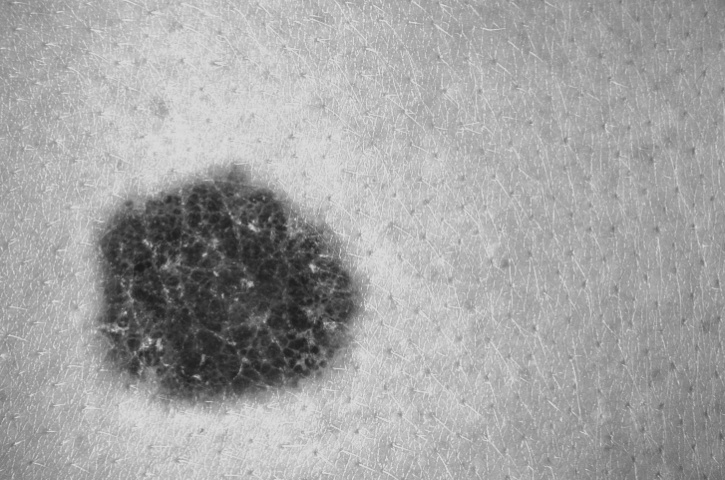
Using so-called “sentinel node” biopsies to determine if melanoma has started
to spread saves some patients the pain of having all their lymph nodes removed,
U.S. researchers report.
The strategy can also give patients a
jump-start on aggressive treatment, they addrf.
There are few treatment options for
melanoma unless the disease is caught early. As a result, melanoma is one of the
deadliest cancers around.
However, patients whose lymph nodes tested
positive for cancer, and who had all their lymph nodes removed, had a much
higher five-year survival rate compared to those who tested positive but delayed
node removal.
These results should help make sentinel
node biopsy standard practice in dealing with this type of malignancy, said lead
researcher Dr. Donald L. Morton, medical director and chief of the melanoma
program at John Wayne Cancer Institute at Saint Johns Hospital in Santa Monica,
Calif.
His team published its findings in the
Sept. 28 issue of the New England Journal of
Medicine.
“People had been skeptical that sentinel
node biopsy was necessary. This further cements the view that it is,” said Dr.
Vijay Trisal, an assistant professor of surgical oncology at City of Hope Cancer
Center in Duarte, Calif. “This gives us an idea about the biology of the cancer,
and gives us ammunition that this is the right thing to
do.”
The findings are “not earth-shattering in
the sense of treatment, but certainly in terms of prediction,” commented Dr.
Donald McCain, a surgical oncologist and member of the melanoma division at
Hackensack University Medical Center Cancer Center, in Hackensack,
N.J.
Melanoma is the most rapidly increasing
malignancy in the world today. According to the American Cancer Society, nearly
60,000 Americans will be diagnosed with melanoma this year, and almost 8,000
will die from the disease.
About 20 percent of patients with melanomas
of intermediate thickness have a microscopic spread of their cancer to the lymph
nodes — meaning the metastasis can’t be seen or felt. Generally speaking,
melanoma that spreads to the lymph nodes has a much poorer
prognosis.
Still, physicians haven’t been sure how to
approach the issue. Experts have tended to split into two camps: one
recommending that all lymph nodes automatically be removed, and the other
advocating waiting until the mass can actually be felt in the lymph
nodes.
“The problem with [the first] approach is
that since only 20 percent of patients have nodal metastasis, the other
80 percent have an operation that they can’t benefit from. They don’t really
need it,” Morton explained. “The question is how to figure who does and who
doesn’t need it.”
Enter sentinel node biopsy, a technique
developed by Morton and colleagues about 20 years ago. Here, the surgeon tests
only one or two lymph nodes, where the cancer is most likely to head to first.
If these are positive, the rest of the lymph nodes are tested and removed. If
not, the patient is left alone.
“We found that about 20 percent of people
of this intermediate thickness would have spread to one to two sentinel nodes,”
Morton said.
This trial, which an accompanying editorial
called the “largest and most important trial of sentinel-lymph-node biopsy for
melanoma conducted to date,” sought to determine if sentinel node biopsy made
any difference in survival.
Investigators randomly assigned 1,269
patients with intermediate thickness melanoma (1.2 to 3.5 millimeters) to have a
sentinel node biopsy (followed by removal of lymph nodes if they contained
cancer) or simply observation. If participants in the observation-only group
developed a palpable mass in their lymph area, they also underwent removal of
all lymph nodes.
Five-year, disease-free survival was
similar in both groups: 78.3 percent in the biopsy group and 73.1 percent in the
observation group.
The difference was in patients with
cancer-positive vs. negative lymph nodes. Patients whose sentinel nodes were
tumor-negative had a five-year survival rate of 90.2 percent whereas those with
tumor-positive sentinel nodes had a survival rate of only 72.3
percent.
And for those patients with positive lymph
nodes, the five-year survival rate was higher among those who immediately had
all their lymph nodes removed (72.3 percent) vs. those who delayed removal (52.4
percent).
“As far as I’m aware, outside of this trial
there’s never been any randomized trial that showed a survival benefit for
melanoma with sentinel node biopsy,” Morton said.
The technique is used routinely by doctors
for breast, lung and colon cancers. “It is a universal principle that in cancers
that spread through the lymphatics, if it’s going to spread, it’ll be in the
sentinel node,” Morton said. “Sentinel node biopsy saves two-thirds of women a
radical actuary dissection.”
As for melanoma, experts now
know there is a survival benefit there, as well. “Those with positive sentinel
lym


By subscribing, you consent to receive emails from BlackDoctor.com. You may unsubscribe at any time. Privacy Policy & Terms of Service.