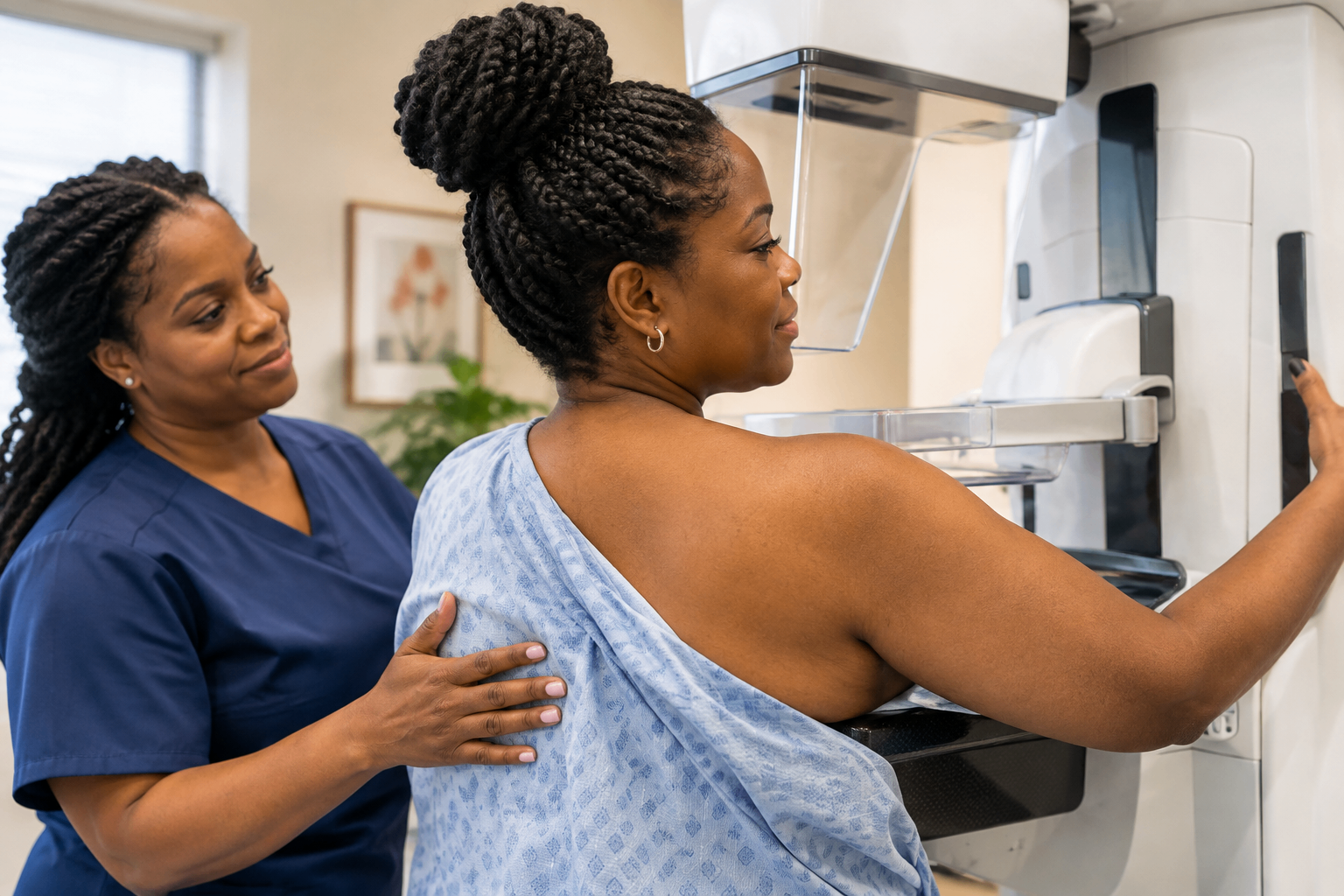
For some Black women, the barrier to a mammogram isn’t scheduling an appointment. It’s actually making it through the door. A new clinical trial is testing whether a more personalized approach can help close that gap and improve compliance with routine breast cancer screening.
The trial is exploring whether a more personalized approach can help Black women overcome some of the barriers that prevent them from completing routine breast cancer screening. The study comes as researchers continue to examine why some women schedule mammograms but ultimately don’t show up.
The trial states that almost one in five Black women scheduled for a screening mammogram don’t show up for the appointment. Black patients with breast cancer also face higher mortality rates and are more likely to be diagnosed at a more advanced stage than women of other races.
According to the American Cancer Society (ACS), breast cancer is the leading cause of cancer death among Black women. More than 40,000 Black women are expected to be diagnosed with breast cancer, and about 6,000 are expected to die from the disease. And while Black women have a slightly lower rate of breast cancer than white women, they are 38 percent more likely to die from it. Black women are also less likely to be diagnosed when the cancer is still localized, when it’s generally easier to treat.
The disparities are especially concerning when it comes to aggressive disease. The ACS reports that Black women are about twice as likely as white women to develop triple-negative breast cancer, a fast-growing form of breast cancer with fewer treatment options.
Women of average risk are recommended to get mammograms every year starting at 40. For women of higher risk, they should begin getting mammograms at 30, and breast MRI’s from 25-35. Black women are more likely to have risk factors, and they are often diagnosed at an earlier age. These recommendations come from many organizations, including the American College of Radiology.
RELATED: The Importance of Breast Cancer Clinical Trials
The NCI trial aims to identify and address real-life obstacles that can keep a woman from getting a screening appointment.
The study identifies barriers such as transportation problems, scheduling conflicts, and insurance concerns. Previous research has also found that socioeconomic factors, including insurance status and neighborhood poverty, are associated with missed mammography appointments.
That distinction matters. A missed appointment doesn’t necessarily mean someone doesn’t care about their health. Work responsibilities, caregiving, transportation, cost concerns, or uncertainty about what to expect can all make preventive care harder to prioritize.
The new study is testing whether meeting women where they are can make a difference.
The trial which is named “Multilevel Personalized Intervention to Improve Breast Cancer Screening Attendance for Black Women Scheduled for Routine Screening Mammograms,” will compare two approaches.
Participants in the intervention group will receive a mailed reminder seven to 10 days before their mammogram. They will also receive a telephone call from a practice facilitator within seven days of the appointment.
That call isn’t simply another reminder. The facilitator will ask about potential obstacles and work with the participant to address them. Depending on their circumstances, that could include transportation assistance, scheduling conflicts, or insurance issues.
Participants will also receive a short digital navigation video by text message one to three days before their appointment. The video will explain why screening is important and what to expect during a mammogram.
The comparison group will receive usual care: an automated reminder phone call one to three days before the appointment. Researchers will then follow participants for six to eight weeks.

The study is looking for women who:
Women scheduled for diagnostic mammograms or those with certain cognitive, hearing, or visual impairments are not eligible. The study is currently listed as approved, with the Siteman Cancer Center in St. Louis serving as the listed study location.
RELATED: Clinical Trials Outreach: From Black Women to Black Women
For Black women, improving mammography rates isn’t simply about encouraging more appointments. It’s also about understanding what happens between scheduling the mammogram and actually getting through the door.
This trial could help researchers determine whether personalized support — instead of another automated reminder — can close that gap and ultimately help more Black women receive potentially lifesaving breast cancer screening.


By subscribing, you consent to receive emails from BlackDoctor.com. You may unsubscribe at any time. Privacy Policy & Terms of Service.