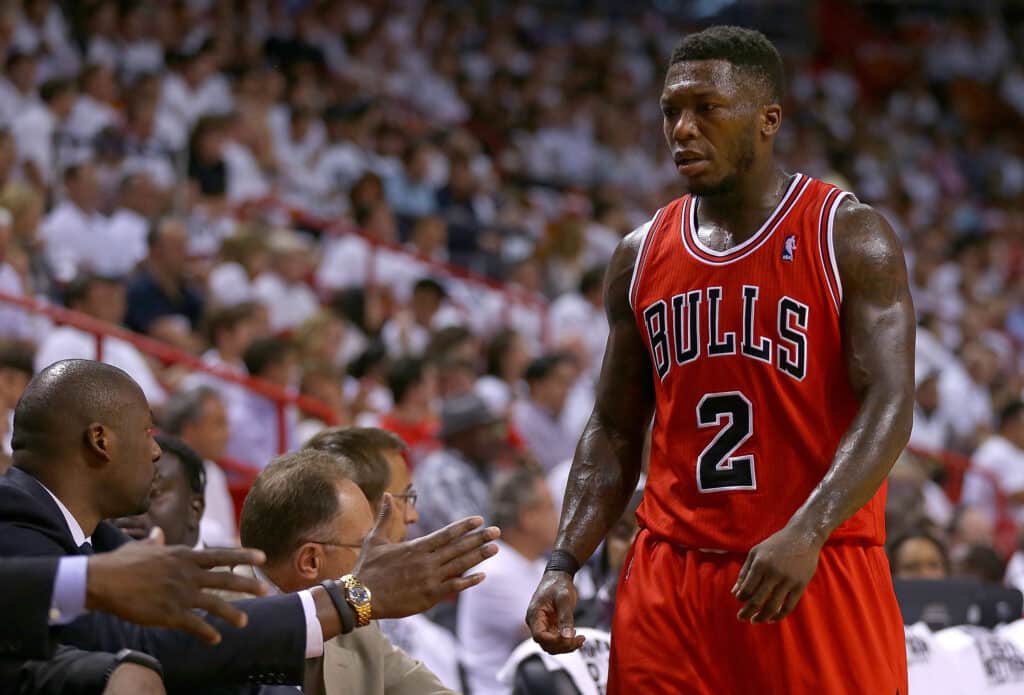
(Photo by Mike Ehrmann/Getty Images)
Two years after announcing his renal kidney failure diagnosis, ex-NBA star Nate Robinson has admitted he ‘doesn’t have long to live’ if he can’t find a replacement.
Robinson, an 11-year NBA vet and three-time Dunk Contest champion who played for the Knicks, Celtics and Bulls, has spent the last four years searching for a kidney – and shared he’d only survive a ‘week or two’ without a dialysis machine.
In a July 2024 update, Robinson says he continues to face what many other Black Americans living with kidney failure struggle with—finding a donor within a difficult, complex healthcare system that often fails people of color.
“The Black people I know that go through this—[getting a kidney] is always harder for them,” Robinson says. “For some reason, they make it harder for us, bro. To get healthy, to get a kidney, to do anything. Our people go through tough times.”
In an interview with Daily Mail’s sports vertical, he kept it brutally honest about what’s next for him if he doesn’t get a new kidney.
“I know that I don’t have long if I can’t get a kidney,” Robinson admitted. “I know I’m not going to have long to live. So I just want to make the best of it as much as I can.”
For many with kidney disease, the strongest form of survival is routine dialysis. Since your kidney is unable to filter blood properly, toxins flow into your bloodstream, and dialysis does the job of cleaning your blood.
Robinson undergoes dialysis, and while he’s glad it’s been a successful route for him, he delves into just how time-consuming the process is.
“Some people’s body reject dialysis. And thank God that mine accepts it and I can live… if I didn’t go to dialysis, I wouldn’t live probably longer than a week or two,” the former NY Knick said. “So it’s serious, can’t miss a day. I go in for four hours, three days a week, four hours a day. And they clean my blood to get my toxins out. And they help me out a lot because that’s how I’m living.”
Without the prospect of a new kidney, Robinson is doing his best to live day by day and spend as much time with his family as he can.
“The [dialysis] machine has been helping my longevity and my life right now,” he said. “So I’m just enjoying the times where I do feel healthy. I try to get out there with my kids, see my family and play basketball, do the things that I love.”
There are five stages of kidney disease. While we aren’t sure which stage Robinson’s was initially diagnosed, we acknowledge that he is most likely in Stage 5.
Stage 1: eGFR 90 or greater—kidneys working normally.
Stage 2: eGFR 60 to 89—mild kidney damage.
Stage 3a: eGFR 45 to 59—mild to moderate kidney damage.
Stage 3b: eGFR 30 to 44—moderate to severe kidney damage.
Stage 4: eGFR 15 to 29—severe kidney damage.
Stage 5: eGFR less than 15—kidney failure.
A number of symptoms can develop if kidney disease is not found early or it gets worse despite treatment.
These symptoms can include:
In 2021, there were 786,000 patients living with kidney failure, yet less than 25,0002 received a transplant that year. In 2022, the U.S. finally reached 25,000 kidney transplants3 in one year, but there are still an estimated twelve people dying each day without the opportunity to receive a life-saving transplant.
According to the National Institutes of Health, around 1 in 5 deceased donor kidneys are discarded–that’s nearly a third of kidneys generously donated but never used.
Two main reasons are logistics and communication. Organ procurement organizations (OPOs), transplant centers, and the United Network for Organ Sharing (UNOS) don’t have a streamlined information-sharing system. As a result, many organs are sent to the wrong place, spend too much time in transport, or arrive damaged.
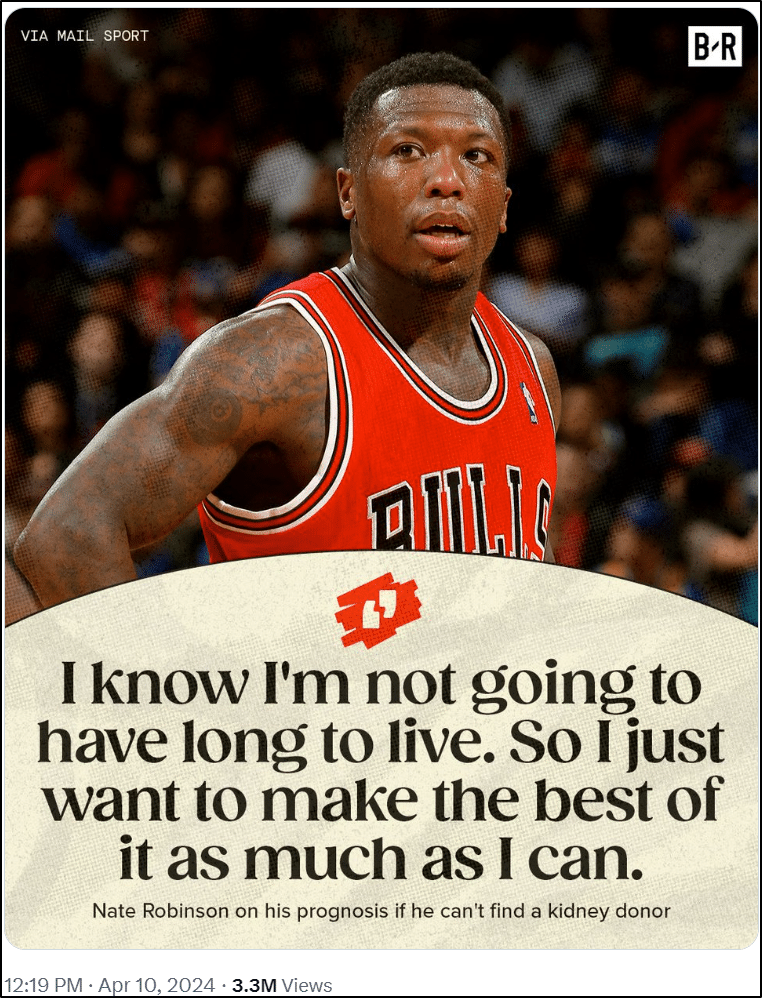
A 2022 interview revealed that Robinson had learned in 2006 that his high blood pressure would leave him with kidney problems later in his life. He remembers being told if his blood pressure was too high he shouldn’t play, but he disregarded the advice so he could hit the court no matter what.
“Don’t check my blood pressure because I am playing regardless of what you say,’” said Robinson. “I thought I was young and invincible. I didn’t know it was going to catch up to me.”
Robinson got his start in the league after skipping his senior year in college in favor of declaring for the 2005 NBA draft. He was selected by the Phoenix but was later traded the the Knicks alongside Quentin Richardson on draft night.
But the true fanfare came from his short, 5-foot-9 stature and even more so when he won the 2006, 2009 and 2010 Slam Dunk Contest, which was highlighted by him jumping over Dwight Howard to win his second trophy.
Social media is praying that Robinson gets a kidney transplant soon and returns to full health.


By subscribing, you consent to receive emails from BlackDoctor.com. You may unsubscribe at any time. Privacy Policy & Terms of Service.