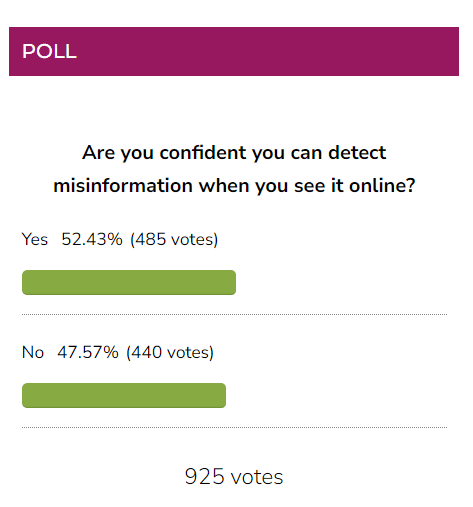
Finding credible guidance is crucial in a world filled with rapidly changing health information. During a recent town hall event, a panel of experts convened by the Coalition for Trust in Health & Science in partnership with the National Consumers League (NCL) discussed strategies for identifying trustworthy health information. Moderated by Dr. Reed Tuckson, Co-Founder and Board Chair of the Coalition for Trust in Health & Science, and supported by BlackDoctor.org (BDO), the discussion addressed the challenges and solutions consumers face in navigating health information amid widespread misinformation. New data from BDO shows 50% of consumers are not confident in information found online.
Dr. Tuckson opened by explaining that the NCL provides insights on issues such as child labor, privacy, and medication safety, making it a well-regarded consumer advocate. Health misinformation, however, affects personal and community well-being, meaning that access to reliable information is essential for making safe health decisions.
Dr. Helen Burstin, CEO of the Council of Medical Specialty Societies, emphasized the need for consumers to access clear, credible medical information. Her organization represents over 50 medical societies and over 800,000 physicians across numerous specialties nationwide, all committed to advancing healthcare transparency and accuracy.
Want to identify trusted health information and avoid false content? Visit the NCL and Coalition for Trust in Health & Science’s toolkit for essential tips and tools!
Ramin Bastani, CEO of Healthavna Inc., a company using technology to deliver health information, shared insights into how mobile technology has revolutionized health communication. Healthvana uses mobile-friendly tools to deliver health updates and actionable advice directly to patients’ phones, helping them make informed decisions in real time. The company’s goal is to meet patients where they are, often on mobile devices, and help alleviate the anxiety that can come with uncertain health information.
Bastani added that his company has incorporated AI-powered conversational tools to improve accessibility. Through AI-driven conversations, they aim to provide users with support and information anytime they need it. Bastani highlighted a common issue: many people, especially younger audiences, prefer turning to social media or digital platforms rather than seeking clinical advice directly. In response, conversational AI tools offer an accessible, reliable alternative to traditional health information sources.
Robin Strongin, Director for Health Policy at NCL, identified two primary barriers to accessing credible health information: the healthcare system and individual challenges. Many people find navigating health advice overwhelming, and misinformation on the internet further complicates the process. The healthcare system itself is in constant flux, with scientific advancements changing guidelines, which can make it hard for consumers to keep up.
“Everybody wants to be a good advocate for their health and their loved ones’ health,” Strongin noted. “The problem is it’s very overwhelming. It can be very overwhelming to find the information that one is looking for…”It’s really important to keep in mind that science evolves. What’s true in medicine today may not be the same tomorrow and that’s not because scientists and researchers got it wrong. It’s because they’re always learning new things –diseases, new viruses, new information– we’re always learning. That can be very confusing because as the scientists are innovating and learning it changes what we call a standard of care, which can be confusing to someone who’s trying to keep up…”
Individual challenges are also significant, including cultural stigma, language barriers, and the intimidating nature of health settings. For non-native English speakers, for instance, navigating medical terminology can be daunting. Additionally, people may turn to social media influencers or unverified online sources rather than established health professionals, partly due to ease of access.
The panel also discussed the difference between misinformation and disinformation. Both are forms of inaccurate information, but they differ significantly in intent and impact.
Misinformation is shared without any intention to mislead. It often happens when individuals genuinely believe the information they’re sharing is true, even if it isn’t. In a healthcare context, misinformation can still be harmful, especially when it involves medical advice or public health recommendations. As Strongin explained, people can get “tripped up inadvertently along the way,” sharing “jumbled information” they think is helpful but that may actually mislead others.
In contrast, disinformation is false information, created and spread to deceive. Strongin clarified that disinformation “is done deliberately to deceive or to harm for whatever purpose, political, financial gain, propaganda.” This intentional spread of false information is particularly dangerous because it’s crafted to manipulate public opinion or behavior, making it more harmful than misinformation in many contexts.
Misinformation and disinformation, while different, can both negatively impact health decisions. The panel emphasized the importance of vigilance in distinguishing between accurate and inaccurate information, especially online, to avoid unintended harm.
“We saw this during the pandemic, we certainly saw this with the amazing work that you did with BlackDoctor.org, really trying to increase vaccination for the African American community,” Dr. Burstin told Dr. Tuckson. We saw the amount of misinformation and disinformation… that clearly suggested that you shouldn’t get your vaccine, you shouldn’t take Paxlovid if you’re older and sick and need it and I think patients got harmed by a lot of that. We think of what happens with childhood vaccinations and the amount of misinformation we’ve seen there and communities, losing their ability to have community-level immunity and starting to see measles and things again that I’ve never seen as a doctor…”
Another major focus of the town hall was how anxiety influences health decisions.
“If you can address [anxiety], that’s where you start to build a trusting relationship with someone, whether that’s in person or, in our case, using technology…If you’re delivering a test result or something that’s super sensitive..you can deliver that in a way that’s really easy for them to understand. It helps them get to whatever that next step is that’s a big win and the likelihood is they’ll come back to you,” Bastasni says. “So for us, it’s about helping people make better health decisions…”
The town hall concluded with an emphasis on the importance of health equity. Many underserved populations, such as the Black community, face barriers to accessing reliable health information, such as limited access to data and technology. These barriers need addressing to ensure everyone can access credible information and make informed health decisions.
Ultimately, accurate health information is a matter of life and death. “I’ve been at this work for healthcare and caring for people in a variety of ways for almost 50 years now, I take this very, very seriously, this obligation, this accountability to help everyone be as healthy as they possibly can,” Dr. Tuckson concluded.
Navigating health information may be challenging, but by seeking credible sources and staying informed, you can make empowered, informed decisions.


By subscribing, you consent to receive emails from BlackDoctor.com. You may unsubscribe at any time. Privacy Policy & Terms of Service.