Menu

Life After Diagnosis: Navigating SCLC Treatment Options

Table of Contents
SCLC treatment

Getting told you have small-cell lung cancer (SCLC) can feel like the ground has been pulled out from under you. Because it’s a fast-moving cancer, it’s completely normal to feel overwhelmed, fearful, or even paralyzed.

But here is the most important thing to remember: treatment has advanced significantly, and you will not face this journey alone. You have a dedicated medical team and support network ready to fight alongside you.

What Happens Right After Diagnosis

Once SCLC is confirmed, your doctors will move quickly to create a personalized plan. The goal of this initial phase is to gather all the necessary information to determine the best course of action.

Your care team will focus on three key areas:

  1. Staging the Cancer: Determining if the cancer is limited (confined to one side of the chest) or extensive (more widespread). This is the primary factor in deciding treatment.
  2. Assessing Your Overall Health: This involves detailed blood tests, scans, and possibly a biopsy to understand your physical condition and how well you might tolerate treatment.
  3. Assembling Your Care Team: Bringing together the specialists who will guide you every step of the way.

RELATED: Recognizing the Signs: Early Symptoms of SCLC You Shouldn’t Ignore

Building Your Essential Care Team

Think of your care team as your personal “squad.” This multidisciplinary group is structured to support every aspect of your health and life.

Your team will likely include:

  • Oncologists: The cancer doctors who recommend and manage your primary treatments, such as chemotherapy and immunotherapy.
  • Radiation Oncologists: Specialists who use targeted energy (radiation) to kill cancer cells in specific areas.
  • Nurses and Patient Navigators: These key members answer your daily questions, help coordinate appointments, and provide vital education and emotional support.
  • Support Specialists: Dietitians, social workers, and therapists who focus on supporting your body, mind, and everyday life.

The Power of Asking Questions

Your job on this journey is to be an active participant. Don’t be afraid to ask: “What does this treatment do? What side effects should I expect? What is the goal here?” Clear answers will help you feel more informed and in control.

Treatment Options Explained Simply

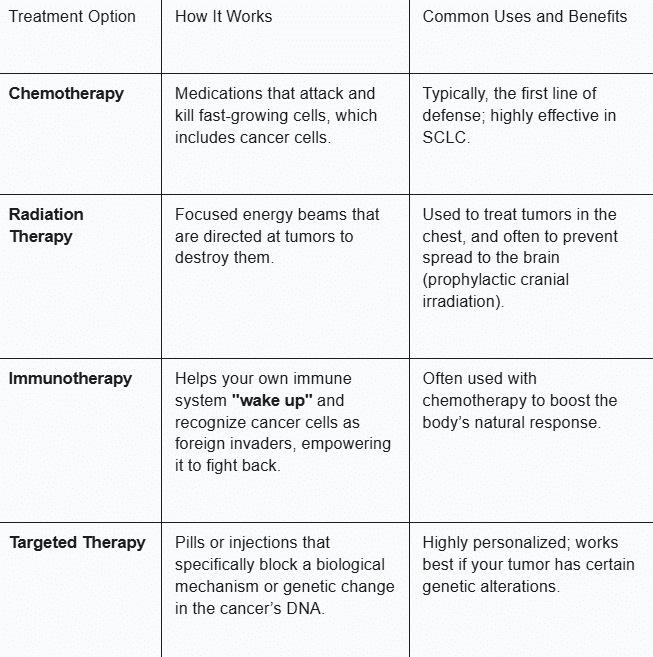
The approach to SCLC is always personalized. Treatments are often used in combination and are overseen by your oncology team.

“Treatment may include chemotherapy, radiation, immunotherapy, or targeted therapies, depending on the stage and the patient’s needs. Recent advancements in SCLC treatment include the addition of immunotherapy with chemotherapy for limited-stage SCLC, as well as the FDA approval of a new type of immunotherapy for patients with advanced disease. Side effects can happen, but supportive care is available to help manage them. Partnering closely with your oncology team ensures the best possible care,” Lee Hong, M.D., Ph.D., Medical Oncologist at City of Hope Orange County, says.
“Patients are closely monitored throughout treatment by their doctors and usually assessed every three weeks to see how the treatment is tolerated. The response to treatment is also constantly assessed through labs, physical exams, and imaging,” Khalil Choucair, M.D., MSc, Medical Oncologist, Leader, Thoracic Oncology Multidisciplinary Team, Barbara Ann Karmanos Cancer Institute, adds.

Managing Side Effects

Side effects are a sign that your body is working hard, not that you are failing treatment. While some side effects, like hair loss and nausea, are common with chemotherapy, others, such as inflammation in organs, are more common with immunotherapy.

Your care team anticipates these challenges and has medicines and strategies ready to help manage them, ensuring you stay as comfortable as possible.

RELATED: Myth vs. Fact: What You Really Need to Know About SCLC

SCLC treatment

Clinical Trials: An Option Worth Discussing

Every life-saving cancer treatment in use today began in a clinical trial. Trials aren’t just a “last chance” option; they can be an important part of treatment at many different stages.

Why consider a clinical trial?

“Clinical trials can provide access to cutting-edge treatments and help advance research for future patients. Participation from underrepresented groups, including Black patients, is especially important to make sure research benefits everyone. Patients should talk with their care team about trial opportunities,” Dr. Hong notes.

As Dr. Choucair notes, trials offer a systematic, closely monitored way to test therapies that scientists believe may be better than the current standard of care.

  • Access to Novel Drugs: You can receive new, promising drugs not yet widely available to the public.
  • Personalized Approach: Many modern trials use your tumor’s unique genetics to tailor the treatment.
  • Expert and Frequent Monitoring: Patients in trials are often monitored more closely by top leaders and researchers in the field, with more frequent testing and scans.
  • Advance Future Care: Your participation helps advance what we know about SCLC and helps countless patients in the future.

Finding a Trial

Finding the right trial can feel daunting, but you don’t have to do it alone.

  • Talk to Your Oncologist: Always ask your doctor about potential trials and if there are patient advocacy groups or navigators who can help you research.
  • Use Trusted Resources: Educate yourself using publicly available websites like the National Cancer Institute’s website and ClinicalTrials.gov.
  • Ask About Non-Medical Support: When discussing cancer care and trials, ask about practical support services, including help with transportation, financial counseling, and interpreter services.

Living with SCLC

Living with SCLC means adjusting to new daily challenges. Being proactive about managing them is a powerful step toward maintaining your quality of life.

  • Fatigue: Cancer and its treatments are draining. Balance rest breaks throughout the day with light activity, such as short, easy walks or gentle stretching, to maintain energy levels.
  • Shortness of Breath: This can often be eased through prescribed breathing exercises, the use of supplemental oxygen, or specialized pulmonary rehab programs.
  • Eating Well: Cancer often changes your appetite. Focus on smaller, frequent, protein-rich meals to keep your strength up. A dietitian is your best resource for personalized nutritional advice.
  • Mental Health: Anxiety, fear, and sadness are normal emotional responses. Don’t carry that weight alone. Support groups, counseling, and mindfulness tools can help you process and lighten the emotional load.

A Note for Caregivers

If you are caring for a loved one with SCLC, your role is absolutely vital, but it is also exhausting. It is not selfish to ask for help from friends, family, or support services. Caregivers need breaks, too. Taking care of your own health and emotional well-being is essential for you to care better for your loved one.

The Path Forward

Life after an SCLC diagnosis is challenging, but it is a path forward. You don’t have to know every detail right away. Focus on taking the next manageable step, use your support systems, and lean on your comprehensive care team and loved ones.

You are not walking this road alone.

SHARE
Related Stories
Answer the question below

Gout Survey

People with gout often have sudden, painful flares of joint swelling and redness. How many gout flares have you experienced in the last 12 months?
Have you ever received intravenous medicine for your gout?

Get our Weekly Newsletter

Stay informed on the latest breakthroughs in family health and wellness. Sign up today!

By subscribing, you consent to receive emails from BlackDoctor.com. You may unsubscribe at any time. Privacy Policy & Terms of Service.

More from BlackDoctor

Where Culture Meets Care

BlackDoctor is the world’s largest and most comprehensive online health resource specifically for the Black community. BlackDoctor understands that the uniqueness of Black culture - our heritage and our traditions - plays a role in our health. BlackDoctor gives you access to innovative new approaches to the health information you need in everyday language so you can break through the disparities, gain control and live your life to its fullest.
✦ AI Search Disclaimer
This AI-powered search tool helps you find relevant health articles from the BlackDoctor.org archive. Please keep the following in mind:
✦ For Informational Purposes Only
The information provided through this AI search is for general educational and informational purposes only. It is not intended as a substitute for professional medical advice, diagnosis, or treatment.
✦ Always Consult a Healthcare Provider
Never disregard professional medical advice or delay seeking it because of something you have read through this search tool. If you have a medical emergency, call your doctor or 911 immediately.
✦ AI Limitations
This search tool uses artificial intelligence to help match your queries with articles in our archive. While we strive for accuracy, AI-generated results may occasionally be incomplete, outdated, or not fully relevant to your specific situation.
✦ No Doctor-Patient Relationship
Using this search tool does not create a doctor-patient relationship between you and BlackDoctor.org or any healthcare provider.
Explore over 35,000 articles and videos across black health, wellness, lifestyle and culture
Full AI Search Experience >
×

Download PDF

Enter your name and email to receive the download link.

BlackDoctor AI Search