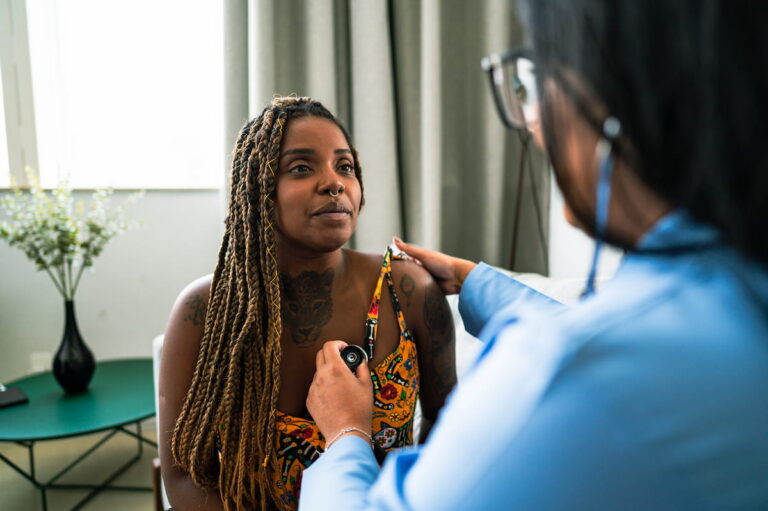
When Ann Alexander underwent chemotherapy to treat breast cancer a decade ago, she was warned about potential hair loss, nausea and vomiting.
The 73-year-old wasn’t, however, told about the potential side effects of radiation therapy, namely acute radiation dermatitis. Symptoms can range from mild to severe, and they include itchy skin, swelling, blistering and open sores.
“It was painful, and it was scary,” the Bronx, N.Y., resident said. “I did everything I was supposed to do and ended up with really bad burns on my skin. I would have liked a heads up that this could occur.”
Now 10 years cancer-free, Alexander routinely counsels other women on what to expect and how to deal with this side effect as a Bronx Oncology Living Daily (BOLD) buddy.
Each year, 95% of people undergoing radiation to treat cancer will develop acute radiation dermatitis. Until recently, this condition was poorly understood and there wasn’t much to do to prevent it.
This may all change due to the results of two new studies that implicate a common bacterium as the culprit and suggest that a simple antibacterial treatment may be the solution.
“I absolutely believe these findings should change practice,” said study author Dr. Beth McLellan, director of supportive oncodermatology at Montefiore Einstein Cancer Center and chief of the division of dermatology at Montefiore Health System and Albert Einstein College of Medicine in the Bronx.
Until now, acute radiation dermatitis was believed to be the result of a radiation burn, but when researchers took cultures of bacteria before and after radiation from 76 people being treated for cancer, they started to see things differently.
The investigators took samples from inside the nose, skin in the radiated area, and skin on the side of the body not treated with radiation. Before treatment, around 20% of people tested positive for Staphylococcus aureus bacteria (staph) but did not have an active infection.
After treatment, 48% of people who developed severe radiation dermatitis tested positive for staph, compared with only 17% of those who developed the mildest form of the condition, the study found.
Staph typically lives on the skin and doesn’t cause any problems. But radiation may weaken the skin’s structure and allow the bacteria to break through the skin, the study authors explained.
Many people tested positive for nasal staph, suggesting that nose bacteria might infect the skin.
The second study included 77 patients undergoing radiation. They were told to follow the standard care (normal hygiene and moisturizing treatment such as Aquaphor) or an experimental antibacterial regimen.
This treatment involved using the antibacterial body cleanser chlorhexidine and mupirocin, an antibiotic nasal ointment, every day for five days, every other week, throughout their radiation treatment.
More than half the people treated with the new antibacterial regimen developed mild-to-moderate symptoms, but no one developed severe symptoms. In contrast, 23% of people who followed the current standard of care developed severe symptoms, the findings showed.
“People should know that there are options to prevent radiation dermatitis, including our antibacterial regimen, and they should ask their radiation oncologist if it is an option for them before they start treatment,” said McLellan.
Both studies were published online May 4 in JAMA Oncology.
“Radiation dermatitis is an expected bystander effect for many undergoing radiotherapy for various cancers, one which can be extremely burdensome, disabling, possibly treatment-interfering, and for which we have no standard of care for prevention or treatment,” said Dr. Adam Friedman. He is chair of dermatology at the George Washington University School of Medicine and Health Sciences, in Washington, D.C.
People who develop more severe radiation dermatitis tend to have staph in their nasal passages, said Friedman, who has no ties to the new study.
“Utilizing a relatively simple decolonization regimen significantly limited the severity of radiation dermatitis in cancer patients, compared to those receiving standard of care for prevention/management,” he said.
“More work is needed; however, given the simplicity of this preventive strategy, I will certainly consider it in my supportive oncodermatology clinic at George Washington University,” Friedman added.
More information
The American Cancer Society has more on the side effects of radiation therapy.


By subscribing, you consent to receive emails from BlackDoctor.com. You may unsubscribe at any time. Privacy Policy & Terms of Service.