
We all experience occasional stomach pain now and then and sometimes that pain has us making a mad dash to the washroom. But what if you get to the toilet and you have blood in your stool? Alarm bells go off! Your mind is racing thinking about what it could be. Or the pain is unlike any other stomachache before. One of the possibilities of this issue of blood and pain could be ulcerative colitis.
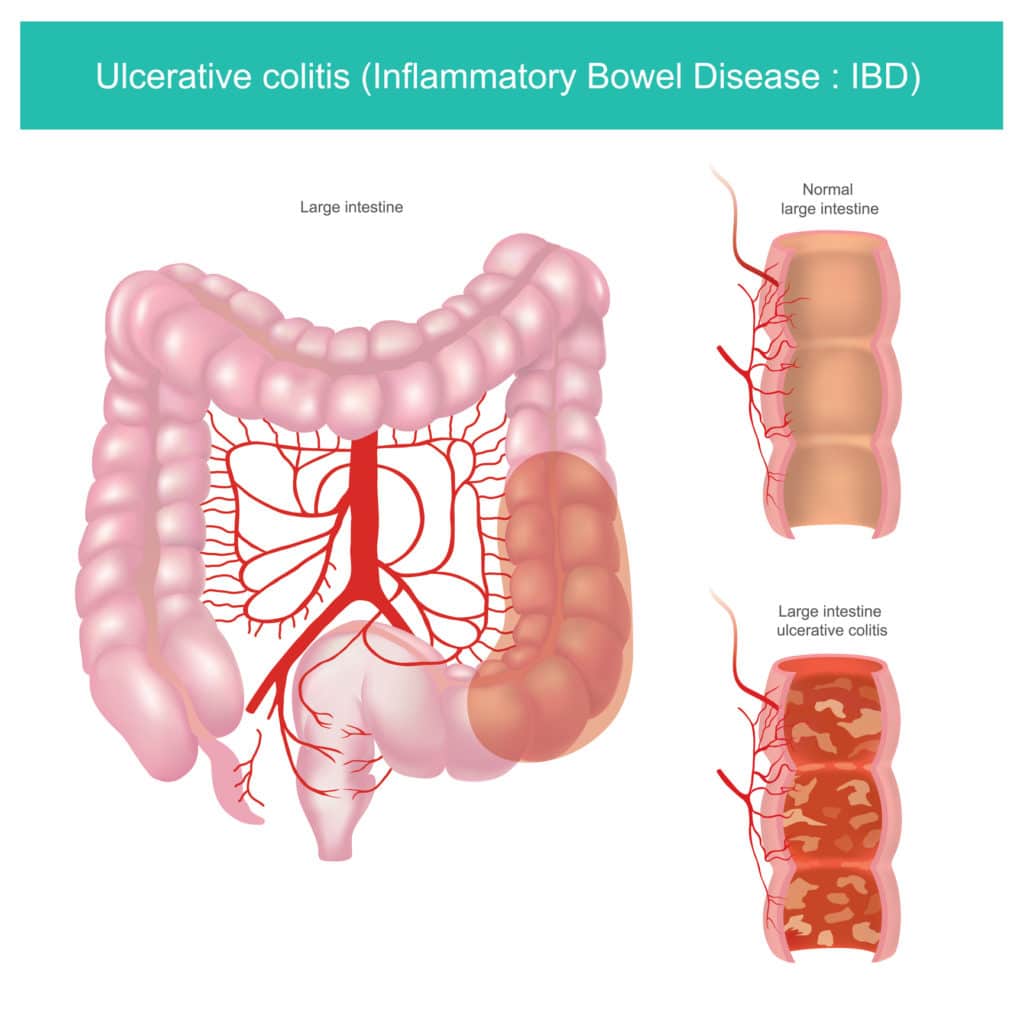
Ulcerative colitis (UC) is an Inflammatory bowel disease (IBD), which is when you have chronic inflammation of the digestive tract along with ulcers in the colon and pain in the lower half of your abdomen. The two main types of IBD are UC and Chron’s. Some symptoms of UC are unrelenting diarrhea along with abdominal pain and blood in the stool, loose and urgent bowel movements, bloody stool, abdominal cramps, pain, loss of appetite, fatigue and weight loss.
Inflammatory bowel disease is an autoimmune disease that occurs when your immune system mistakenly attacks healthy cells, tissue and organs. Immune deficiency can lessen your ability to fight viruses and pathogens leaving you susceptible to infections.

People who suffer from IBD are rarely diagnosed correctly the first, or even the second time symptoms present themselves.
“It admittedly took a long time and a lot of unnecessary steps to get a proper diagnosis, says Ronald Reynolds, a 20 “something-year-old” writer.
“I first made an appointment with my PCP, but she left on maternity leave and my conditions got worse, so I scheduled an appointment to go to urgent care. The doctor on duty was fresh out of medical school and working with a more experienced doctor but neither could determine what was wrong with me and even started trying to find connections to unrelated health conditions from the distant past. Even though they’d drawn blood and saw that my blood levels had dropped so drastically that I had become anemic, the best they could give me was a referral to see the gastroenterologist in that same hospital — in more than a month.”
Everyone’s initial symptoms with IBD varies, but you know when something is different with your body. For Reynolds, he began to lose weight. “Over the course of a calendar year, I lost more than 50 pounds and went down two sizes in most clothes. This, coincidentally, happened at the same time when I started working out regularly and cooking more, but the weight loss still seemed extreme. It wasn’t until I felt strong stomach pains for days at a time that I chose to speak to a doctor.”
There have been historic issues with healthcare providers not believing Black people when they tell doctors of their symptoms. It was once believed that Black people couldn’t get ulcerative colitis.
“My symptoms continued to get worse to the point where I was afraid to eat or was going to the bathroom at work every hour simply as a precaution. Thankfully, someone close to me also has some gastrointestinal issues and recommended a private practice doctor named Dr. Julia Dyer. She saw my lab results and heard my symptoms and immediately jumped into action and scheduled me for a colonoscopy just a few days later. She confirmed that I have ulcerative colitis, as she expected.”
Although this is a chronic disease and cannot be cured, the goal for doctors is to bring the disease into remission (a long-term state where there are no symptoms).
AVOID FLAREUPS
The best way to remain in remission is to avoid anything that will cause a flareup (reoccurrence of active symptoms). Some factors that may cause a flareup:
■ Food (certain foods trigger symptoms, know yours)
■ Smoking
■ Missing IBD medications or taking the incorrect dose
■ Non-steroidal anti-inflammatory drugs (NSAIDs)
■ Antibiotics
■ Stress
MEDICATIONS
The classes of medications used to treat IBD include:
■ Aminosalicylates
■ Biologic therapies
■ Corticosteroids
■ Immunomodulators
NEWEST MEDICATION
The newest medication to emerge for ulcerative colitis are:
Tofacitinib (Xeljanz)
Xeljanz belongs to a class of medications known as Janus kinase (JAK) inhibitors. These drugs block the enzyme JAK, which activates cells of the immune system to produce inflammation.
Biosimilars
Biosimilars are a fairly new class of drugs that are intended to mimic the effects of biologics. Like biologics, these drugs target immune system proteins that contribute to inflammation.
CLINICAL TRIALS
Clinical trials are a way to test new drugs that help relieve or cure diseases. Far too often black people are left out of clinical trials. There is a push to correct that. There is a current clinical trial for African Americans with IBD, ulcerative colitis or Chron’s, the Multi-Center African-American Inflammatory Bowel Disease Study (MAAIS) given by NIH.gov
ORGANIZATIONS
There are support groups to help IBD sufferers:
Color of Crohn’s and Chronic Illinois (COCCI) is an organization that educates minority communities about often-misdiagnosed inflammatory bowel disease, especially with women of color. Because of low representation, they also petition to have African Americans included in large clinical trials.
Crohn’s and Colitis Foundation is another group that gives direction and support to IBD patients.
NEW TREATMENT UNDER INVESTIGATION
Stem Cell Therapy
Stem cells are the young cells that grow into all of the various cells and tissues in our bodies. If used properly, they have powerful healing potential.
Fecal Transplant
A fecal transplant, or stool transplant, is an experimental procedure that puts healthy bacteria from a donor’s stool into the colon of someone with UC.
Although this is a chronic disease, once diagnosed and prescribed the proper medicine, people living with ulcerative colitis can live a normal, and often, pain-free life.


By subscribing, you consent to receive emails from BlackDoctor.com. You may unsubscribe at any time. Privacy Policy & Terms of Service.