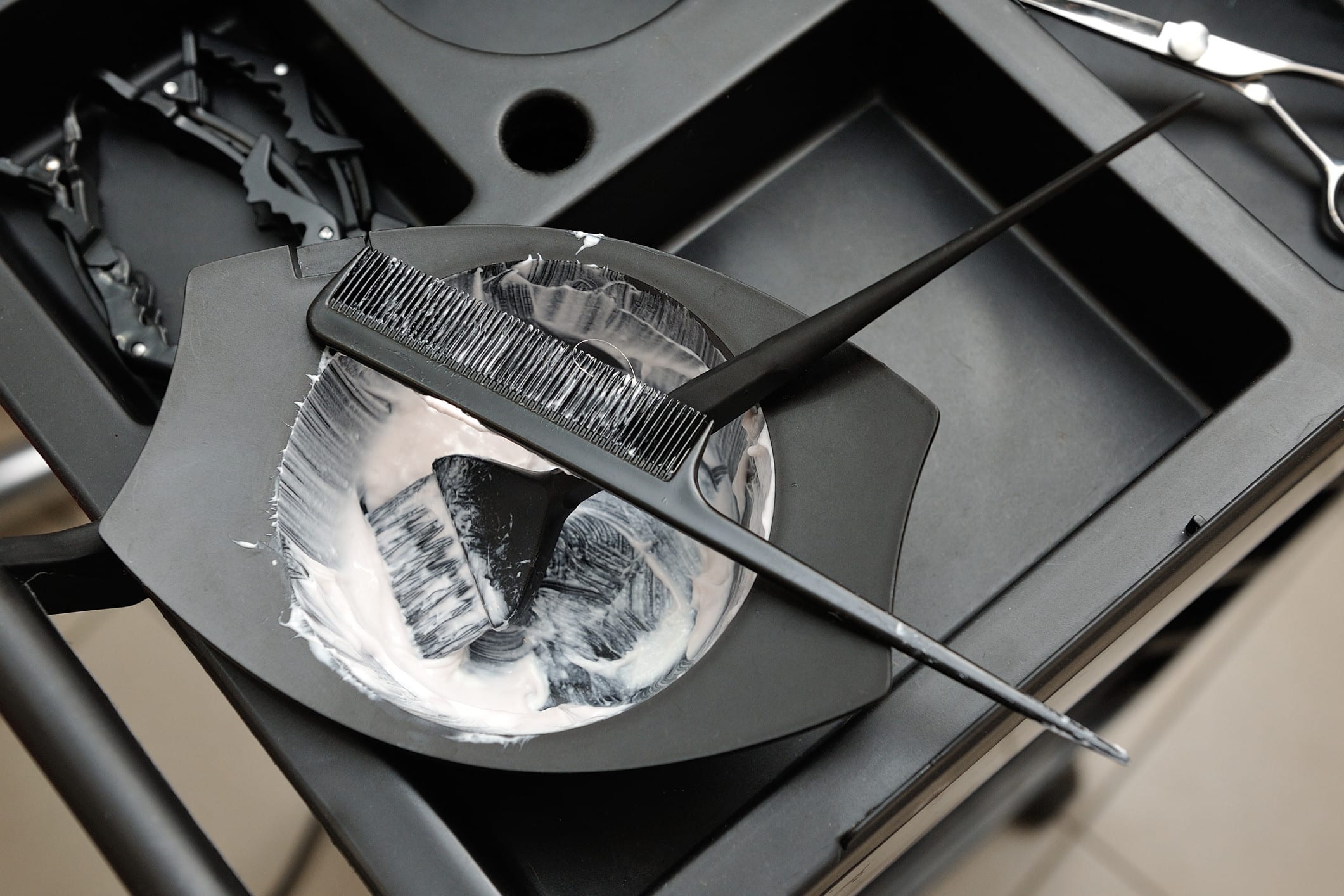
New research raises concern in the beauty industry when it comes to permanent hair dye and chemical hair straighteners, especially among African American women. The study published this week in the International Journal of Cancer says there may be a link between those hair chemicals and breast cancer.
Previous research in animals has found links between certain chemicals in hair dye and straighteners and cancer. But findings from other human studies on the association between hair dyes and straighteners and cancer have been inconsistent. This large, prospective study provides firmer evidence of a link.
Using data from 46,709 women in the Sister Study, researchers at the National Institute of Environmental Health Sciences (NIEHS), part of NIH, found that women who regularly used permanent hair dye in the year prior to enrolling in the study were 9% more likely than women who didn’t use hair dye to develop breast cancer.
Among African American women, using permanent dyes every five to eight weeks or more was associated with a 60% increased risk of breast cancer as compared with an 8% increased risk for white women.
That risk was even higher among black women who dyed their hair frequently, every one or two months.
“The association was notably higher among black women,” says epidemiologist Alexandra White, study author and an investigator with the National Institute of Environmental Health Sciences, who studies environmental risk factors for breast cancer.
Researchers don’t know which ingredients in the products might be of concern. The study did not look at the specific ingredients in the products women were using, only at whether they had used the product and whether they developed breast cancer.
All women in the Sister Study were already at high risk for breast cancer since they had a sister who had breast cancer.
Researchers note that in the United States, breast cancer incidence remains high for
all women and appears to be increasing for non-Hispanic black women, who also are more likely to be diagnosed with more aggressive forms of the disease and more likely to die from it.
Hair products contain more than 5,000 chemicals, according to researchers, including those with mutagenic and endocrine-disrupting properties such as aromatic amines, which can raise cancer risk, according to White.
When it came to chemical straighteners, the risk didn’t vary by race. Both black and white women who used hair straighteners were about 30% more likely to develop breast cancer than those who didn’t use the products.
However, black women are more likely to use them, with about 75% of black women in the study reporting they straighten their hair.
“For the chemical straighteners one of the big concerns there is formaldehyde, which is a known carcinogen,” says White. She notes that in the early 2000s just before the study began, Brazilian keratin treatments came on the market.
This new treatment, commonly called a Brazilian blowout, contains formaldehyde, while earlier hair straightening treatments did not.

The study findings should be understood in context, says Dr. Otis Brawley, a medical oncologist with Johns Hopkins University. The actual risk found for use of these hair treatments is quite low, he adds, especially compared with other known carcinogens like tobacco or radiation.
“This is a very weak signal that these things might be causing cancer in the population,” he says.
“Much more research is needed,” he says, “to know for sure how risky these products are. For example, long-term clinical trials with a control group and placebo would be more definitive.”


By subscribing, you consent to receive emails from BlackDoctor.com. You may unsubscribe at any time. Privacy Policy & Terms of Service.