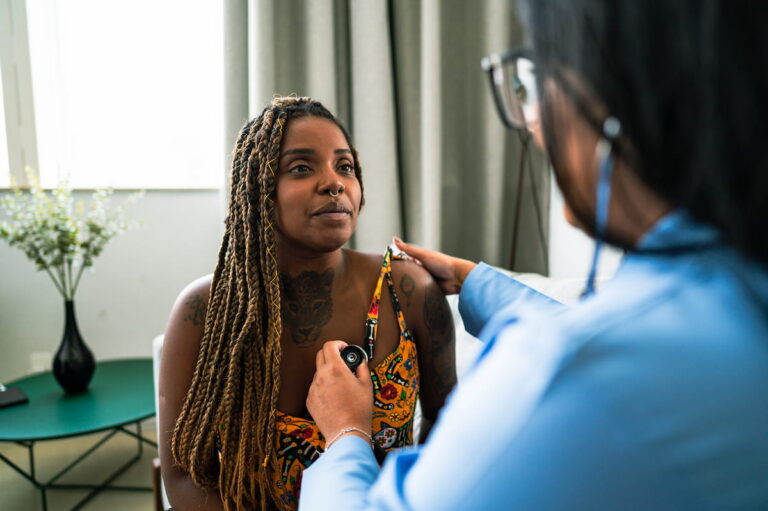
This month we are going to break down that all-important first prenatal visit and specifically what you can expect. Don’t forget to check out our book Everything You Ever Wanted to Know About Pregnancy But Were Too Afraid or Embarrassed To Ask available on Amazon and be sure to download the app (Everything Pregnancy) from the Apple App and Google Play stores.
Like many things during pregnancy, the first prenatal appointment is no doubt the subject of lots of excitement and probably a little bit of apprehension. Fear not! The Twin Docs are going to tell you everything you need to know about the first prenatal visit so that you sail through it like a pro! So, here is a run-down of what to expect:
When we say detailed, we really mean detailed. There are lots of things in your medical history (medical conditions, current medications, possible genetic conditions, environmental exposures) that could affect you, your pregnancy, and your baby, and the best way to predict these and prevent any potential problems is to simply ask a ton of questions.
Answering these questions can take a lot of time, so plan at least an hour for this first visit. So, what are some things your doctor will want to know?
Just when you think you are home free and finally finished answering all of those medical questions, it’s time for a bunch of lab test. So, what tests can you expect?
I’m sure your doctor isn’t the only person who wants to know when to expect your bundle of joy. There are a few ways that they can
determine your due date. Using the first day of your last period, your doctor can use Nagel’s rule to estimate your due date.
All you have to do is take the first day of your last normal period, add a year, subtract three months, and then add seven days and voila, that’s your due date. If you don’t know when your last period started, your doctor may order or perform an ultrasound. The earlier the ultrasound, the more accurate the due date.
Prenatal vitamins and DHA/omega-3 fatty acids: If you haven’t already started taking a prenatal vitamin over-the-counter (spoiler alert, OTC prenatal vitamins are just as good as prescription vitamins), your doctor will probably prescribe one for you.
Many prenatal vitamins come with supplemental DHA/Omega-3 fatty acids. If your vitamin does not come with this supplement, consider purchasing it separately over the counter. DHA/Omega-3 fatty acids play an essential role in your baby’s neurodevelopment (brain development) and the development of good eyesight.
Depending upon your medical history, your doctor may change your current medications or prescribe other medications for you. Make sure that you discuss any medications that you are currently taking with your doctor (including other vitamins and supplements) to determine which are appropriate to continue and which may need to be stopped or substituted.
If you want more where this came from, be sure to check out our book Everything You Ever Wanted To Know About Pregnancy But Were Too Afraid or Embarrassed To Ask, available in print or electronic versions on Amazon. You can also check out our mobile apps for Apple and Android in the Apple App and Google Play stores.
If you have a specific pregnancy-related question, you can submit it to BlackDoctor.org using the hashtag #EverythingPregnancy, and we will try to answer it during our next Facebook live or in a future blog.

Idries J. Abdur-Rahman, MD, FACOG
Obstetrician/Gynecologist
TwinDoctorsTV

By subscribing, you consent to receive emails from BlackDoctor.com. You may unsubscribe at any time. Privacy Policy & Terms of Service.