Protein is one of the nutrition essentials needed to maintain a healthy diet. It is used to build and repair body tissue and keep your hair, nails, and skin healthy. It also helps to boost your immune system. Beyond those benefits, research indicates eating lean, high-quality protein can help people with type 2 diabetes lose or maintain weight and manage blood glucose.
In a recent study, participants consumed either a high animal protein diet – including lean meat and dairy foods or a high-plant protein diet for six weeks. The composition of both diets was 30% protein, 40% carbohydrate and 30% fat. At the end of the study, A1C percentage decreased in both groups (the A1C test reflects your average blood glucose level over the past three months). Moreover, insulin sensitivity improved (how sensitive the body is to the effects of insulin) in only the animal-protein diet group.
Maintaining a healthy body weight is important to help prevent and manage type 2 diabetes. Findings from researchers at Duke University show that when obese women consumed a high protein low-calorie diet, including lean pork, as part of a six-month weight-loss diet they lost weight. While most Americans eat the majority of their protein at dinner, this study demonstrates benefits of spreading protein equally throughout the day. The women in the study received 30 grams of protein (about 4 ounces) at each meal with two of the meals including pork.
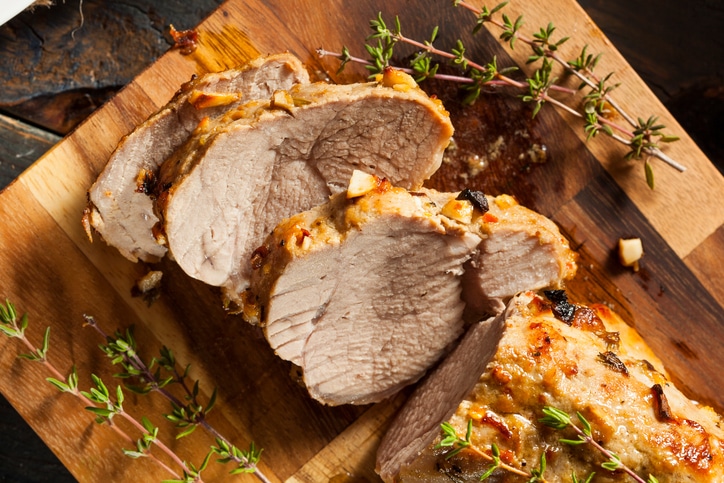
Choose protein sources that are low in saturated fat and cholesterol. These include poultry, fish, legumes, and beans. Many people with diabetes mistakenly avoid pork because they think it is high in fat. Choices like tenderloin, low-sodium ham, chops and lean ground pork are low-fat choices that can also be included. These cuts of pork meet the U.S. Department of Agriculture (USDA) guidelines for “lean” by containing less than:
In fact, pork tenderloin has the same amount of fat as a skinless chicken breast.
Limit protein sources such as fatty cuts of beef, pork, and lamb; regular (75% to 85% lean) ground beef; regular sausages, hot dogs, and bacon; some luncheon meats such as regular bologna and salami; and some poultry such as duck. These choices are high in saturated fat and can increase your cholesterol.
Diets high in cholesterol can raise LDL “bad” cholesterol levels in the blood. Cholesterol is only found in foods from animal sources. Some foods from this group are high in cholesterol. These include egg yolks (egg whites are cholesterol-free) and organ meats such as liver and giblets. To help keep blood cholesterol levels healthy, limit the amount of these foods you eat.
Control temperature. To ensure lean pork is flavorful and juicy it shouldn’t be overcooked. In fact, the USDA recommends cooking pork chops, roasts, and tenderloin to an internal temperature between145° F and 160° F, followed by a three-minute rest period. Since large cuts increase approximately 10° F while resting, the National Pork Board recommends removing them from the heat at 150° F followed by a 10-minute rest.
Pair it. Pork pairs well with a variety of flavors and foods, especially fruits and vegetables. Use pre-cut fruits and vegetables to make stir-fries and quick snacks.
Add flavor with marinades. Use spice rubs or low-fat marinades – such as fat-free dressing, to add extra flavor to meat, without adding fat.
Use low-fat cooking methods. Try low-fat cooking methods like broiling, grilling, and roasting.

Constance Brown-Riggs, MSEd, RD, CDE, CDN is a registered dietitian, certified diabetes educator, national speaker and author of The African American Guide to Living Well with Diabetes.. She is a Dannon One Yogurt Every Day Nutrition Advisor.


By subscribing, you consent to receive emails from BlackDoctor.com. You may unsubscribe at any time. Privacy Policy & Terms of Service.