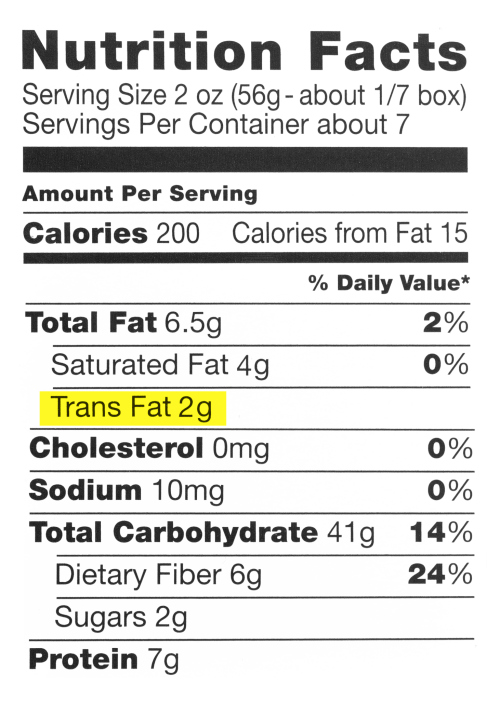
Q: The Food and Drug Administration (FDA) is requiring that, by January 2006, food labels list the amount of trans fat together with saturated fat and cholesterol. What is trans fat?
A: Trans fat is a type of fat that is formed when vegetable oil is hardened through a process called hydrogenation. This process helps makes foods more solid, gives them shape, and prolongs their shelf life.
Q: What do saturated fat, trans fat, and cholesterol in foods have to do with heart disease?
A: Saturated fat, trans fat, and cholesterol in the diet all raise the level of LDL “bad” cholesterol in the blood. The higher the LDL cholesterol, the greater the risk for coronary heart disease (CHD), the main form of heart disease and a leading cause of death, illness, and disability in the United States. Saturated fat and trans fat raise LDL similarly, but Americans consume 4-5 times as much saturated fat as trans fat. Saturated fat is the chief dietary culprit that raises LDL, but consumers need to know about all 3 – saturated fat, trans fat, and cholesterol – in the foods they eat to reduce their risk for CHD and stay heart-healthy.
Q: What foods contain saturated fat, trans fat, and cholesterol?
A: High amounts of saturated fat are found in animal products, such as fatty cuts of meat, chicken skin, and full-fat dairy products like butter, whole milk, cream, and cheese, and in tropical vegetable oils such as palm, palm kernel, and coconut oil. Trans fat is found in some of the same foods as saturated fat, such as vegetable shortening, some margarines (especially hard or stick margarine), crackers, cookies, baked goods, fried foods, salad dressings, and other processed foods made with partially hydrogenated vegetable oils. Small amounts of trans fat also occur naturally in some animal products, such as milk products, beef, and lamb. Foods high in cholesterol include liver, other organ meats, egg yolks, shrimp, and full-fat dairy products.
Q: How will the nutrition label on foods be different?
A: The FDA’s rule requires that the amount of trans fat be listed on a separate line under saturated fat on the Nutrition Facts panel of the food label. The new label will enable consumers to know the amount of saturated fat, trans fat, and cholesterol in a serving of the food they eat.
Q: How can I use the new food label to make heart-healthy food choices?
A: Check the Nutrition Facts panel of the food label. Choose foods lower in saturated fat, trans fat, and cholesterol. For saturated fat and cholesterol, you can also use the Percent Daily Value (%DV): 5% DV or less is low, and 20% DV or more is high. (There is no %DV for trans fat.) Some food products may not show the amount of trans fat until 2006, when the FDA rule will go into full effect. Use the Nutrition Facts panel to choose foods low in saturated fat and cholesterol, and if the trans fat is not listed, read the ingredients and limit products that list shortening or hydrogenated or partially hydrogenated vegetable oil, which tend to be high in trans fat.
Q: Is it better to eat butter instead of margarine to avoid trans fat?
A: No. The combined amount of saturated fat, trans fat, and cholesterol in butter is usually higher than in margarine, even though some margarines contain more trans fat than butter. There are margarines available that contain no trans fat. Soft (tub) or liquid margarine usually contains less trans fat than hard (stick) margarine and less saturated fat and cholesterol than butter.


By subscribing, you consent to receive emails from BlackDoctor.com. You may unsubscribe at any time. Privacy Policy & Terms of Service.