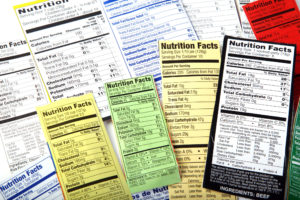
 Nutritional facts on what you are eating.
According to the Academy of Nutrition and Dietetics, understanding the label can make you a wiser shopper and help you eat right.
“Nutrition Facts Labels help you find out which foods are good sources of particular nutrients such as vitamin D or dietary fiber,” says registered dietitian nutritionist Lauri Wright, a national spokesperson for the Academy of Nutrition and Dietetics in Jacksonville, Fla. “Nutrition Facts Labels can help you compare similar foods so you can select those lower in salt, saturated fat, trans fat, and added sugars.”
Many manufacturers have already started to use the U.S. Food and Drug Administration’s updated Nutrition Facts Label, which was announced in 2016. The new label must appear on all food items by January 1, 2021. The updates are based on the latest information about nutrition and the links between what people eat and chronic diseases such as obesity, diabetes, and cardiovascular disease.
The following tips will help you understand the updated Nutrition Facts Label.
Understand the Serving Size. The serving sizes on the Nutrition Facts Label have been updated to reflect what people now customarily consume at one time. In addition, the servings per container show the total number of servings in the entire package or container. When comparing foods or drinks, look at the calories, nutrients, and serving size to make an accurate comparison.
“Consider the amount you typically eat or drink and compare it to the serving size listed on the label,” Wright says. “If what you typically eat is larger than the listed serving size, you will consume more calories, fat, and other nutrients listed on the label.”
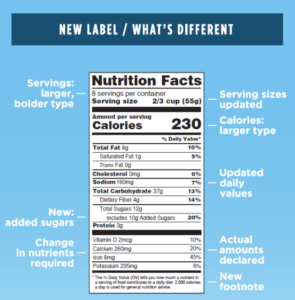
Make Calories Work For You. Calories are now displayed in a larger and bolder font on the new Nutrition Facts label to make the information easier to find and use. To achieve or maintain a healthy body weight, balance the number of calories you eat and drink with the number of calories your body uses. Two thousand calories a day is used as a general guide for nutrition advice, but your calorie needs may be higher or lower. “Caloric needs vary depending on a person’s sex, age, height, weight, and physical activity levels,” Wright says. “Consider consulting a registered dietitian nutritionist to help you determine the number of calories your body needs.”
Use the Percent Daily Values as A Guide. The Percent Daily Values help you evaluate how a food fits into your daily eating plan, not just for one meal or snack. Percent Daily Values represent the amount a nutrient contributes based on a serving of that food and in relation to 2,000 calories per day.
“Percent Daily Values help with the comparison of foods,” Wright says. “Look for foods with Percent Daily Values of five percent or lower in saturated fat, sodium, and added sugars. Look for foods with Percent Daily Values of 20 percent or higher in vitamins, minerals, and dietary fiber.”
Look for Added Sugars. Labels for foods and beverages with added sugars will list the number of grams and the percent Daily Value (%DV) for added sugars within the Nutrition Facts label. Added sugars have been added to the label because consuming too much added sugars can make it hard to meet nutrient needs while staying within your calorie limits and difficult to control your blood sugar measurement. Added sugars include sugars that are added during the processing of foods—often referred to as hidden sugars (such as sucrose or dextrose), foods packaged as sweeteners (such as table sugar), sugars from syrups and honey, and sugars from concentrated fruit or vegetable juices.
Have you ever wondered why there are carbs in frankfurters, bologna, or other processed meats? Or, if you have diabetes, why your blood glucose levels go up higher than usual after eating them? Hidden sugar is most likely the cause. The new label will reveal hidden sugar and take the guesswork out of carbohydrate counting.
To learn more about the updated Nutrition Facts Label, visit the FDA website.

Constance Brown-Riggs, is a registered dietitian, certified diabetes educator, national speaker and author of the Diabetes Guide to Enjoying Foods of the World, a convenient guide to help people with diabetes enjoy all the flavors of the world while still following a healthy meal plan. Follow Constance on social media @eatingsoulfully


By subscribing, you consent to receive emails from BlackDoctor.com. You may unsubscribe at any time. Privacy Policy & Terms of Service.