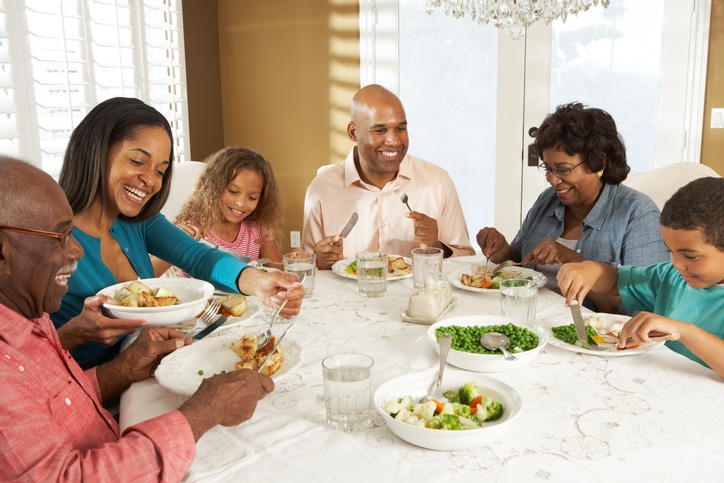
Remember the days when your whole family gathered together for a meal? It was a time to de-stress, laugh, share family news, and spend quality time with loved ones.
Family meals have always been at the heart of African American family life and special celebrations. “Traditions like Sunday suppers and holiday meals have historically been a part of African American customs since slavery – often as a means to rejuvenate one’s spirit and spend time together within a positive environment,” says Sade Anderson, Oldways Program manager and African Diaspora Specialist. “And Across the African continent, you can still find people cooking and eating together as a daily practice.”
Unfortunately, it seems that these traditions have not withstood the test of time and African American health may be suffering as a result. “Studies show that family meals, specifically cooking and sitting down to eat, can improve one’s health,” says Anderson. Home-cooked meals nourish the spirit, brain, and health of all family members.
Not to mention, people who frequently cook at home eat fewer, healthier calories. “Cooking at home means you are able to control the salt, sugar, and fat content of your meals and that can greatly reduce your chances of health-related illnesses such as obesity and diabetes,” says Anderson. Additionally, regular family meals are linked to higher grades and self-esteem, healthier eating habits and less risky behavior in children.
However, according to a 2013 Harris poll, only 30 percent of American families share dinner every night. Juggling jobs, kids and the demands of a busy, modern life often come at the expense of family mealtime at home. But, this doesn’t need to be the case. The following tips will help you reclaim your family meal traditions and make new modern mealtime traditions.
Plan your meals. Anderson says, “Meal-planning as a family is a great way to bring everyone to the table for a meal. As a family, you can come up with exciting and delicious meals that everyone is interested in trying.”
Share meal preparation tasks. Involving your children in meal preparation will make them more likely to eat the meal. “Make family meals intergenerational. Involve your children in the meal-planning, grocery shopping, and food preparation stages of your meals, so everyone has a role and feels involved,” says Anderson. Children involved in meal preparation are also more likely to acquire healthy eating habits.
Cook in advance. Cook two or three dishes on your day off, and freeze some of them. Use the frozen dishes on the days when you don’t have time to cook.
Keep it simple. Anderson says, “Don’t feel like you have to reinvent the wheel. There are so many great recipes online and in cookbooks that you can experiment with and craft recipes that cater to your family’s needs and taste.” Click here for a variety of African Diaspora inspired recipes.
Take a cooking class. A Taste of African Heritage Cooking Program, managed by Anderson, provides an opportunity for you to learn how to prepare a variety of delicious and nutritious meals to inspire a whole new way of eating. Click here to find out if a class is happening near you.
I encourage you to reclaim your family traditions. Reflect on the days when your family gathered around the table for home cooked meals. Make family meals a priority and commit to one more family meal at home per week. Family meals make families healthier and stronger.

Constance Brown-Riggs, MSEd, RD, CDE, CDN is a registered dietitian, certified diabetes educator, national speaker and author of The African American Guide to Living Well with Diabetes. She is a Dannon One Yogurt Every Day Nutrition Advisor.


By subscribing, you consent to receive emails from BlackDoctor.com. You may unsubscribe at any time. Privacy Policy & Terms of Service.