
Menu

Recognizing the Differences: Usual Seizures vs. Seizure Clusters

Table of Contents
seizures

For those with epilepsy, knowing the distinction between typical seizures and seizure clusters is crucial for managing health and safety. While both types involve episodes of increased electrical activity in the brain, seizure clusters have unique characteristics that make them more unpredictable and potentially dangerous. Here, we’ll break down what makes seizure clusters different from regular seizure patterns, the associated risks, and ways to recognize and respond to these episodes.

What Are Usual Seizures?

A seizure occurs when there is a sudden surge of electrical activity in the brain, causing changes in behavior, movement, or awareness. Individuals with epilepsy may experience one or more types of seizures, which are typically classified as either focal (originating in one part of the brain) or generalized (involving the entire brain).

Common Patterns of Usual Seizures

  1. Predictable Timing: People with epilepsy often experience their seizures at relatively consistent intervals, whether daily, weekly, or monthly.
  2. Single Occurrence: Usual seizures often happen individually, with a recovery period afterward before the next seizure occurs.
  3. Managed with Daily Medication: Many individuals with epilepsy take daily anti-seizure medications, which help control or reduce seizure frequency, allowing them to live more predictably and safely.

In general, most people with epilepsy and their caregivers become familiar with the patterns of their usual seizures, recognizing triggers, symptoms, and the expected duration.

Featured on BlackDoctor

What Are Seizure Clusters?

Unlike single, isolated seizures, seizure clusters involve two or more seizures that happen within a short timeframe, often within a 24-hour period. These clusters have distinct characteristics that can make them unpredictable and concerning.

Key Features of Seizure Clusters

  1. Increased Frequency: Seizure clusters are marked by multiple seizures happening within hours rather than the typical pattern of isolated episodes.
  2. Unpredictable Onset: Unlike usual seizures that may follow a regular pattern, seizure clusters can occur suddenly and without warning.
  3. Escalating Intensity: Seizure clusters may start with shorter, less intense seizures that increase in duration and severity as the cluster progresses.
  4. Higher Risk of Complications: With seizure clusters, there’s an elevated risk of experiencing status epilepticus—a prolonged seizure lasting more than five minutes—which can require immediate medical attention to prevent brain damage or other serious health complications.

Since seizure clusters often present in a way that disrupts a person’s established seizure pattern, they can feel overwhelming, especially for individuals who usually have controlled epilepsy. In some cases, seizure clusters may require rescue medication to halt the cluster and prevent further escalation.

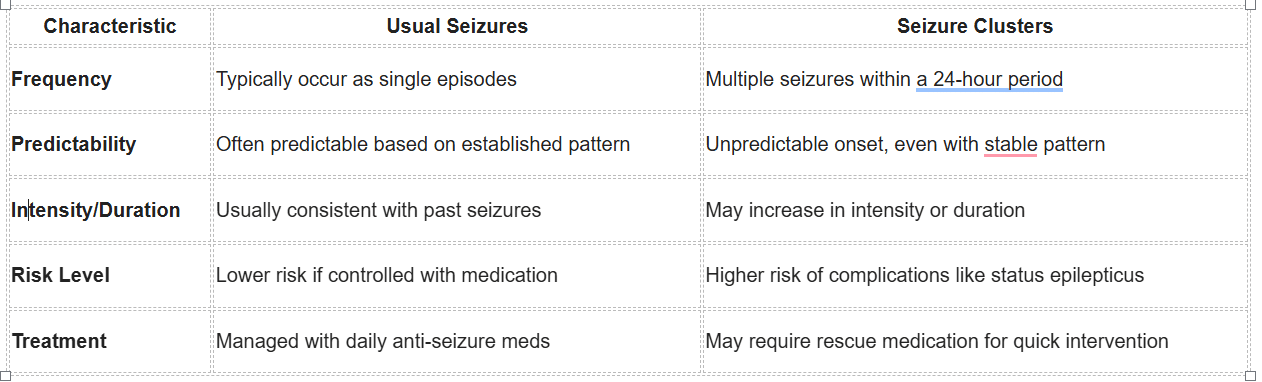
Recognizing the Differences: Usual Seizures vs. Seizure Clusters

Understanding the differences between usual seizures and seizure clusters can help individuals and caregivers identify when additional medical intervention may be necessary.
Why the Difference Matters: Health and Safety Risks

Seizure clusters pose unique risks due to the potential for prolonged seizures and the rapid succession of episodes. These risks can include:

  1. Injuries: Having multiple seizures in a short period increases the likelihood of falls or accidents.
  2. Hospitalization: Seizure clusters may require emergency care if they escalate to status epilepticus, a life-threatening condition.
  3. Prolonged Recovery: Frequent or intense seizures within a short time can lead to longer recovery times and increased fatigue.

Because seizure clusters can develop unexpectedly, it’s essential for individuals and caregivers to recognize the signs early and have a plan in place for emergency intervention.

Treatment Options for Seizure Clusters

For most people with epilepsy, daily medications play a primary role in managing seizure frequency. However, in cases of seizure clusters, a separate rescue medication may be necessary to break the cycle of frequent seizures quickly.

Daily Medications vs. Rescue Medications

  • Daily Anti-Seizure Medications: These are typically taken every day to help control seizure activity over the long term. They help to prevent seizures from occurring but are not designed to stop a seizure once it has started.
  • Rescue Medications: Rescue medications are designed to act fast in cases of seizure clusters, preventing the cluster from escalating. These medications are usually prescribed as a nasal spray, injection, or dissolvable tablet, allowing for quick administration even outside a hospital setting.

Your healthcare provider can guide you in creating a plan for managing seizure clusters, including when and how to use your rescue medication.

Practical Tips for Managing Seizure Clusters

Here are some tips for managing seizure clusters and minimizing risks:

  1. Know Your Triggers: Identify factors that may trigger seizure clusters, such as sleep deprivation, stress, or illness, and take steps to avoid them.
  2. Keep a Seizure Diary: Tracking your seizures can help you and your healthcare provider detect patterns and recognize signs that may precede a cluster.
  3. Have a Rescue Plan: Make sure you and your caregivers know how to use your rescue medication and when to seek emergency help.
  4. Educate Family and Friends: Teach those around you about seizure clusters and how they differ from usual seizures so they’re prepared to assist if needed.

The difference between usual seizures and seizure clusters lies in the frequency, predictability, and risk level associated with each. Seizure clusters can disrupt established patterns, present higher health risks, and may require immediate intervention. By working closely with your healthcare provider and being prepared, you can manage seizure clusters more effectively, ensuring the best possible safety and quality of life for you or your loved one living with epilepsy.


SHARE
Related Stories
Answer the question below

Gout Survey

People with gout often have sudden, painful flares of joint swelling and redness. How many gout flares have you experienced in the last 12 months?
Have you ever received intravenous medicine for your gout?

Get our Weekly Newsletter

Stay informed on the latest breakthroughs in family health and wellness. Sign up today!

By subscribing, you consent to receive emails from BlackDoctor.com. You may unsubscribe at any time. Privacy Policy & Terms of Service.

More from BlackDoctor

Where Culture Meets Care

BlackDoctor is the world’s largest and most comprehensive online health resource specifically for the Black community. BlackDoctor understands that the uniqueness of Black culture - our heritage and our traditions - plays a role in our health. BlackDoctor gives you access to innovative new approaches to the health information you need in everyday language so you can break through the disparities, gain control and live your life to its fullest.
✦ AI Search Disclaimer
This AI-powered search tool helps you find relevant health articles from the BlackDoctor.org archive. Please keep the following in mind:
✦ For Informational Purposes Only
The information provided through this AI search is for general educational and informational purposes only. It is not intended as a substitute for professional medical advice, diagnosis, or treatment.
✦ Always Consult a Healthcare Provider
Never disregard professional medical advice or delay seeking it because of something you have read through this search tool. If you have a medical emergency, call your doctor or 911 immediately.
✦ AI Limitations
This search tool uses artificial intelligence to help match your queries with articles in our archive. While we strive for accuracy, AI-generated results may occasionally be incomplete, outdated, or not fully relevant to your specific situation.
✦ No Doctor-Patient Relationship
Using this search tool does not create a doctor-patient relationship between you and BlackDoctor.org or any healthcare provider.
Explore over 35,000 articles and videos across black health, wellness, lifestyle and culture
Full AI Search Experience >
×

Download PDF

Enter your name and email to receive the download link.

BlackDoctor AI Search