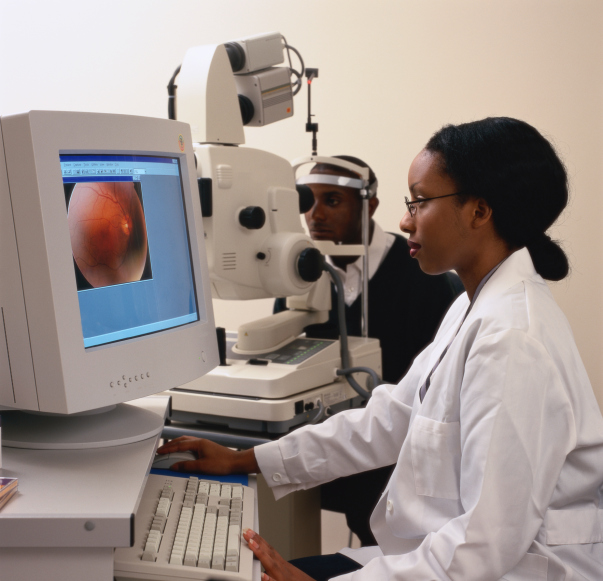
Do you know what retinitis pigmentosa (RP) is? If the answer is no, you’re not alone. An estimated 100,000 people in the U.S. are living with RP, a rare, inherited disease that’s characterized by loss of vision. With RP, the cells in the retina – the part of the eye that receives light – gradually die, causing blindness.
Some of the most frequent symptoms of RP include night blindness and photosia (seeing flashes of light). Although the disease is progressive, the rate varies from person to person. According to www.blindness.org, “most people with RP are legally blind by age 40, with a central visual field of less than 20 degrees in diameter.”
Unfortunately, there is no cure or effective treatment for RP. “The best you can do is to get diagnosed early enough before complete loss of vision so you can get low vision training and adaptive devices ahead of the time when you fully lose your vision,” explains Dr. Bola Oyeyipo, a family physician in San Antonio, Texas and co-founder of Healthgist.com.
“Other things that might help delay visual loss are vitamin A, lutein and beta carotene supplementation, avoiding vitamin E supplementation, avoiding the use of medications for erectile dysfunction like Viagra, which can cause visual loss. Treatment options, such as gene therapy, retinal implantation are still in the development phase and their efficacy is doubtful at the current time.”
Does retinitis pigmentosa run in your family? “See an ophthalmologist, who would tend examine your retina to see if you inherited the condition,” Dr. Oyeyipo recommends. “Then continue with regular follow-up with the ophthalmologist. Use the recommended dose of vitamin A, beta carotene and lutein. This formulation is available as Occuvite.”
According to the American Academy of Opthalmology, the following are signs of retinitis pigmentosa:
Because retinitis pigmentosa is an inherited disease, there’s no way to prevent it, which is extremely unfortunate, but taking the necessary steps as Dr. Oyeyipo mentioned can help slow down the process. If retinitis pigmentosa runs in your family and/or you think you may have the disease, see your ophthalmologist right away.


By subscribing, you consent to receive emails from BlackDoctor.com. You may unsubscribe at any time. Privacy Policy & Terms of Service.