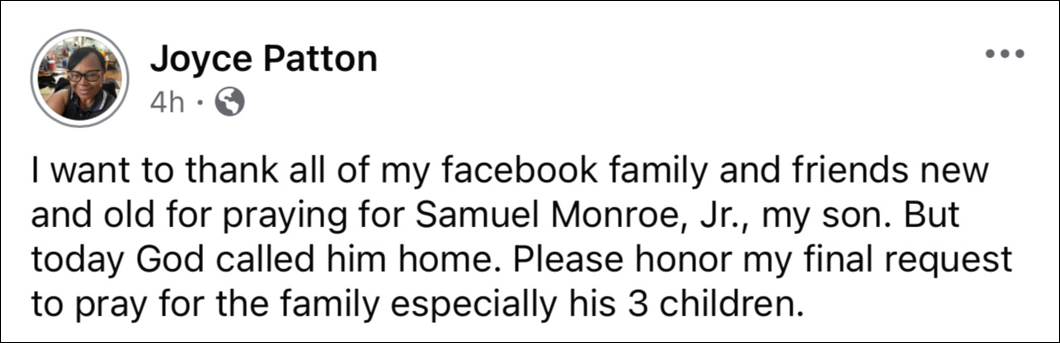
The hip-hop movie world is morning the loss of another 90’s star. Following months of hospitalization, actor Samuel Monroe Jr. has passed away, his mother, Joyce Patton, announced on Facebook.
In a post shared on Facebook, his mother confirmed that Monroe died.
“I want to thank all of my Facebook family and friends new and old for praying for Samuel Monroe, Jr., my son,” she wrote. “But today God called him home. Please honor my final request to pray for the family, especially his 3 children.” Before his death, his family revealed he was hospitalized following complications from meningitis.
For fans of Black cinema, his work remains part of an era that produced some of the most recognizable urban films and characters of its generation.
Beginning with his film debut in 1993’s “Menace II Society,” Monroe steadily maintained work due to his looks and charisma. He frequently popped up in movies that played on L.A. culture, including 1995’s “Tales From The Hood,” 1996’s “Set It Off,” and a spoof of the hood classic genre, 1996’s “Don’t Be A Menace to South Central While Drinking Your Juice In The Hood.” He also starred as Junior, Ronnie’s brother, in the 1997 film “The Player’s Club.”
His death brings renewed attention to meningitis—a disease that can begin with symptoms resembling a routine infection but quickly become life-threatening.
Monroe’s wife, Shawna Stewart, previously said that he became ill approximately 18 months ago while working in Las Vegas. According to the family, he visited several hospitals but did not receive the correct diagnosis for eight months.
Stewart said that by the time doctors identified the condition, the infection had affected Monroe’s brain and spine. He later required life support and reportedly underwent multiple brain surgeries while also experiencing seizures, kidney problems and severe brain swelling.
The actor was hospitalized in April with severe meningitis and MRSA pneumonia. MRSA is a type of staph bacteria that is resistant to several commonly used antibiotics and can cause serious infections, including pneumonia and bloodstream infections.
The complete clinical circumstances surrounding Monroe’s illness and death have not been publicly released. Details concerning the type of meningitis he had and precisely how he contracted the infection also have not been confirmed.
Meningitis is inflammation of the membranes that protect the brain and spinal cord. It can be caused by bacteria, viruses, fungi, parasites and, less commonly, noninfectious conditions such as certain medications, cancers or autoimmune diseases.
Viral meningitis is the most common form in the United States and is often less severe. Bacterial meningitis, however, is a medical emergency that can cause death within hours if it is not recognized and treated promptly. CDC meningitis overview
Because treatment differs depending on the cause, doctors may perform blood tests, brain imaging and a lumbar puncture, sometimes called a spinal tap, to determine what is producing the inflammation.
Meningitis is not one single infection, so there is no single way that people contract it.
Several bacteria that cause meningitis can live in the nose and throat without making a person sick. Under certain circumstances, the bacteria can enter the bloodstream and reach the tissues surrounding the brain and spinal cord.
Meningococcal bacteria may spread through saliva or respiratory secretions during close or prolonged contact. Possible exposures include:
The bacteria do not generally spread as easily as cold or flu viruses. Brief casual contact usually is not enough to transmit meningococcal disease.
Other bacteria have different routes of transmission. Group B streptococcus can pass from mother to baby around the time of birth, while Listeria may be contracted by eating contaminated food.
Viral meningitis can be associated with enteroviruses, herpes viruses, influenza, mumps, measles, HIV and mosquito-borne viruses such as West Nile virus. Fungal meningitis, which is rare, may occur after fungal spores are inhaled and an infection spreads elsewhere in the body. It is seen more frequently in people with weakened immune systems.
Some of the infections that cause meningitis are contagious, but meningitis itself is not always passed directly from one person to another.
Someone exposed to a virus linked to viral meningitis may contract the virus without ever developing meningitis. Fungal and parasitic forms generally do not spread between people.
When a person is diagnosed with meningococcal disease, health officials may recommend preventive antibiotics for household members, intimate partners or others who had direct contact with the person’s saliva or respiratory secretions.
Meningitis develops around the brain and spinal cord—structures responsible for consciousness, breathing, movement and nearly every essential bodily function. Severe inflammation in this area can increase pressure inside the skull, reduce blood flow and damage brain tissue.
Bacterial meningitis can also allow bacteria to enter the bloodstream and cause sepsis. This extreme immune response may lead to dangerously low blood pressure, abnormal clotting, organ failure, loss of circulation to the limbs and death.
The World Health Organization estimates that approximately 1 in 6 people who develop bacterial meningitis die, while about 1 in 5 experience serious complications. Survivors can be left with hearing loss, seizures, memory problems, learning difficulties, brain damage or limb loss. WHO meningitis fact sheet
Monroe’s reported experience also underscores why delayed diagnosis can be so dangerous. The earlier bacterial meningitis is recognized and treated with appropriate antibiotics, the greater the opportunity to prevent irreversible damage.
Symptoms may develop suddenly and can include:
Babies may become unusually irritable or inactive, feed poorly, vomit or develop a bulging soft spot on the head. They may not display the classic stiff neck seen in older children and adults.
Symptoms can resemble the flu or another common illness during the early stages. Not everyone develops every warning sign, and a rash may never appear.
Anyone experiencing a sudden combination of fever, severe headache, neck stiffness, confusion, seizures or unusual drowsiness needs immediate emergency evaluation. Do not wait for the symptoms to worsen.
Vaccines can prevent several major causes of bacterial meningitis, including meningococcal, pneumococcal and Hib disease. People should speak with a healthcare professional about which vaccines are recommended based on their age, medical conditions, living situation and travel plans.
Other protective measures include washing hands regularly, covering coughs, avoiding shared drinks and utensils, practicing food safety and seeking prompt medical care for concerning symptoms.
Monroe’s death is a painful loss for his family, friends and fans. It is also a powerful reminder that persistent or rapidly worsening symptoms should never be ignored—especially when they involve fever, severe headache, neck stiffness or changes in alertness.


By subscribing, you consent to receive emails from BlackDoctor.com. You may unsubscribe at any time. Privacy Policy & Terms of Service.