
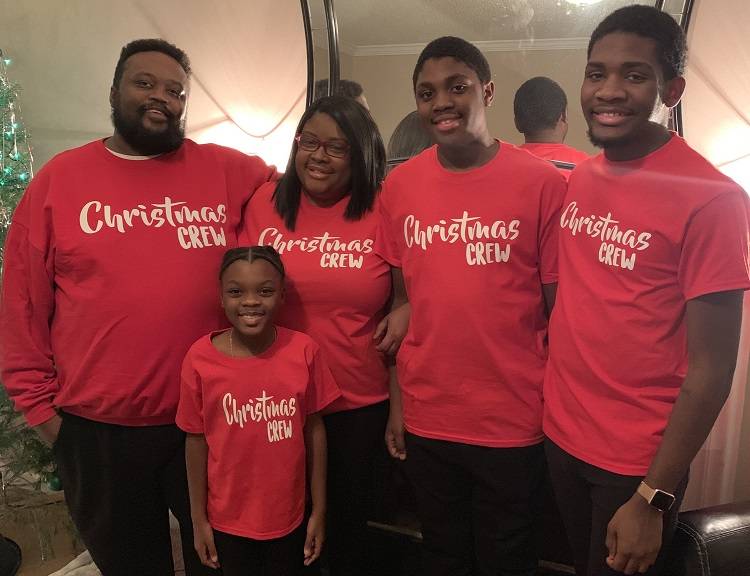
 (Photo courtesy of Cherron Gilmore/Heart.org)
The American Heart Association shares some incredible, real-life stories from the heart about people who have triumphed over difficult situations. Today, we share one of those stories about a mother of three named Cherron.
The first time Cherron Gilmore was denied a heart transplant, it was because her support system was too small. The second time, it was because she had a compromised immune system.
The third time? She wasn’t sick enough.
Once Cherron was on life support, doctors feared even if they gave her an artificial heart to bridge the time needed to find a heart, she might not make it. Yet they were willing to see if other hospitals might take her case.
Virginia Commonwealth University Health’s Pauley Heart Center did.
In September 2018, VCU doctors gave 37-year-old Cherron an artificial heart. She spent three weeks recovering at the hospital before going home to Winston-Salem, North Carolina. About a week later, VCU called her back. A donor heart was available.
On Oct. 14, Cherron received her new heart. She was the 600th person to get a heart transplant at VCU, the second-oldest transplant program in the United States.
“When I woke up from (the transplant), I was painless,” she said. “I was out of ICU the next day. Even now when people see me, they’re like, ‘Shouldn’t you by laying around or something?'”
But after a nine-year near-death battle with postpartum cardiomyopathy, a rare type of heart failure, lying around was the last thing Cherron wanted to do.
Her health story traces back to 2009, when she was pregnant with her third child.
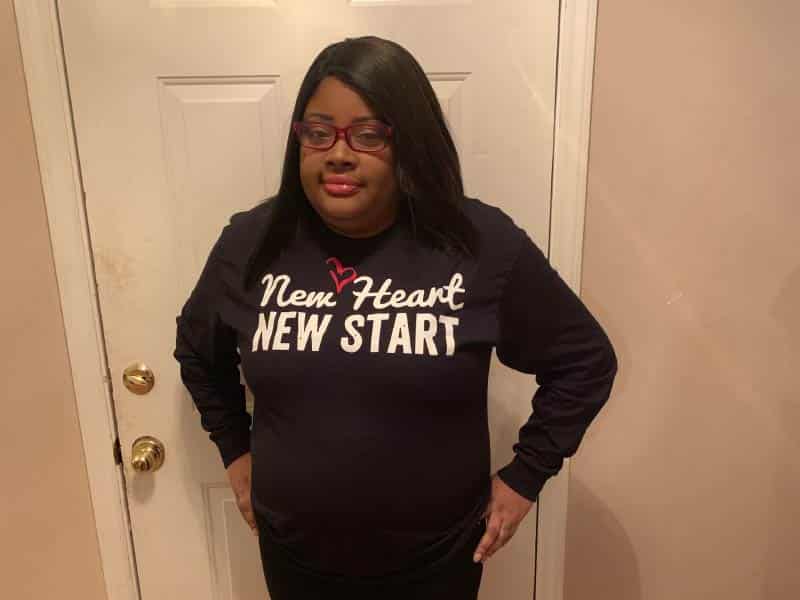 (Photo courtesy of Cherron Gilmore/Heart.org)
“I noticed that I was becoming more fatigued than usual and I had shortness of breath,” she said. “When I laid down it felt like somebody was sitting on my chest. We went to the doctor and they chalked it up to the pregnancy. But I had been pregnant twice before and it didn’t feel like those.”
She was eventually diagnosed with postpartum cardiomyopathy. Doctors said her heart would improve after her daughter was born. It didn’t.
Cherron’s fatigue and shortness of breath remained. On one of her many hospital visits, doctors presented her with a shocking ultimatum.
“They said, if we don’t put this LVAD (left ventricular assist device) in you right now, you won’t wake up tomorrow,” she said. “I didn’t have a choice.”
While her husband was at work, Cherron was whisked into surgery. She had the LVAD for about 18 months and her heart eventually strengthened enough for doctors to remove the device.
“For me, it was always about pushing through to let her know I was by her side,” said her husband, Geoffrey. “I tried not to show that I was worried (but) she said that she could see that I was worried.”
Cherron did well for about three years. “But … my heart failure came back,” she said. “And it came back with a vengeance.”
As her heart continued to weaken, doctors determined she needed a transplant. That began her frustrating odyssey of denials. Every time she would get her hopes up, they would be dashed with what seemed to her the oddest of reasons.
At one rejection, the outlook was so bleak that Cherron wrote goodbye letters to each of her children, ages 17, 13 and 8. She emailed them to her husband for delivery to the children after her death.
“I wanted them to know that I didn’t give up on them, my heart gave up on me…”
she said.
Instead of comforting her children, the letters became part of Cherron’s recovery process after her transplant.
“The social worker at VCU told me to delete those letters,” Cherron said. “So, we deleted them and we don’t have them anymore. Now I can tell them (the story) myself.”
Heart disease is the number one cause of both death and disability in women in the U.S. As a Black woman, you have an even higher chance of dying from heart disease—and at a younger age—compared to white women, according to the National Heart, Lung, and Blood Institute.
How big of a problem is this? About 49% of African American women over age 20 have some type of heart disease, like:
That means nearly 1 in every 2 Black women in the U.S. has heart disease.
Think about that: If you’re sitting in a room with another Black woman, that means one of you might have some type of heart disease—and you don’t even know it.


By subscribing, you consent to receive emails from BlackDoctor.com. You may unsubscribe at any time. Privacy Policy & Terms of Service.














