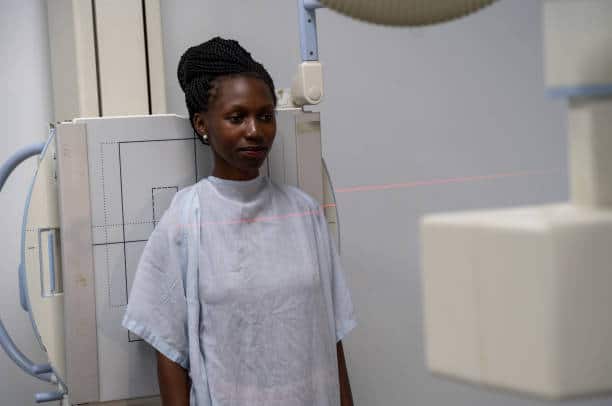
Experts recommend that women at least consider starting breast cancer screening once they turn 40. Now a new study suggests that is especially critical for Black women.
Looking at data on U.S. breast cancer deaths, researchers found — as other studies have — that Black women in their 40s were substantially more likely to die of the disease than other women their age. The disparity was seen between Black women and women of all other races and ethnicities studied.
That racial divide is a known one. This study took another step, trying to estimate the best starting age for breast cancer screening for women of different races and ethnicities.
RELATED: Dense Breasts? This MRI Screening Can Rule Out Breast Cancer
The upshot was that Black women should start sooner — a full eight years earlier than now recommended by guidelines from the U.S. Preventive Services Task Force (USPSTF).
Those guidelines say that women at average risk of breast cancer should start mammography screening at age 50. Based on the new findings, age 42 would be a better starting point for Black women.
Experts said the results are not enough to change breast cancer screening guidelines — which actually vary based on the group issuing them.
But they do emphasize that there’s “no one-size-fits-all” for every woman, according to Dr. Arif Kamal, chief patient officer for the American Cancer Society (ACS).
The society’s own recommendations differ from those of the USPSTF — a government-funded panel of medical experts. The ACS recommends yearly mammography screening starting at age 45 for all average-risk women. It also says that women between the ages of 40 to 44 should have the option to start yearly screening.
For its part, the USPSTF says women in their 40s should have the choice to start mammography screening if they want it.
Kamal said the new study findings largely align with the ACS recommendations for average-risk women — though they do not
give separate advice based on race or ethnicity.
“We strongly recommend that all women consider mammography screening from age 40 onward,” Kamal says.
For the study — published April 19 in JAMA Network Open — researchers analyzed U.S. government data on breast cancer deaths between 2011 and 2020.
They found that among women in their 40s, deaths from the disease were nearly doubled among Black women, compared with white women: The yearly death rate from breast cancer was 27 per 100,000 Black women, versus 15 of every 100,000 white women. Death rates were lowest among Asian, Hispanic and Native American women, at 11 per 100,000.
According to the researchers’ calculations, the average 42-year-old Black woman has already reached the same risk of dying from breast cancer as the average 50-year-old woman in the U.S. population as a whole.
RELATED: Can I Get Breast Cancer At 20?
So for Black women, it makes sense to start screening by that age.
The results won’t shake up any guidelines. Clinical trials are the best way to make any new screening recommendations that take race and ethnicity into account, says senior researcher Dr. Mahdi Fallah of the German Cancer Research Center in Heidelberg.
But that would take years, he notes. In the meantime, Fallah says, doctors can use this information when talking to patients about screening decisions. He pointed to the USPSTF recommendation that women in their 40s make that decision after discussing the risks and benefits with their doctor.
“This study provides the precise information that [doctors] would need for a race- and ethnicity-tailored starting age of
breast cancer screening,” Fallah adds.
Kamal says relatives’ history matters, too.
“We agree that screening should be individualized,” Kamal says, adding that family history is a key to that. He recommends that women of all races be aware of their family history of cancer — not only breast cancer — and share it with their doctor when talking about mammography screening.
To close the nation’s racial disparity in breast cancer deaths, though, Kamal says it’s important to look beyond screening.
“The completion of the screening mammogram is not where the disparity is,” he shares. Instead, Kamal says, Black women tend to face barriers in “what comes after screening” — including access to timely surgery and other treatments.
There are downsides to cancer screening, Fallah points out: A major one is that it can yield false-positive results that lead to unnecessary, sometimes invasive, follow-up tests, as well as anxiety.
And earlier or more frequent screening raises the odds of those downsides.
But the risk should also be seen in context, says Dr. Kathie-Ann Joseph, a surgical oncologist at NYU Langone’s Perlmutter Cancer Center in New York City.
Women undergoing screening mammography, she says, “get recalled for additional imaging about 10 percent of the time, and biopsies are needed in one to two percent of cases, which is quite low.”
“This has to be compared to the lives saved from earlier screening mammography,” says Joseph, who was not involved in the study.
She adds that “earlier screening can have other benefits, by allowing women of all racial and ethnic groups to have less-extensive surgery and less chemotherapy, which impacts quality of life.”
Your risk for developing breast cancer can differ from other women and also change over time no matter your age, so it is best to consult with your doctor.


By subscribing, you consent to receive emails from BlackDoctor.com. You may unsubscribe at any time. Privacy Policy & Terms of Service.