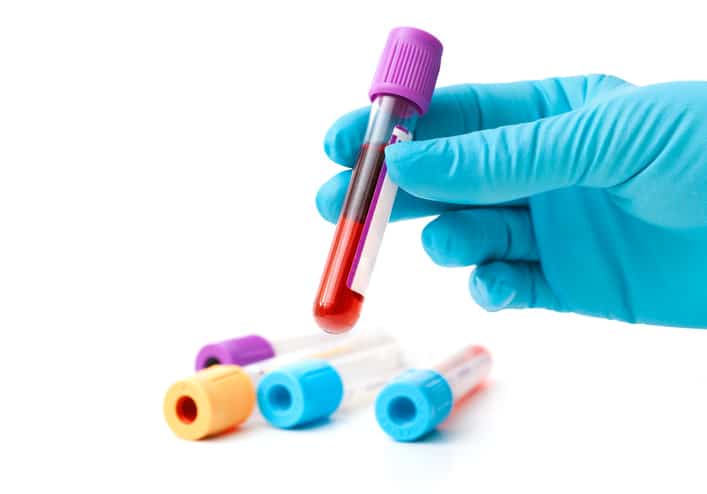
British researchers say a simple blood test may be a cheap, easy and effective way to spot risk of recurrence of a common form of acute myeloid leukemia (AML).
This type of AML is characterized by a mutation in the NPM1 gene. A third of AML patients have this form of the deadly blood and bone marrow cancer.
Despite aggressive chemotherapy, a certain percentage of patients with this mutated gene will see their disease return. And many would benefit from a pre-emptive, lifesaving bone marrow transplant — sometimes called stem cell transplantation, the researchers noted.
But a transplant ultimately destroys not only the marrow’s cancerous cells but healthy tissue as well. So, doctors have long sought a reliable way of separating those in true need of a transplant from those who would likely fare well without one, the researchers said.
The problem: Accurately pinpointing the highest-risk patients has proven difficult, with doctors typically forced to rely on costly and time-consuming genetic testing of extracted tumor tissue.
Enter the so-called “Minimal Residual Disease” (MRD) test.
MRD testing is designed to help doctors screen for patients whose post-chemotherapy blood contains a telltale sign of the NPM1 gene mutation. Those who have that sign are at high risk for recurrence of the leukemia, and need a transplant, the researchers explained.
The test is now being used in a number of European countries, said study author Dr. David Grimwade. He is a professor of molecular haematology in the department of medical and molecular genetics with the Cancer Genetics Lab at King’s College London.
“We are using it to guide transplantation in the current U.K. national trial for younger adults with AML,” he said.
Grimwade and his colleagues tried the test (which is not yet approved for use in the United States) on more than 2,500 blood samples obtained from nearly 350 patients with the NPM1 mutation.
At the same time, standard genetic testing was conducted on almost 275 other blood samples.
“Our key finding,” said Grimwade, “is that the MRD test — which is pretty cheap and easy to apply — provides a much more powerful predictor of patient outcome in this group of AML patients as compared to genetic profiling of the tumor sample, which is a much more expensive test.”
The investigators said the test found evidence of a high risk for disease recurrence in 15 percent of the tested samples, following a second round of chemotherapy. Finding that evidence suggested a more than 80 percent chance of disease recurrence after three years. This compared with just a 30 percent risk of disease recurrence among the other AML patients.
The study findings were published in the Jan. 21 issue of the New England Journal of Medicine.
In the end, Grimwade said his team concluded that the MRD test “provides a far stronger predictor of patient outcome than the standard tests used to determine whether a patient should have a stem cell transplant or not. We also show that serial MRD testing after completion of therapy can pinpoint precisely which patients are destined to relapse, allowing the opportunity for early intervention preventing full-blown relapse from occurring.”
Dr. Michael Burke, author of an accompanying editorial in the journal, said the finding is important given that “a relapse in AML is almost certain death.”
“And this study,” he added, “points out that you can actually follow very, very low levels of leukemia using this NPM1 marker, and that those patients in whom it disappears after a couple of cycles of chemo will do exceedingly well. They don’t need a bone marrow transplant. But those with high levels of this marker after two rounds of chemo fare terribly and really should go on to have the transplant. So, this is very encouraging news.”
Burke is director of the Leukemia Lymphoma Program at the Children’s Hospital of Wisconsin in Milwaukee.
More information
There’s more on acute myeloid leukemia at the U.S. National Cancer Institute.
SOURCES: David Grimwade, M.D., Ph.D., professor, molecular haematology, department of medical and molecular genetics, Cancer Genetics Lab, King’s College London, England; Michael Burke, M.D., associate professor, department of pediatrics, division of hematology and oncology, blood and marrow transplantation, Medical College of Wisconsin, and director, Leukemia Lymphoma Program, Children’s Hospital of Wisconsin, Milwaukee; Jan. 21, 2016, New England Journal of Medicine, online.
Copyright © 2016 HealthDay. All rights reserved.


By subscribing, you consent to receive emails from BlackDoctor.com. You may unsubscribe at any time. Privacy Policy & Terms of Service.