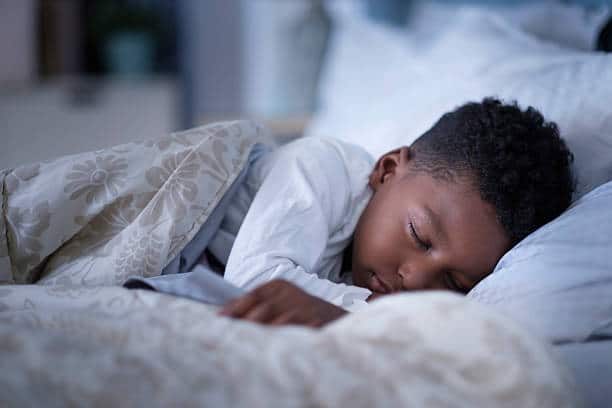
Black children are four to six times more likely to develop obstructive sleep apnea (OSA) compared to white children. Black adults younger than 26 have an 88 percent higher risk of OSA, according to the National Center for Biotechnology Information. For teens who have had OSA since childhood, this could potentially lead to future complications. New research shows that teens who’ve had sleep apnea since childhood have a much higher risk of high blood pressure than those who never had sleep apnea.
“Our study showed that pediatric sleep apnea can act as a gateway to future hypertension,” study author Julio Fernandez-Mendoza, an associate professor in Penn State’s Sleep Research and Treatment Center says.
The researchers assessed 421 children ages 5 to 12 and found that about 12 percent had OSA. The participants were assessed again eight years later for sleep apnea and high blood pressure.
Teens who had sleep apnea since childhood were nearly three times more likely to develop high blood pressure than those who never had sleep apnea. In a bit of good news, teens whose childhood sleep apnea improved as they got older didn’t have an increased risk of high blood pressure.
“Because most cases of sleep apnea go undiagnosed in adults and children alike, the problem needs more attention. Sleep apnea and its risk factors should be screened for, monitored and targeted early in life to prevent future cardiovascular disease,” Fernandez-Mendoza adds.
READ: Sleep Apnea 101: Everything You Need To Know For A Better Sleep
Participants whose sleep apnea began as teenagers were nearly twice as likely to develop high blood pressure as those without sleep apnea.
These teens were more likely to have a specific form of high blood pressure called orthostatic hypertension. It occurs when standing up quickly from a
prone position and is considered a strong risk factor for heart disease in adulthood.
The findings highlight the seriousness of sleep apnea in children and the importance of early treatment, according to the researchers.
Most research on sleep apnea in youngsters focuses on effects such as sleepiness, hyperactivity and thinking, Marishka Brown the director of the NHLBI’s National Center on Sleep Disorders Research notes.
“There is limited data on either the short- or long-term impact on cardiovascular risk in this population,” she says. “The new findings address this knowledge gap and raise awareness of sleep-disordered breathing in children as a public health problem.”
Obstructive sleep apnea causes people to briefly and repeatedly stop breathing during sleep. It occurs mostly in adults, but an estimated 10 percent of school-aged children may also have it. Almost half of children with sleep apnea outgrow it by the time they reach their teens, but it remains a chronic problem in the other half, the researchers add.
In order to help your child it’s important that you know the symptoms and risk factors:
Keep in mind that children with pediatric OSA don’t always snore. Sometimes children may just have disturbed sleep and show the following symptoms:
Obesity is just one of many risk factors that can give your child a higher risk of developing OSA:
As with any condition, it is important to get your child screened and monitored early to prevent any future complications such as heart disease and high blood pressure. You should monitor your child’s sleeping habits if they exhibit any of the symptoms or risk factors. If your child consistently wakes up in the morning feeling tired and has behavioral problems, you should consult with your child’s doctor.


By subscribing, you consent to receive emails from BlackDoctor.com. You may unsubscribe at any time. Privacy Policy & Terms of Service.