Slick Woods, who you may know as Rihanna’s muse for Fenty, recently revealed that she has been diagnosed with Stage 3 Melanoma. On Tuesday, the 24-year-old model and recent star of Love & Hip Hop Hollywood revealed that she is currently undergoing chemotherapy for cancer.
If you’re unfamiliar with this young go-getter, Slick Woods, also known by her real name, Simone Marie Thompson, made headlines as she walked the 2018 Savage X Fenty runway in pasties and lacey lingerie as a 9-month pregnant woman (going into labor immediately after her strut across the stage).

Back in July of 2019, Woods had no idea that a routine dental appointment would leave her with a life-altering diagnosis. During an appointment, her dentist noticed suspicious spots, and took samples for further analysis. Soon after, she received the call informing her that she had stage 3 melanoma.
“I just dropped the phone. I couldn’t even cry,” the 24-year-old recalled in a phone interview. “It was so scary. The first thing I said to my doctor was at least I’m bald already.”
Woods posted a photo of herself and her Love & Hip Hop castmates with a caption that read, “How I feel about chemotherapy, shout out to everyone that gotta go through it. #atleastimalreadybald.”
View this post on Instagram
After this post, The Shade Room reached out to Slick and was able to confirm that she is, in fact, battling with Melanoma. She says that she is “currently fighting for her life” and that she is battling with stage 3 melanoma cancer as it spreads.
What Is Melanoma?
Melanoma is a type of skin cancer. It can lead to death if left untreated. Because Woods was diagnosed at stage 3, it’s likely that chemotherapy was suggested as an immediate treatment because, at this stage, the cancer has typically already spread to the lymph nodes.
What’s Next For Slick Woods?
After her diagnosis was revealed, there was an immediate outpouring of love and support from fans, friends, and other professionals in the entertainment industry. Stars like Taraji P. Henson have since reached out to her, stating, “You are already on the other side of this, healthy and strong like it never happened. I adore you.”
She has support flowing from all sides, friends, family, and fans alike, as she fights this aggressive disease. Although
she’s going through a challenging time, Woods wants her fans and loved ones to know that she’s no victim.
View this post on Instagram

Jasmine Danielle is the Associate Editor of BlackDoctor.org. She received her BFA in Dance Education & Performance from the University of Illinois at Urbana-Champaign and has since done work as a certified fitness & wellness educator, blogger, dancer, and designer.
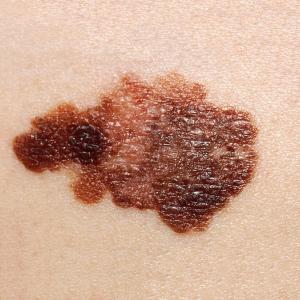
Melanoma is the skin cancer that took the life of the legendary reggae singer, Bob Marley, at the age of 36. It is the most dangerous type of skin cancer. It originates from pigment-containing cells called “melanocytes”, located in the basal segment of the epidermis. These are the cells that make melanin.
There is a myth in the African American community that skin cancer cannot occur the darker your skin is, hence the reason why most African Americans don’t wear sunscreen.
Having melanin doesn’t mean that you can’t get melanoma. Although it is true that black people are less likely to get Melanoma, we, however, are more likely to die from it. Melanoma presents at a rate of 22 per 100,000 in Caucasians and 1 per 100,000 in African Americans. However, African Americans usually present with advanced disease at the time of diagnosis, compared to Caucasians.
In fact, about 52% of African-Americans and 26% of Hispanics find out they have melanoma when it has already spread, compared with 16% of white people.
What Causes Melanoma?
Exposure to ultraviolet (UV) radiation from sunlight or tanning lamps and beds increases your risk of developing melanoma.
Additionally, other factors such as genetics or environmental influences may occur on parts of the body rarely exposed to the sun. For example, people who have dark skin are more susceptible to acral lentiginous melanoma, which is an especially dangerous form of melanoma that typically appears on the palms of the hands and soles of the feet.
While melanoma is not the most common of skin cancers, it causes the most deaths. Therefore it is important to know the signs of skin cancer because melanoma can be treated successfully if it is detected early.
A Few Things That Can Reduce Your Risk of Developing Melanoma:
-Take note of any new moles or spots on your skin, especially if it changes in size, color or shape.
-Reduce your exposure to UV radiation whether it is from the sun or from tanning beds.
-Wear a water-resistant sunscreen with SPF 30 or higher. Even if your skin doesn’t “burn” you can still incur skin damage.
-If possible stay in shaded areas between 10:00 am and 4:00 pm when the sun’s UV rays are the most intense.
-Check your own skin regularly (at least monthly) for any new marks, moles or spots, including the soles of your feet, the palms of your hands and even under your nails.
-Make sure to get skin checks at least once a year by a dermatologist. As a general rule, if you spot something abnormal or a change in an existing mole/lesion/birthmark, don’t overlook it and don’t delay seeing a physician.

Dr. Eva Beaulieu (IG: @dr.evab) has practiced medicine for 11 years as an Internal Medicine Hospitalist. She specializes in treating patients with High Blood Pressure, Diabetes and Obesity in Atlanta, GA.


By subscribing, you consent to receive emails from BlackDoctor.com. You may unsubscribe at any time. Privacy Policy & Terms of Service.