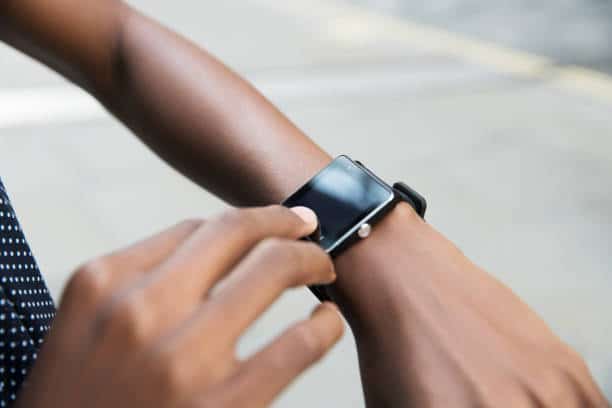
Millions of Americans use smartwatches or fitness trackers to check on their heart rate, but the accuracy may fall short for people of color, a new research review finds.
The analysis, of 10 published studies, found that in four of them, wearable devices were clearly subpar in gauging the heart rate of people with darker skin tones. Two other studies found that to be true of some devices they assessed, but not all.
RELATED: Fitbit Recalls Over 1 Million Smartwatches Due to Burn Hazard smartwatches
The researchers said the discrepancy is a concern, since Apple Watches, Fitbits and other “wearables” are not only being used to track workouts.
The Apple Watch, for example, can send users a notification when their heart rate is abnormally high or low, or when they have potential signs of atrial fibrillation — a common heart rhythm disturbance.
“Now these devices are being promoted as a way to monitor your health,” says Dr. Daniel Koerber, the lead researcher on the study and a resident physician at the University of Alberta in Edmonton, Canada.
That means inaccuracies could lead to unnecessary medical visits for a heart rate that seems too high or too low, Koerber shares.
While people with concerning readings should talk to their health care provider, he says, it’s also important to be aware of the lesser accuracy for people with darker skin.
“I do think we need to take these readings with a grain of salt,” Koerber shares.
Koerber is scheduled to present his findings April 3 at a meeting of the American College of Cardiology (ACC) in Washington, D.C. Studies reported at meetings are generally considered preliminary until published in a peer-reviewed journal.
Fitness wearables are everywhere. A 2020 survey by Pew Research found that 21% of U.S. adults said they regularly use
a smartwatch or fitness tracker; that included 26% of Hispanic and 23% of Black adults.
The issue of the devices’ accuracy across skin tones is not new. The studies in the current review date back to 2015, according to Dr. Koerber.
The problem stems from the basic technology used in most wearables. It measures heart rate by analyzing blood volume changes in the blood vessels, via light that passes through the skin. That light is usually green light.
And green light differs from the infrared light used in medical-grade monitors, says Dr. Nishant Shah, co-chairman of the ACC’s digital health and devices work group.
Green light has a shorter wavelength, Shah explains, and it’s more readily absorbed by melanin, the pigment in skin. The upshot: Darker skin blocks more green light, which can dampen the accuracy of the devices’ measurements.
Shah agrees the discrepancies are a concern, in part because the devices are being used in employee wellness programs and the like. Many companies incentivize employees’ use of fitness trackers with financial perks, like extra vacation days or even lower health insurance premiums.
“People need to be aware that there are some limitations for people with darker skin tones when using these devices,” Dr. Koerber adds. “Algorithms are often developed in homogeneous white populations, which may lead to results that are not as generalizable as we would like.”
RELATED: This New Technology Can Predict Heart Failure smartwatches
“It is important to explore alternative options to make sure we can create a more equitable solution in health care and not just in the consumer industry,” Dr. Koerber adds. “For example, there is some evidence to suggest that certain wavelengths of light, particularly green light, are more accurate in people across all skin tones.”
Device manufacturers are aware of the issue, Shah says, and based on the information they’ve made public, have taken some steps to address it (such as adjusting algorithms). Apple has said its technology uses both green light and “intermittent” infrared light, Shah notes.
What’s unclear at this point, he says, is whether any technology tweaks have indeed made the devices more accurate for people with darker skin.
“It’s a little frustrating,” he adds, “because we can’t be certain these devices work equally well for all of our patients.”
Still, Shah says he is “generally supportive” of incorporating wearable technology into health monitoring, and that its use is evolving.
“I do think these devices are generally getting better over time,” he notes.
RELATED: Can You Tell If Your Own Heart Is Failing? smartwatches
He agrees that for now, people should be aware their device may not be on the money for their skin tone. One way to check, Shah notes, is to take your device to your next medical appointment, and see if its readings match what your provider is getting.
The current findings are based on 10 published studies, involving a total of 469 participants. Not all found heart-rate inaccuracies based on skin tone, but the studies also had limitations, Koerber shares. Some were quite small, and actually involved few people with darker skin.
Koerber says the findings underscore the importance of doing research to ensure digital technologies serve diverse groups of people.
“Ongoing research and development of these devices should emphasize the inclusion of populations of all skin tones so that the developed algorithms can best accommodate for variations in innate skin light absorption,” Koerber says.


By subscribing, you consent to receive emails from BlackDoctor.com. You may unsubscribe at any time. Privacy Policy & Terms of Service.