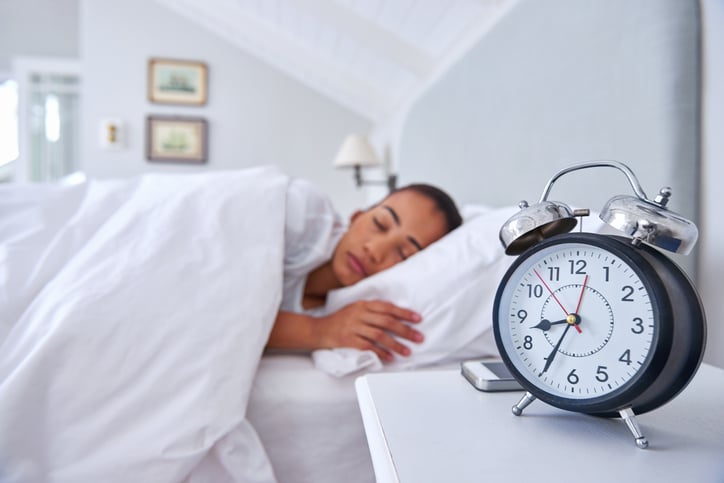
Are you living that jet set life? Maybe you’re more into catching flights instead of feelings, but trying to catch up on the sleep you’re missing could mess with your heart, according to new research.
What is Social Jet Lag?
Coined in 2006 by researchers studying the ways in which social schedules mess with our natural rhythm, social jet lag, like the tiredness one feels when traveling between time zones, occurs when you set a specific sleep pattern during the work week only to throw it all away by crashing a little bit longer on your days off (weekends). According to experts, this royally messes with your circadian rhythm. In other words, while your body grows accustom to one kind of sleep-wake pattern during the week, come Monday you may feel like you were hit by a Mack truck because that pattern was drastically disrupted on the weekend.
“A lot of people will be waking up at 7 a.m. on weekdays, but going to bed later and sleeping in on the weekends to compensate,” study leader, Sierra Forbush at the University of Arizona in Tucson recently told New Scientist.
For the study, Forbush and her team surveyed about 984 adults — ages 22 to 60 — living in Pennsylvania. To calculate how much social jet lag they experienced each week, Forbush found the midpoints between when people said they went to bed and woke up on weekdays and weekends.
After adjusting several factors, including for how long people slept each week, and whether they suffered from insomnia, the team discovered that “for every hour of social jet lag, there was an 11 percent increase in the risk of cardiovascular disease.” There was also a link to increased sleepiness and fatigue, as well as being moody.
How Social Jet Lag Impacts Your Health
In 2016, the Centers for Disease Control and Prevention (CDC) found that more than one third of Americans are not getting the recommended seven hours of sleep on a regular basis.
Meanwhile, Forbush’s study found that individuals who experienced just one hour of social jet lag each week were 22 percent more likely to rate their health as good, rather than excellent, and 28 percent more likely to rate it as fair or poor.
“Physicians often tell people to think about their diet and exercise, but I think this offers an additional preventative strategy,” says Forbush, whose results were presented at the SLEEP meeting in Boston. “It’s not just about getting enough sleep, but getting regular sleep: ideally you want to be going to bed and waking up at the same time every day of the week.”
Of course, this isn’t the first study to link social jet lag and lackluster health. “There are studies indicating that chronotype – a person’s biological inclination towards morning or evening preference – may influence risk of cardiovascular disease, and evening types may be more at risk,” Tami Martino, of the University of Guelph in Ontario, Canada told
The study argues that it’s not our weekend tendencies that need to be tweaked, but our habits. For example, late sleepers should arrange their work schedules to accommodate their late-rising biological needs.
The American Academy of Sleep Medicine and the Sleep Research Society, “recommend that adults aged 18–60 years sleep at least 7 hours each night to promote optimal health and well-being. Sleeping less than seven hours per day is associated with an increased risk of developing chronic conditions such as obesity, diabetes, high blood pressure, heart disease, stroke, and frequent mental distress.”


By subscribing, you consent to receive emails from BlackDoctor.com. You may unsubscribe at any time. Privacy Policy & Terms of Service.