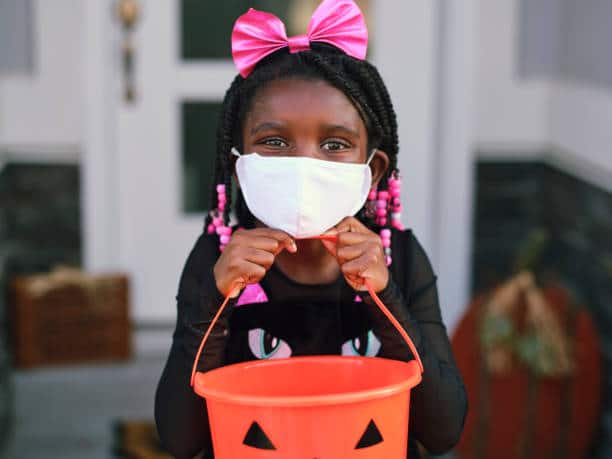
Halloween originated from several customs, the earliest of which dates back to Ireland in the fifth century B.C. As we know it today, the Oct. 31 celebration is a fun way to dress up in sometimes scary costumes. But experts warn that precautions are needed to ensure that disguises are the only frightening things on All Hallows’ Eve.
As COVID-19 continues to grip the United States, parents need to plan ahead to keep their children safe on Halloween, experts say.
Kids aged 12 and older are eligible for COVID shots, but many haven’t been vaccinated. Those under 12 aren’t yet eligible for vaccination.
“Some families organized a family movie night, held virtual costume parties, or built special candy-delivering chutes to maintain physical distancing last year,” Phoenix pediatrician Dr. Gary Kirkilas says in an American Academy of Pediatrics (AAP) news release.
“Parents don’t necessarily need to do anything elaborate this year to make Halloween safe, but I would consider building on the successes of last year and staying mindful of keeping activities small and outdoors when possible,” he adds.
RELATED: 8 Healthy Delicious Halloween Treats!
Here are some COVID friendly Halloween tips:
Dr. Kirkilas suggests limiting trick-or-treating to small groups and outdoors, where the virus is much less likely to spread. Kids should avoid large groups and gathering near front doors or in driveways.
If you’re handing out treats, consider sitting outside and lining up individually prepackaged goodies on a table for children to take. Non-edible treats such as stickers, glow sticks, temporary tattoos and colored pencils are good options for trick-or-treaters with allergies.
If you’re taking kids under 12 to a party or community event, make sure they wear face masks and follow physical distancing rules. Masks should cover the
mouth and nose and fit snugly against the sides of the face without gaps.
In areas with high numbers of COVID-19 cases, everyone should wear face masks indoors, regardless of vaccination status, according to the U.S. Centers for Disease Control and Prevention.
Parents need to remember that a costume mask is not a substitute for a cloth one to protect against COVID-19 transmission.
Parents: 10 Tips For A Diabetes-Friendly Halloween
After kids return from trick-or-treating, they should wash their hands, and parents should inspect their candy to ensure that packaging is not ripped or torn and nothing has been tampered with. The nonprofit children’s health organization, The Nemours Foundation, says to stick with wrapped candy; fresh fruit is easily tampered with and may be covered with bacteria that could make your child sick. Throw away homemade treats.
“The best way to protect children from COVID-19 is to start at home and make sure everyone in the family who is eligible to be vaccinated gets the vaccine,” Kirkilas says. “This adds a layer of protection, along with masking, for those too young to be vaccinated and helps provide peace of mind that everyone in the family can enjoy a safe and healthy Halloween.”
Besides COVID, the following tips will also keep your child safe during Halloween:

The No. 1 cause of injuries on Halloween night is accidental falls from tripping over hems of costumes, steps, curbs, or unseen objects, according to the National Safety Council. But even more startling is that four times more children are killed annually in pedestrian/automobile accidents on that holiday night than on any other night of the year, reports the CDC.
“The most important thing on Halloween is that children are escorted and watched. They have a great potential of running from in front of or behind a car,” says Richard Douglas, a Lewisville, Texas Police Department community relations officer. “We prefer that the young ones are in from trick or treating before dark.”
Indeed, the CDC reminds parents that the return from daylight saving to standard time lengthens the period of darkness and that a number of other factors could put children in the path of a car. These include their short stature, inability to react quickly enough to avoid a car or evaluate a potential traffic threat, lack of impulse control, and distractions because of shouts from other children, eye-catching costumes, and urges to acquire the best candy.
“Children are so excited on that night that they aren’t
using their normal safety sense,” says Kerri Totty, a certified hand therapist at Harris Methodist Fort Worth Hospital.
RELATED: 5 Halloween Treats That Won’t Ruin Your Diet
Totty deals with some of the injuries that children and their parents may receive during the days leading up to Halloween as well as on the holiday itself, such as cuts and burns related to turning a pumpkin into a jack-o-lantern.
“We see a lot of kitchen knife injuries. These can be devastating because of the structures in the hand,” Totty tells WebMD. These include tendons, nerves, and arteries. She says that major therapy is required when the tendons and nerves are severed when a child or adult uses an inappropriate knife or uses one incorrectly. Physical therapy to prevent scarring from permanently disabling a hand can last for eight to 12 weeks.
“Usually these injuries happen because [people are] not paying attention to what they’re doing or they’re cutting toward themselves, or using the knife like an ice pick,” Totty says, adding that knives should be clean because the bacteria on them can cause a major infection in any cut.
For adults, the medical experts advise using sharp knives; small children should just draw the jack-o-lantern design on the outside of the pumpkin with a marker and let someone older do the cutting. Youngsters who are old enough could use knives intended for carving pumpkins.
“With my own children, I let them use the special pumpkin cutters that have the serrated edges. These work as well as anything,” says Mark Mason, MD, a plastic surgeon at Harris and also at the Cook Children’s Medical Center in Fort Worth.
#SquadGoals: 9 Halloween Costumes For The Crew
Safety organizations warn parents and trick-or-treaters alike to be aware of other dangers:
Finally, therapist Totty says, “You have to be their eyes and ears to protect them. And don’t allow them to gobble down candy as they’re running down the street!”


By subscribing, you consent to receive emails from BlackDoctor.com. You may unsubscribe at any time. Privacy Policy & Terms of Service.