
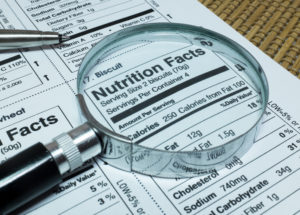
Have you seen the new Nutrition Facts label? Last year the U.S Food and Drug Administration finalized a new Nutrition Facts label that will make it easier for you to identify and compare products with added sugar and enable you to make healthier choices. While most food manufacturers have until 2019 to change their labels, many have already done so. For the over 30 million people living with diabetes in the U.S., that’s really good news!
Have you ever wondered why there are carbs in frankfurters, bologna or other processed meats? Why your blood glucose levels go up higher than usual after eating them? Hidden sugar is most likely the cause. Often times, food manufacturers list these ingredients using unfamiliar terms like maltose or levulose. Adding to the confusion – particularly if you have diabetes, the current label doesn’t distinguish between added sugars and naturally occurring sugars.
“Although people with diabetes need to count carbs from all sources, it’s important to distinguish between natural and added sugar,” says registered dietitian Bonnie Taub-Dix, MA, RDN, CDN, creator of BetterThanDieting.com and author of Read It Before You Eat It! “Natural sugars are the sugars that are naturally occurring in food—like lactose (the sugar in milk) and fructose (the sugar in fruit). Added sugar is, literally, added by the manufacturer—like the sugar that’s added to sauces and fruit canned in syrup.”
The new label clears up the confusion by listing added sugars separately from naturally occurring sugars. Added sugars are no longer hidden and can be found under “total sugars” on the Nutrition Facts panel. As a reminder, naturally occurring sugars come with many nutritional benefits like the fiber in fruit and the calcium in milk and can be part of a healthy diabetes meal plan. On the other hand, when manufacturers add sugar to foods they’re not increasing nutritional value, just boosting calories.
The 2015 Dietary Guidelines for Americans recommend you keep your intake of added sugars to less than 10% (e.g., 200 calories if you consume 2,000 calories in a day) of your total daily calories. If “added sugars” is not yet on the label you’re reading use the ingredient list to find added sugars. Taub-Dix says sugar is a “master of disguise” and can appear as brown sugar, maple sugar, corn sweetener, corn syrup, honey, malt syrup, and molasses.
Bottom line. The new Nutrition Facts label will list the amount of added sugar under the “total sugar,” which will help you better manage your diabetes. Naturally occurring sugars, such as those in fruit or milk, are not added sugars.
Added sugars are not the only change to the label. Serving size and calorie information have also been updated:
Serving Size
Servings per container and serving size are now in bolder type. Serving sizes have also been updated to be more realistic to reflect what people actually eat and drink today. However, it’s important to note that the serving size does not necessarily reflect the best portion for you. “In the past, your package may have said, 1/2 muffin was a serving size, while now it might say, 1 muffin. But if that muffin is 500 calories, you may need to proceed with caution and take a look at the carb, sugar, and fat count as well as calories to see what that product is composed of,” says Taub-Dix.
Calories
The calorie information tells you the number of calories in a single serving. The new label will have larger, darker letters to make it easier to see the calorie information. When it comes to health outcomes, the type of fat you eat matters more than the overall amount of fat. For this reason, the label will no longer show the percentage of “calories from fat,” but will show percentages from the unhealthy saturated and trans fats.
If you’ve attempted to read the Nutrition Facts label in the past and failed to understand the information, then you’re not alone. Although the new Nutrition Facts label is a lot easier to understand you may still have questions. In Taub-Dix’s new book Read It Before You Eat It! she helps you understand how to read labels and select the right food to help you live well with diabetes.
 Constance Brown-Riggs, MSED, RD, CDE, CDN is a registered dietitian, certified diabetes educator, national speaker and author of The African American Guide to Living Well with Diabetes. Her new book “Diabetes Guide to Enjoying Foods of the World” will be released in January 2018. She is a spokesperson for OneTouch.


By subscribing, you consent to receive emails from BlackDoctor.com. You may unsubscribe at any time. Privacy Policy & Terms of Service.














