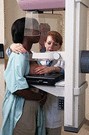
(BlackDoctor.org) — Breast cancer is one of the most common cancers in women. Because not all lumps necessarily mean cancer, and not all cancers can be detected by touch/physical examination, until it becomes large enough, a mammogram is the best way to detect cancer early.
Although it is not 100% accurate, the mammogram can:
• Detect lesions in their very early stage
• Detect lesions that are not palpable
• Detect lesions before they are palpable
• Give important information about the “lump” or change you or your doctor feels
Regular mammograms may therefore give you a better chance of picking up early breast cancer than the occasional mammogram.
So what myths/questions are stopping you from making your appointment?
It’s Too Painful
You will feel some pressure as the mammogram is performed, but any discomfort will only last a few seconds. Because breasts are more sensitive just before your menstrual period, you should try to schedule your mammogram seven to 10 days after the start of your period.
I Can’t Afford It
Routine mammograms in women over age 40 are considered preventive care and are covered by most insurance companies. If you have Medicare, Medicare will help pay for a mammogram once a year. There are also state and federal programs to help women pay for a mammogram every year. You can call the American Cancer Society toll-free, 800-227-2345, for more information.
I’m Not At Risk For Breast Cancer
“If you’re a woman, you’re at risk for breast cancer,” says Dr. Gregory. “Almost 70 percent of women with breast cancer have no known risk factors.”
I Don’t Feel A Lump Or Have Any Symptoms
The reality is, screening mammograms are for women with NO lumps or other symptoms. The best time to find cancer is before you can feel it.
A mammogram can detect cancer as much as a year or two before you or your physician could feel it. Breast cancer found in its earliest stages offers the greatest chance of remission and survival.
I Don’t Know Where To Go
By doing a little research and asking the right questions, you can ensure you’re receiving a high-quality mammogram. The American Cancer Society recommends that you:
• Ask to see the FDA certificate that is issued at the center. The FDA requires that all facilities meet high professional standards of safety and quality.
• Use a facility that specializes in mammograms and does many mammograms a day.
• If you are satisfied with the quality, go to the same facility on a regular basis so your mammograms can be compared from year to year.
Isn’t The Radiation Dangerous?
With modern mammography machines, the high-quality images produce a low amount of radiation. “Strict guidelines are in place to ensure that the equipment uses the lowest dose of radiation possible,” says Dr. Gregory. “The doses are very small and tightly regulated by the FDA.”
My Self-Exams and Annual Checkups Are Enough For Me
Mammography can typically spot lesions one-fifth the size of those that can be felt by hand during self-examination or clinical breast examination by a healthcare professional. For example, an experienced examiner can feel a lump the size of a small pea. Mammography can find a lump the size of a grain of rice. Overall, mammography can pick up about 40% of cancers that are too small to detect by touch on clinical examination.
My Doctor Did Not Recommend a Mammogram
In most studies, they have found that the reason women most frequently give for not having a mammogram would be whether their primary health care doctor suggested it. If your doctor does not suggest mammography and you are in the correct age group and if you have some risk factors, it will be up to you to raise the issue.
I Am Too Young For a Mammogram
Although in screening programmes, the age of 40 or 50 is always mentioned, any person who has signs or symptoms suggestive of breast cancer needs appropriate evaluation, regardless of age. Even males with suspected breast cancer undergo mammograms. In addition, if breast cancer runs in your family and tends to occur early, you may need a different recommendation for mammography. Always consult your doctor or a radiologist.
Why Have a Mammogram When It Is Not 100% Accurate?
No test in medicine is 100% accurate. However, all results are interpreted with their limitations and limits of accuracy in mind. For example, the ECG (electrocardiogram) done for a patient with chest pain may be normal (rarely so) even if the patient is suffering from a heart attack. An exercise stress test for the heart may only pick up about 70% of those with narrowing (stenosis) of the heart blood vessels of more than half its diameter.
Remember that most African American women should have their first baseline mammogram at age 35. Talk to your doctor to get the help and information that you need that’s right for you.
body { background: #FFF; }


By subscribing, you consent to receive emails from BlackDoctor.com. You may unsubscribe at any time. Privacy Policy & Terms of Service.