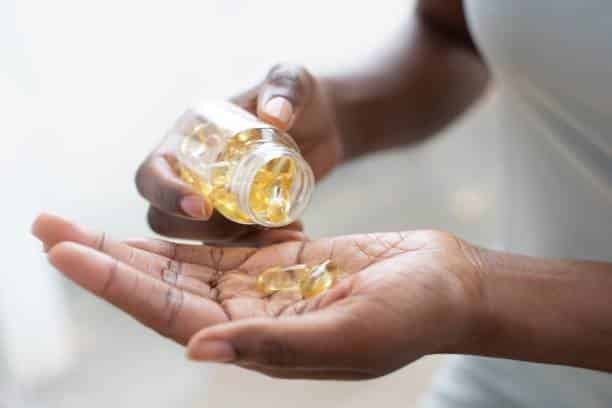
When trying to be healthier, one of the first moves should be to cut out overly processed food that doesn’t offer nutritional value and replace it with vitamin-rich veggies, fruits, and other goodies. In addition to making a big impact on your gut, the type of nutrients you digest also plays a factor in your outer appearance.
When you lack certain supplements and vitamins, your body and face will show it, says board-certified dermatologist Dr. Papri Sarkar.
“Vitamins are organic compounds that are necessary for normal growth and nutrition that our bodies can’t make themselves. If you don’t ingest or absorb them accordingly, you’ll be deficient and might be faced with unpleasant symptoms like brittle nails and even hair loss.”
With the recent boom of beauty supplements, researchers have touted the benefits as alleviating inflammation, fighting stubborn acne breakouts, and even minimizing those wrinkles and fine lines.
RELATED: 5 Vitamins That Can Shrink Your Bloated Belly
However, popping a pill and expecting instant results isn’t the right mindset to adopt. After all, as with regular vitamins that target various internal rhythms within our bodies, supplements are meant to nourish our skin from the inside out. With a bit of research and solid advice from trusted dermatologists, here’s DermStore.com’s essential guide to the right vitamin set you should be taking this summer:
RELATED: 5 Stress Reducing Vitamins & Supplements
If you’re a lifelong acne sufferer, you know how frustrating it is to wake up to an oversized zit. Dr. Sarkar says vitamin A should be your new go-to supplement since it has been known to get rid of acne. She suggests starting with your diet by adding in vitamin A-rich foods, including butter, red meat, and eggs.
If your acne is on the severe side, Dr. Sarkar says that zinc can be another powerful player in clearing out your pores. “Zinc is an important part of wound healing and often acne lesions are inflamed and have openings in the skin barrier, so it’s possible that an anti-inflammatory or wound-healing effect is responsible for the benefit,” she explains.
Proceed with caution, since too much zinc and vitamin A can cause nausea, vomiting, and headaches, so start with small doses.
Another option? Probiotics. Esthetician, makeup artist and global educator for Jane Iredale, Hannah Hatcher, explains that when the bacteria within our tummy is imbalanced it allows bacteria to thrive. This causes inflammation and sprouting acne. Probiotics help with this, especially those formulated for those who eat dairy and those who don’t. Taking one a day could help everything run smoothly—including your pores.
While the condition of your skin and its softness will vary by season, cosmetic dermatologist Dr. Sejal Shah says that if dryness persists, you need to up your vitamin D intake.
Along with promoting healthy bone growth, “this vitamin can [also] improve hydration since lower vitamin D levels have been associated with lower skin moisture and eczema,” she explains.
She also adds, “Vitamin D likely improves dryness by improving the skin barrier function.” Another option is to eat more foods rich in this mineral—like fatty fish, milk, and cheese—or use a moisturizer or serum formulated with this all-star vitamin.
Fatty acids are another great addition. Why? Our lipid bilayer (membranes that protect our cells) is made up of fatty acids, among other components. When we are dry or dehydrated, these fatty acids evaporate more quickly, leaving behind flaky dry skin.
“Omegas that are rich in essential fatty acids can help repair this damage,” Hatcher notes. In other words: adding omega fatty acids to our diets helps to hydrate us from the inside out.
Try This: jane iredale Skin Omegas
Dark spots don’t follow any rhyme or reason for sprouting, and frankly, they can happen at any age. How do they happen? Hatcher explains that most of the time they’re due to free radical damage.
“Free radicals are unstable molecules in our environment, meaning they have an uneven amount of electrons surrounding them,” she continues. Because antioxidants lend an electron to this unstable molecule, creating balance, they help to prevent free radical damage and hyperpigmentation.
As appealing and alluring as the sunshine is, it can be your skin’s worst enemy. If you suffer from the after-effects of this star, Dr. Sarkar suggests taking a break from this source of vitamin D and turning toward the powerful antioxidants of vitamins C and E. “Antioxidants fight free radical damage, which is caused by environmental pollution and ultraviolet rays,” she continues.
Although taking vitamin C every day via pill or chewable isn’t a bad idea for your body, Dr. Sarkar says that a topical vitamin C and E combo might be more effective because these two work best when they’re together. Another great idea? Adding nutrient-dense green vegetables to your diet!
As we age, our bodies—and our skin cells—demand different things. When those fine lines and wrinkles begin to reveal themselves, reach for a topical vitamin A, usually in the form of a retinoid or retinol, to fight against those extra birthday candles.
Dr. Sarkar says that retinoids have been shown to inhibit the enzymes that break down collagen, thereby preserving collagen levels in the skin, while retinol increases the cells that make collagen. “Collagen gives skin its structure and volume, and without it, you can start to see wrinkles and hollowing of the skin,” she explains.
Plastic surgeon Dr. Javad Sajan, MD, agrees, saying that as we age, our skin begins to lose its thickness as collagen decreases. To the rescue are peptides, which Dr. Sajan says help promote the body’s production of collagen and give us that extra glow.
Try This: HUM Nutrition Collagen
Adaptogens are herbs that reduce fatigue and the toxic effects of stress. They’re called adaptogens because they adapt to the body, delivering exactly what it needs to promote healing.
Examples include ginseng, ashwagandha, passionflower, and mushrooms. They’re all-natural, so they’re extra great for those who tend to be more sensitive. Though you can, of course, get these in lotion, serum or essential oil form, they also work wonders as a supplement.
Try This: Passionflower Sleep Tincture from Naturopathica
Hatcher explains that dark circles are typically caused by one of two issues: genetics (thanks mom!) or lack of sleep (thanks to everything else in our lives!).
If you fall under the second category because you’re under the gun at work, your kiddos refuse to sleep or you’re going through a rough patch in your relationship, vitamin B and melatonin can serve as your dreamcatcher.
Hatcher says some people see benefits from melatonin and getting shut-eye, which in return will decrease the intensity of dark circles. “Vitamin B can help with improving oxygenation around the eyes, which is helpful if you have leaky blood vessels due to genetics,” she adds.
Try This: HUM Nutrition Beauty zzZz
You take great care of your skin—washing it day and night. You apply sunscreen and serums. You even buy an expensive eye cream. But for whatever reason, your pores still lack that luster you crave.
Dr. Sajan prescribes glutathione—a tripeptide comprised of three amino acids (cysteine, glutamic acid, and glycine)—for you. Present in most mammalian tissue, glutathione acts as an antioxidant, a free radical scavenger, and a detoxifying agent. It also protects against future pigmentation and may contribute to brightening the skin.
For women, especially, experiencing any type of brittle hair or nails could be attributed to low levels of iron and biotin (a B-complex vitamin that promotes the production of keratin, which is the main protein that strengthens your hair, skin, and nails).
Dr. Sarkar recommends an iron or biotin supplement to combat this deficiency. “If patients have hair loss and low iron levels, I usually recommend an iron supplement. If they have low biotin to start with, supplementing biotin helps to improve hair loss, too,” she explains.
Word of caution, though, for those who are vegan or gluten-free: a supplement may be even more strongly required because you don’t consume foods that have high levels of this vitamin or foods like egg yolks, milk or grains.
However, if you decide to take this supplement, make sure to tell your doctor, since Dr. Sarkar warns that biotin can interfere with some lab test results, including thyroid-stimulating hormone or troponin levels.

Jasmine Browley holds an MA in journalism from Columbia College Chicago, and has contributed to Ebony, Jet and MADE Magazine among others. So, clearly, she knows some stuff. Follow her digital journey @JasmineBrowley.


By subscribing, you consent to receive emails from BlackDoctor.com. You may unsubscribe at any time. Privacy Policy & Terms of Service.