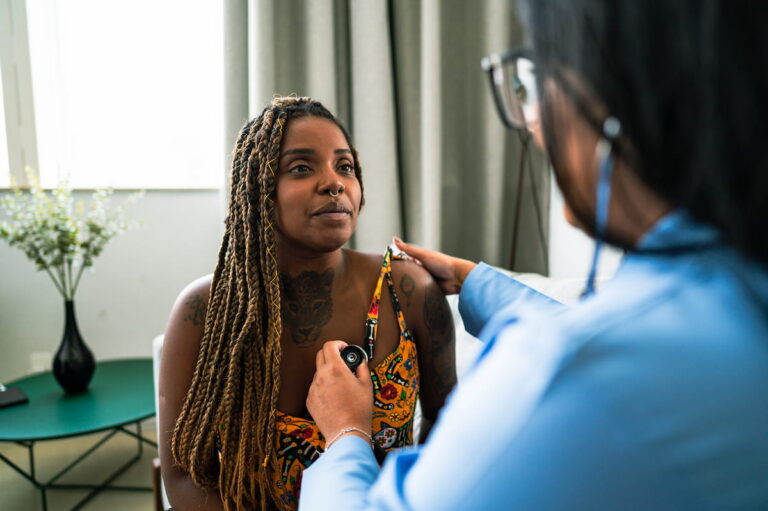
Though neuromyelitis optica spectrum disorder (NMOSD) was identified over a century ago, a lot of people still haven’t heard of it. Black people, in particular, need to be wary as it’s been found to affect them more than other ethnicities. That’s only one of a few recent discoveries, though, and researchers still have quite a bit of work to do. Here’s what they know so far.
NMOSD is a rare autoimmune disorder that can also be known as Devic disease, Devic syndrome, optic neuromyelitis, or opticomyelitis. In this disorder, the immune system attacks a water channel protein called aquaporin‑4, which is essential to the production of healthy cells in the central nervous system. As a result of this attack, astrocytes and neurons die and the protective lining of the brain and spinal cord is damaged or broken down.
This sequence of events is why NMOSD is characterized by inflammation in the spinal cord and optic nerves. In many cases, this inflammation quickly results in permanent damage, and people can end up blind or paralyzed. There was a point when doctors thought NMOSD was simply a form of multiple sclerosis (MS) but this was proven not to be the case.
RELATED: This Disease Acts and Feels Like MS, How Do You Tell The Difference?
While the disease has been on researchers’ radar for about a century, it wasn’t until recently that they explored how NMOSD might be related to a patient’s ethnicity.
During this study, it was found that Black people were 2-3 times more likely to be diagnosed with the illness than other ethnicities. Interestingly, the disease was also more likely to progress quickly, get diagnosed at an earlier age, and have more adverse effects such as permanent disabilities.
When studying how the current treatment options affected African Americans, researchers also found that ethnicity made a difference. Those who were given drugs that affect B-cells, saw better results while others who were given different drugs actually experienced a higher rate of infections. Additionally, the disorder was found to affect women more often than men.
As with several other diseases that disproportionately affect Black people, researchers estimate that genetics play a major role in the higher risk of developing NMOSD. Researchers also found that your location could have an impact as well.
During the study, 3 in 100,000 persons in Japan were diagnosed with the disease but 11 in 100,000 in the French-speaking Caribbean island of Martinique. The highest numbers, however, were found in Nigeria. When they checked with one of the nation’s largest hospitals, they found that 430 of 100,000 persons were diagnosed with NMOSD. Since this is relatively new information, however, researchers are interested in doing more location-based studies as well as further clinical trials with African Americans.
In the early stages of NMOSD, it can be difficult to differentiate between the disorder and MS. However, doctors recommend making note of how your symptoms change or progress over time so you can let your doctor know.
For the most part, the symptoms of NMOSD get worse more quickly than MS. You may also experience more rapidly cycling periods of remission and flares.
Some of the symptoms you may have include blurry vision or blindness in one or both eyes, weakness or paralysis in the legs or arms, painful spasms, numbness throughout the body, chronic nausea, vomiting, uncontrolled hiccups, bladder or bowel problems, and trouble sleeping.
RELATED: NMOSD: Fact Vs. Fiction
The diagnosis of NMOSD typically includes a thorough neurologic medical examination, blood tests, spinal tap, and an MRI. It’s these tests that can make it clear that you have NMOSD and not MS.
For example, people with MS will have evidence of damage to certain areas of the brain during an MRI. Those with NMOSD, on the other hand, won’t show any damage. Once you’re diagnosed, your doctor will need to establish a medical regimen. While the disease can’t be cured, it can be managed effectively.
NMOSD might be rare but a recent study highlights that African Americans are still at a higher risk than other ethnicities. If you’re concerned about any of the symptoms listed here, then talk to your doctor quickly. When NMOSD is left unaddressed, it can progress rapidly and cause permanent damage.


By subscribing, you consent to receive emails from BlackDoctor.com. You may unsubscribe at any time. Privacy Policy & Terms of Service.