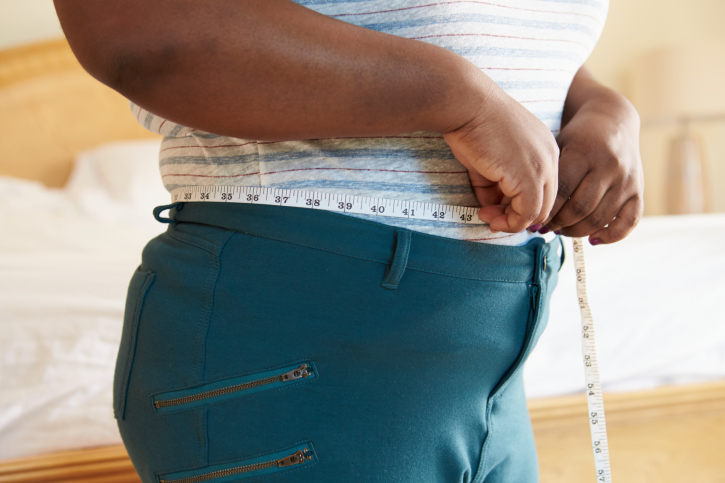
The larger your waist circumference, the greater your risk for type 2 diabetes, a new study has found.
The study examined the association between waist circumference, body-mass index (BMI, a measurement of body fat based on height and weight) and type 2 diabetes.
Like what you’re reading? Then LIKE us on Facebook!
Both waist circumference and BMI were associated independently with diabetes risk, but waist circumference was a stronger risk factor in women than in men, Claudia Langenberg, of the Institute of Metabolic Science at Addenbrooke’s Hospital in Cambridge, England, and colleagues said in a news release from the Public Library of Science.
The findings, published online June 5 in the journal PLoS Medicine, suggest that measuring waist circumference in overweight people could be an effective way to prevent diabetes, because it would identify high-risk people who may benefit from counseling about lifestyle changes, the researchers said.
“Our results clearly show the value that measurement of [waist circumference] may have in identifying which people among the large population of overweight individuals are at highest risk of diabetes,” the study authors said.
About one-third of people in the United States and United Kingdom are overweight, Langenberg and colleagues noted in the news release.
Although the study showed an association between larger waist circumference and increased risk of type 2 diabetes, it did not prove a cause-and-effect relationship.
Waist Size, BMI, and Diabetes Risk
About 19 million Americans have diagnosed diabetes, according to the American Diabetes Association. Most have type 2. The body does not make enough of the hormone insulin or the cells don’t use it effectively.
Langenberg’s team, the InterAct Consortium, re-evaluated data on more than 28,500 people. They lived in eight European countries. They were in the EPIC (European Prospective Investigation into Cancer and Nutrition) study. It looked at lifestyle and other factors, and chronic disease.
Langenberg compared about 12,400 people with type 2 diabetes with about 16,100 people without. They looked at their waist and BMI data.
Among the findings:
• Overweight women with a large waist (35-plus) and overweight men with a large waist (40-plus) had a 10-year incidence of diabetes similar to that of obese people.
• Higher waist size and higher BMI were each linked with higher diabetes risk.
• High waist size was a stronger risk factor for women than for men.
• Obese men with a large waist (40-plus) were 22 times more likely to develop diabetes than men with a low-normal BMI (18.5-22.4) and a smaller waist (less than 37 inches).
• Obese women with a large waist (35-plus) were nearly 32 times as likely to get diabetes than women of low-normal weight and a smaller waist (less than 31 inches).


By subscribing, you consent to receive emails from BlackDoctor.com. You may unsubscribe at any time. Privacy Policy & Terms of Service.