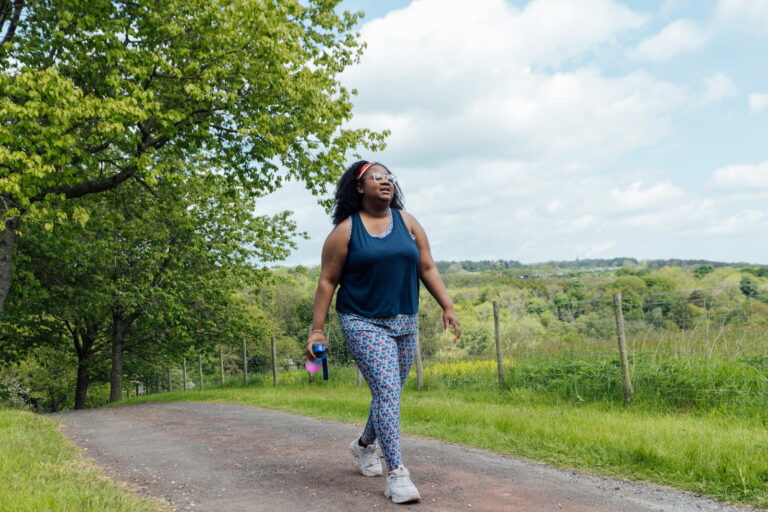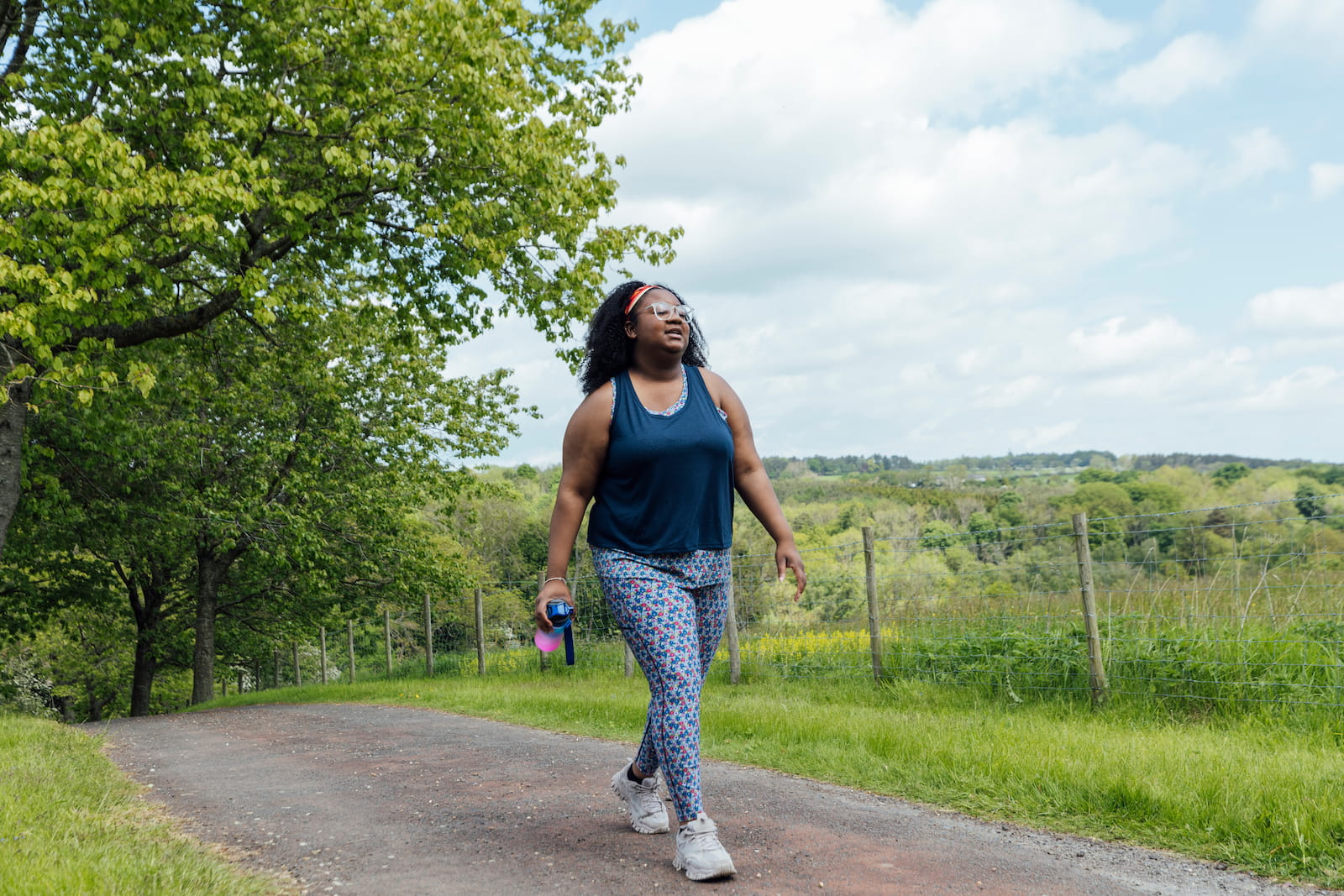
When did the wellness world decide that 10,000 steps was the ultimate walking goal? If you couldn’t hit the number, the thinking became, “Why bother lacing up at all?” So a lot of people don’t. They skip the walk after dinner because five minutes feels pointless. They skip the ten-minute break because it won’t “count.” The step goal that was supposed to get us moving talked a lot of us out of moving at all.
There is so much more to walking than the number of steps you take. In fact, there are many benefits to a variety of walking lengths. A five-minute walk after a meal and a two-hour walk on a Sunday are different tools doing different jobs in your body. When you understand what each length does, you stop chasing a magic number and start matching the walk to what you need that day.
So let’s break it down by the clock. Five walking tiers, five different jobs. Ditch the 10,000-step goal and find out what your walk can really do for your overall health.
Do not underestimate five minutes! A short, easy walk in the window after you eat is one of the most useful things you can do for your metabolism.
When you eat, your blood sugar rises. If you sit still, it tends to spike higher and linger. But when you move, even at a gentle stroll, your muscles start pulling glucose out of your bloodstream to use for fuel, which lessens that spike. Research on short post-meal walks has found that a few minutes of walking soon after eating meaningfully lowers the blood sugar surge compared to sitting.
For anyone managing prediabetes, insulin resistance, or type 2 diabetes, that’s not a small thing. It’s a lever you can pull after every meal without changing anything else about your life.
Ten minutes is where the mental shift shows up. It’s long enough to change how you feel, and short enough that you can fit it into almost any day, no gym, no outfit, no plan required.
A brisk ten-minute walk gets your circulation going, nudges down stress hormones like cortisol, and reliably lifts mood. This is also where the “exercise snacks” research gets interesting.
Scientists have found that movement broken into small bites throughout the day accumulates real, measurable benefit. You don’t have to do it all at once. Three separate ten-minute walks add up to genuine gains in fitness and health on their own.
That reframe matters, because “I don’t have thirty free minutes” is one of the most common reasons people skip movement entirely. You almost certainly have three ten-minute windows.
If there’s a number the experts do support across the board, it’s this one. Thirty minutes of moderate walking, most days of the week, is the tier most public health guidelines are built around, and for good reason.
At this length, you move into steady cardiovascular work. Regular thirty-minute walks are linked to lower blood pressure, improved cholesterol, better blood sugar control, and a reduced risk of heart disease. Your heart is a muscle, and half an hour of brisk walking is a straightforward, repeatable way to train it.
“Moderate” simply means you’re moving with purpose, breathing a little harder, able to talk but not to sing. You don’t need to be fast. You need to be consistent.
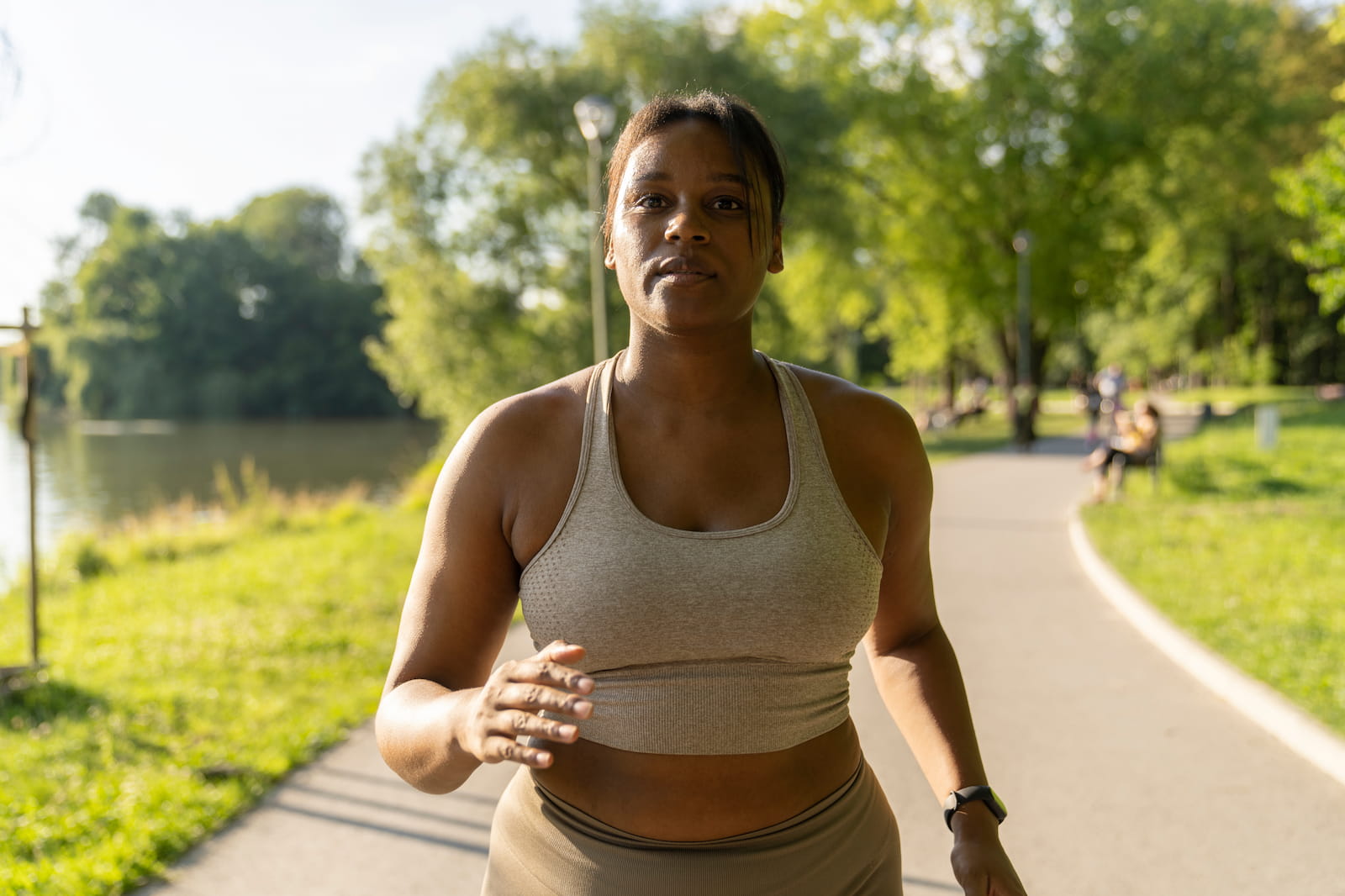
An hour of walking asks a little more of you, and it gives more back in return. This is the tier where you start to see deeper metabolic adaptation and meaningful support for weight management.
At around sixty minutes, your body has burned through readily available fuel and leans harder on fat stores for energy. Longer walks build endurance, strengthen the habit, and support a healthy weight when paired with the way you eat. You don’t have to do an hour every day to benefit; even one or two longer walks a week stretch your stamina and add to your weekly total in a way the shorter tiers can’t quite reach on their own.
An hour is also long enough to become something you look forward to rather than something you check off, time to catch up with a friend, get lost in a podcast, or simply be outside.
Two hours isn’t a daily target. It’s a weekly one, and it’s tied to some of the most powerful benefits on this list: a longer life and a steadier mind.
Much of the research on walking and longevity looks at weekly totals rather than daily counts. Accumulating a couple of hours of walking across a week is associated with lower risk of early death and better long-term health. And when those walks happen outdoors, the benefits deepen. Time in nature is linked to reduced rumination, or that loop of anxious, repetitive thinking, and longer walks in particular give the mind room to wander, which is where a lot of creative thinking and problem-solving happen.
This is the tier for your future self. It’s less about any single walk and more about the pattern you build over a lifetime.
For the Black community, this isn’t just general wellness advice. Hypertension and type 2 diabetes are diagnosed at higher rates among Black Americans than among white Americans, and both conditions respond directly to the kind of movement described here. Post-meal walks help manage blood sugar. Regular moderate walking helps lower blood pressure. These are accessible, no-cost tools that work on the exact conditions that hit our community hardest.
It’s time to ditch the pressure to hit high step goals and acknowledge that every step counts toward better health. You don’t need a gym, a membership, or any fancy machinery. Your progress starts at your front door, in the shoes you already own, in the five minutes after dinner.
If you’ve ever been made to feel that real health requires resources you don’t have, let this be the correction: you have everything you need, just as you are, to build the healthy life you want.
So start where you are. Take the walk you have time for. Let it steady your blood sugar, clear your head, or protect your heart, whatever this one is for. And if you find yourself wanting a little more tomorrow, follow that. Your body will meet you at every tier, and it will thank you at all of them.


By subscribing, you consent to receive emails from BlackDoctor.com. You may unsubscribe at any time. Privacy Policy & Terms of Service.