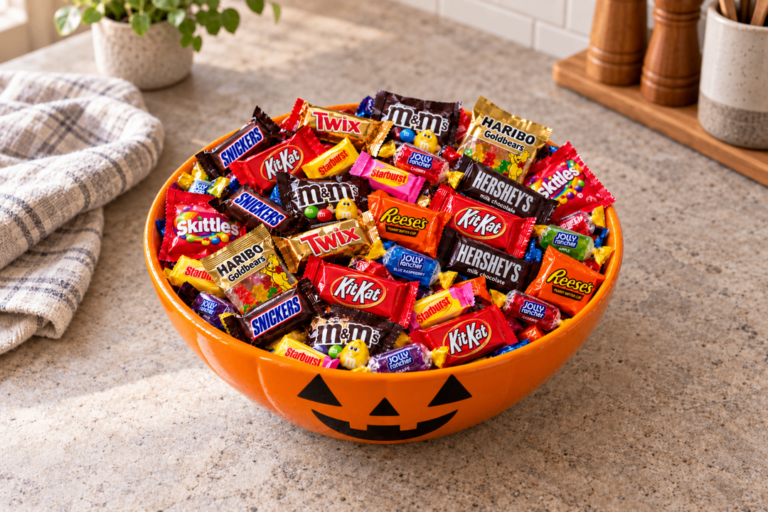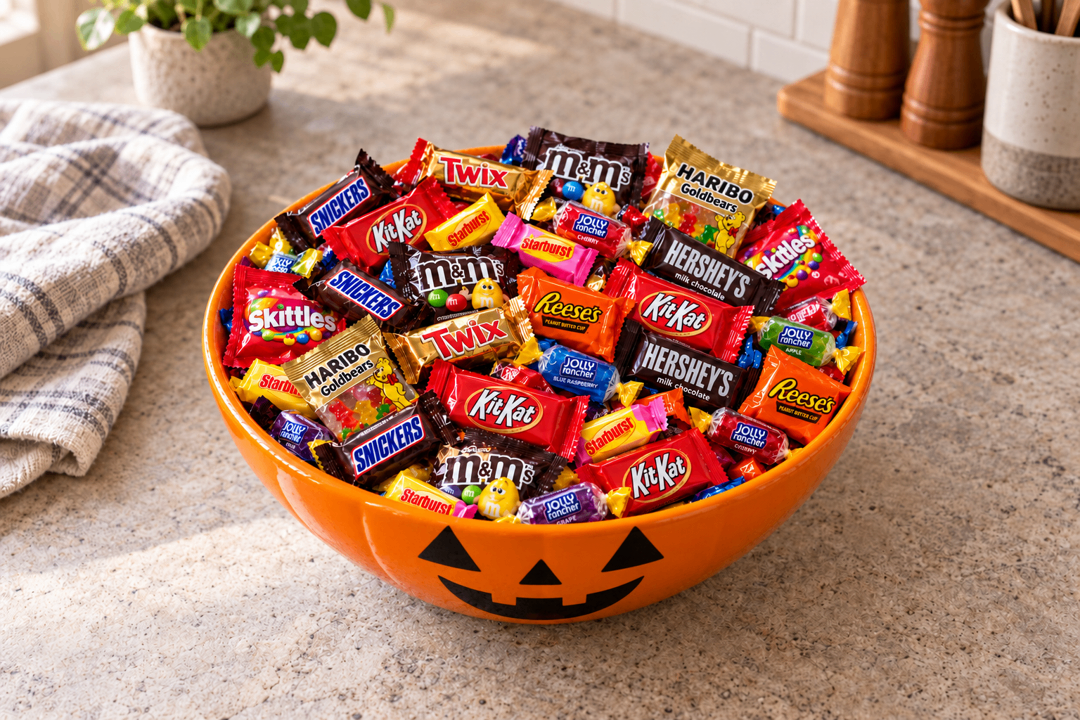
Before you reach into the candy bowl, check the packaging. During 2026, candy and chocolate products distributed in the United States have been recalled for reasons ranging from undeclared peanuts and milk to possible Salmonella contamination and small metal fragments.
Because candy has such a long shelf life, the recalled candy could still be in your house.
Some recalls involve products sold nationwide. Others affect a particular store, region, or batch. A familiar brand name alone does not mean every product from that company is included.
This roundup covers U.S. candy and chocolate recalls identified in FDA recall announcements and enforcement records for 2026 through October 30. The year is still underway, and FDA enforcement records reviewed were last updated October 21, so there could be more. Dates below distinguish the start of a recall from a later public announcement where relevant.
Recall began: January 9, followed by public notices and expansions, including May 8.
Why it was recalled: Possible Salmonella contamination. The company’s investigation identified a lot of date ingredient as the most likely source.
Where it was sold: Online and through selected retail partners nationwide, including products sold through Amazon.
Affected flavors and formats listed across FDA records include:
What to check: The flavor, package size, and batch code on the outer packaging and inner wrapper. Numerous batches are affected; match yours against the FDA notices and enforcement records rather than assuming every bar is recalled.
What to do: Do not eat affected chocolate. Photograph the packaging and batch code, email [email protected] for a refund, and then dispose of the product.
Recall began: January 20.
Why it was recalled: Undeclared milk. Butter and cream appeared in the ingredient information, but milk was not properly declared as an allergen.
Where it was distributed: Florida only. The recalling firm was Cacao Art; FDA’s record identifies the product as Garcia Nevett chocolatier de miami.
What to check: Crunchy Caramel 60% cacao dark chocolate, 2 ounces, marked EXP 07 2026.
What to do: Set aside the recalled chocolate and contact the seller or Garcia Nevett for return or disposal instructions, particularly if someone in your household has a milk allergy.
Recall began: January 26.
Why it was recalled: Undeclared milk, soy, and peanut allergens.
Where it was distributed: Promotional channels in Alabama, Arizona, California, Florida, Iowa, Kansas, Kentucky, Massachusetts, Maryland, Minnesota, North Carolina, New York, Ohio, Pennsylvania, South Dakota, Tennessee, Texas, Virginia, Washington, and Wisconsin.
What to check: 1.3-ounce repackaged M&M’s, item BB458BG, bearing promotional company or organization labels. Affected lot codes are:
What to do: Stop serving affected promotional packages and contact Beacon Promotions or the organization that supplied them for instructions. This record concerns specific repackaged promotional candy, rather than a brand-wide M&M’s recall.
Recall began: January 30; the company publicly announced it April 2.
Why it was recalled: Possible undeclared peanuts.
Where it was sold: Karns Foods stores in Pennsylvania.
What to check: Approximately 8-ounce clear plastic packages with a September 18, 2025, pack date.
What to do: Return the recalled product to the place of purchase for a full refund. Questions: 717-766-6477.
Source: FDA recall announcement
Recall began: January 30.
Why it was recalled: Peanut appeared in the ingredient list but was omitted from the “Contains” statement.
Where it was distributed: Hawaii only, by J2C Hawaii, doing business as Taste of Maui Snacks.
What to check: Approximately 2-ounce bars, UPC 855725005140, with a best-by date of November 2026 or earlier.
What to do: Contact the seller or Taste of Maui Snacks for instructions. People with peanut allergies should not consume the affected candy.
FDA enforcement record: H-0523-2026.
Recall announced: March 12.
Why it was recalled: Undeclared hazelnuts.
Where it was sold: Lidl stores in Delaware, Washington, D.C., Georgia, Maryland, New Jersey, New York, North Carolina, Pennsylvania, South Carolina, and Virginia. Distribution occurred January 28–March 11.
What to check: 3.52-ounce boxes, UPC 20304492. Lidl’s announcement covers all lots.
What to do: Do not eat the candy. Return it to any Lidl store for a full refund; no receipt is required. Questions: 844-747-5435. Source: FDA recall announcement
Recall began: April 13.
Why it was recalled: Undeclared color additives: Blue 1 in the mango candy and Yellow 6 in the orange candy.
Where it was distributed: New York, New Jersey, Delaware, Massachusetts, Pennsylvania, Maryland, Connecticut, California, New Hampshire, and Vermont. FDA’s records do not identify individual retail chains.
What to check:
| Product | Lot | Use-by date |
|---|---|---|
| Swad Mango Flavored Masala Candy | RF CA25301 | April 2027 |
| Swad Orange Flavored Masala Candy | RF CA25233 | February 2027 |
What to do: Set aside affected packages and contact the store or distributor, Raja Foods and Vegetables, for return or disposal instructions.
FDA enforcement records: H-0778-2026 and H-0777-2026.
Recall began: April 20; publicly announced April 24.
Why it was recalled: Undeclared milk, soy, and cashews.
Where it was sold: Uncle Giuseppe’s stores in New York and New Jersey.
What to check: 11-ounce clear rectangular containers, UPC 812235023309, with sell-by dates from September 4–November 6, 2026.
What to do: The company advises affected customers with these allergies to discard the product and seek a full refund from the store. Questions: 516-705-0800. Source: FDA recall announcement
Recall announced: April 23.
Why it was recalled: A tasting-guide error switched the identification of Walnut Fudge and Peach Cobbler bonbons, potentially causing someone to unknowingly eat walnuts.
Where it was sold: French Broad Chocolate stores in Asheville, North Carolina, and online, with shipments to numerous U.S. states and Washington, D.C.
What to check: 6-, 12-, and 24-piece boxes, batches 260414 and 260417, with affected best-by dates of June 22, June 29, or June 30, 2026, depending on size and batch.
What to do: Consumers with tree-nut allergies should return affected boxes for a full refund or discard them. Questions: 828-252-4181 or [email protected].
Corrective action occurred: April 27; the company announced the recall May 5.
Why it was recalled: Undeclared milk.
Where it was sold: Exclusively at three Winfield’s Chocolate Bar locations in Houston, Texas.
What to check: Dark chocolate Cowboy, Cat, Teddy Bear, Champagne Bottle, and Easter Bunny products in clear cellophane bags with bows.
What to do: Consumers with milk allergies or sensitivities should discard affected products or return them to the place of purchase. Questions: 281-667-9411, extension 702, or [email protected].
Recall began: May 23; FDA published the announcement May 27.
Why it was recalled: Possible undeclared peanuts, following a report of peanut-butter-containing products inside Coconut Almond Bites wrappers.
Where it was sold: The public announcement identifies nationwide retail distribution and complimentary samples. Individual retail chains are not named.
What to check: Multiple package formats, including bags, individual bites, Easter packages, and certain mixed displays. Affected best-by dates include December 20, 22, 23, 26, 27, and 29, 2026. Both the package format and lot code must match the recall table.
What to do: Return affected products to the place of purchase for a full refund. Questions: 866-957-9907 or [email protected]. Source: FDA announcement and complete lot table
Recall began: June 11.
Why it was recalled: Possible small metal pieces.
Where it was distributed: Pennsylvania, Texas, Indiana, and Florida. Individual stores are not named in the enforcement record.
What to check: 4-ounce boxes containing 16 marshmallows, expiration date July 28, 2026.
What to do: Do not eat the marshmallows. Keep the package information and contact Wondermade or the seller for instructions.
FDA enforcement record: H-1147-2026.
Recall announced: June 15.
Why it was recalled: Possible undeclared dark chocolate peanuts.
Where it was sold: Smart & Final stores in California.
What to check: 9-ounce clear containers, UPC 797565011830, lot 260562.
What to do: Return affected containers to the place of purchase for a full refund. Questions: 323-443-2567. Source: FDA recall announcement
Recall began: June 24; publicly announced June 25.
Why it was recalled: Undeclared peanuts caused by a packaging problem.
Where it was sold: Retail stores supplied through an Albertsons distribution center between May 18 and June 25. The enforcement record lists nationwide distribution and specifically names Arizona, Nevada, New Mexico, and Texas.
What to check: 15-ounce clear containers, lot 0160933, best by January 23, 2027.
What to do: Discard affected product or return it for a full refund. Questions: 480-962-5017. Source: FDA recall announcement
Recall began: July 10.
Why it was recalled: Undeclared Yellow 5, Yellow 6, Red 3, and Blue 1.
Where it was distributed: New York. The FDA record does not identify a retail chain.
What to check: 5-pound plastic bags, code SLT-11-015, distributed by SLT Foods.
What to do: Stop serving the affected candy and contact the seller or SLT Foods for instructions.
FDA enforcement record: H-0001-2027. Despite the fiscal-year number, the recall began in calendar year 2026.
Recall began: August 14.
Why it was recalled: Undeclared milk and pecans.
Where it was distributed: Iowa, Illinois, Indiana, and Ohio. The FDA enforcement record does not name individual stores.
What to check: 4.47-ounce packages, covering all best-by codes sold August 7–14, 2026.
What to do: Set aside affected packages and contact Fannie May or the seller for return or disposal instructions.
FDA enforcement record: H-1334-2026.
Recall began: August 28.
Why it was recalled: The unapproved color additive Ponceau 4R.
Where it was distributed: Arizona, New York, California, Florida, Georgia, Illinois, Massachusetts, Minnesota, North Carolina, New Jersey, Ohio, Pennsylvania, Tennessee, Texas, and Virginia, through Tiffany Food Corp.
What to check: 200-gram clear bags, UPC 6920603810025, best before October 1, 2026.
What to do: Do not consume affected candy. Contact the seller or Tiffany Food Corp. for instructions.
FDA enforcement record: H-1387-2026.
Recall announced: August 31.
Why it was recalled: Undeclared milk.
Where it was sold: Marshalls, T.J. Maxx, HomeGoods, and Sierra Trading Post in Arizona, Texas, Virginia, Georgia, Massachusetts, North Carolina, Indiana, Nevada, California, New Jersey, Connecticut, Ohio, and Wyoming.
What to check:
| Size | Style number |
|---|---|
| 10 ounces | 54040-CHEY |
| 7 ounces | 54077-CHEY |
| 10.5 ounces | 58008-CHEY |
| 16 ounces | 58089-CHEY |
| 11 ounces | 54083-CHEY |
What to do: Destroy the recalled candy. Stores are not issuing refunds for this recall. Contact Crystal Temptations directly with proof of purchase at 201-246-7990, Monday–Friday, 9 a.m.–5 p.m. Eastern.
Guittard Chocolate Company began recalling 72% Cacao Chocolate with Date Sugar Wafers on May 5 because of possible Salmonella contamination.
FDA’s record identifies 25-pound packages distributed in Ohio, item 0568C25, UPC 00071818367654. Affected lots are 11775A, 21775A, 31785A, 11785A, 21785A, 22095M, 12105M, and 22105M.
Businesses holding these lots should stop using them and contact their supplier or Guittard for disposition instructions.
Recall announced: September 10, 2026.
Why it was recalled: The rollerball at the top of the candy bottle can detach, creating a choking hazard that could cause serious injury or death. Approximately 2.3 million bottles were recalled. No incidents or injuries had been reported when the recall was announced.
Where it was sold: H-E-B, Forman Mill, and other candy stores nationwide, as well as online at Walmart.com, CandyFunHouse.com, RickyJoy.com, and other retailers. The recalled bottles were sold January 2023 through May 2026, individually for about $3 and in multipacks for approximately $13–$32.
What to check: Ricky Joy Sour Crush Rolling Liquid Candy in 1.85-fluid-ounce plastic bottles, sold individually and in packs of three or 12. Affected colors and flavors include:
The bottles feature the Ricky Joy logo, the words “EXTREME SOUR” and “SOUR CRUSH,” the flavor name, and a green monster image.
What to do: Stop using the candy bottles immediately and take them away from children. Contact Ricky Joy for a refund and a prepaid shipping label to return the recalled product. Call 404-975-0352, Monday–Friday, 8 a.m.–5 p.m. Eastern, or visit Ricky Joy’s recall page.
Stop eating or serving it while you check the details. Match the brand, size, UPC, lot code, and date against the applicable notice. A product may be recalled even if its best-by date has not passed.
Photograph the label before returning or disposing of it. Keep your receipt or online order confirmation when available, and follow the specific refund instructions: some companies accept store returns, while others require direct contact.
Do not donate recalled candy or put it in a shared candy bowl. If you have already distributed it, pass along the recall information.
If someone develops trouble breathing, throat swelling, or faintness after eating candy, call 911. Contact a healthcare professional about illness or injury that may be linked to a recalled product.


By subscribing, you consent to receive emails from BlackDoctor.com. You may unsubscribe at any time. Privacy Policy & Terms of Service.