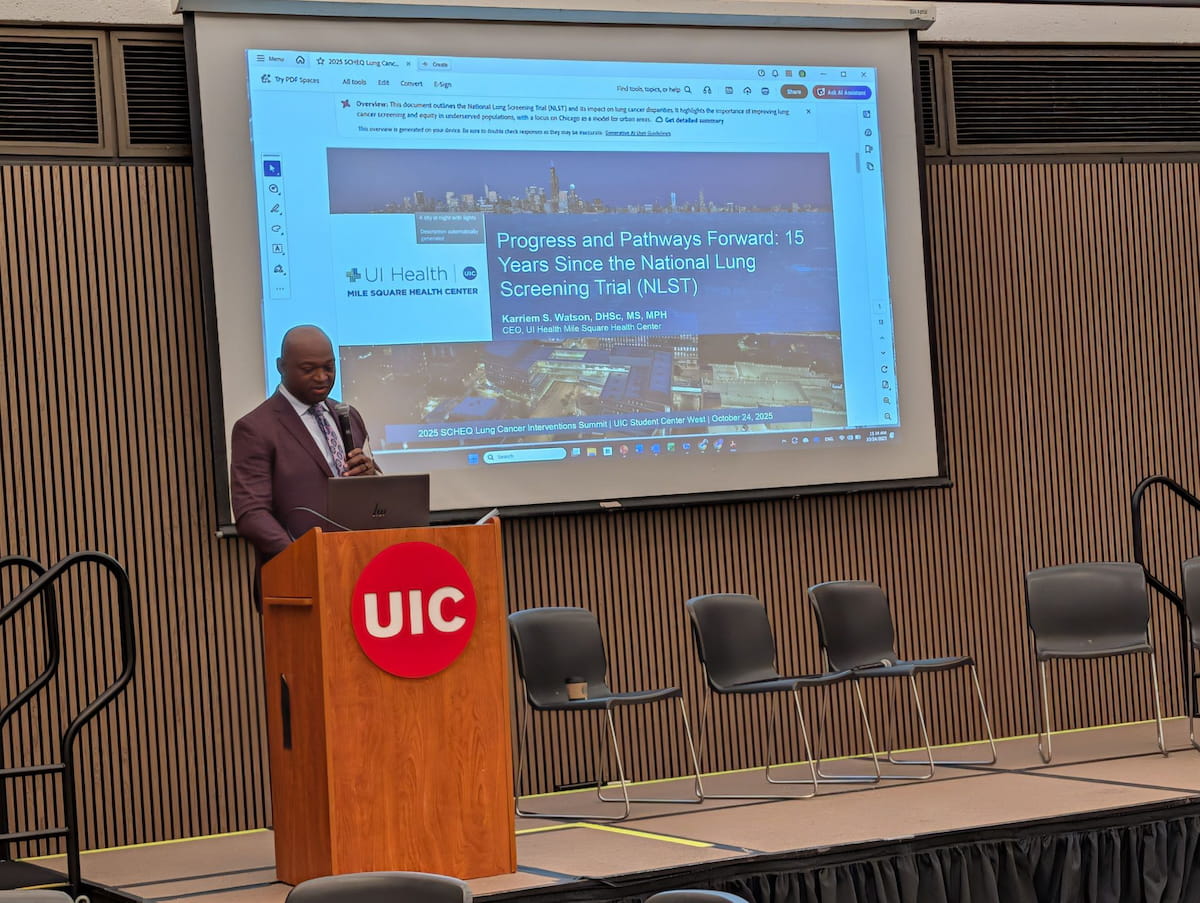
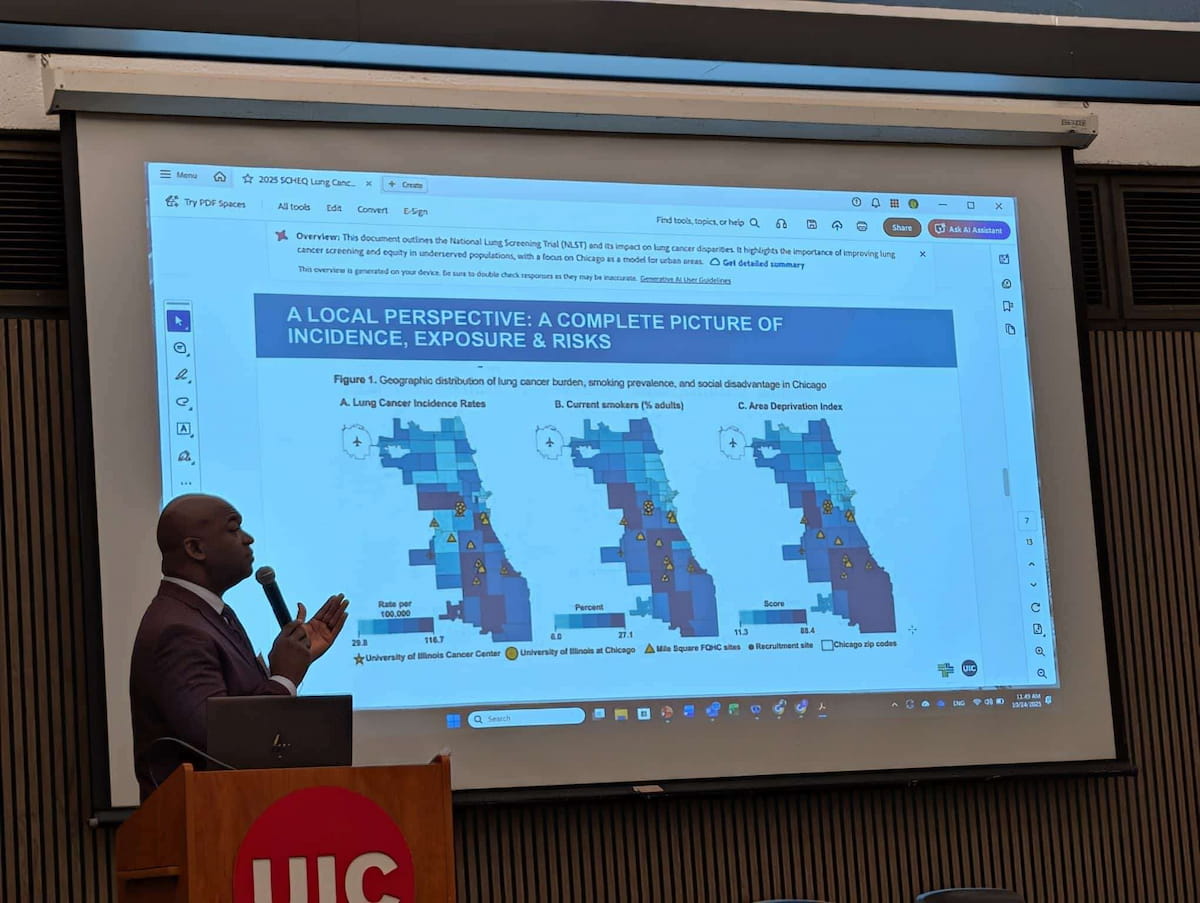
The 2025 SCHEQ Lung Cancer Interventions Summit in Chicago brought together health leaders and researchers with a singular focus: to strengthen equitable care and radically improve outcomes for every individual affected by lung cancer. The primary goal was to systematically remove existing barriers to care.
The keynote address on October 24, delivered by Dr. Karriem S. Watson, Chief Executive Officer for UI Health Mile Square Health Center, anchored the summit. Dr. Watson, who manages community health centers in underserved Chicago areas, used his profound personal and professional experience to challenge the entire healthcare system. His core message was clear: science and policy must become more inclusive to truly save lives, emphasizing that a patient’s “zip code should not determine their health outcome.”
The Driving Force: Personal Loss and Systemic Failure
Dr. Watson opened by sharing a series of family losses to cancer, which vividly illustrated the systemic failings he later dedicated his career to addressing:
Loss of a Mother, Loss of Access: He shared the heartbreak of losing his birth mother to cancer at age six. Her death was directly tied to a lack of access—she couldn’t participate in clinical trials or receive evidence-based interventions available at the time. This established his foundational belief that a person’s “zip code can be a greater determinant of health outcomes than their genetic code.”
The Never-Smoker Bias: Later, he navigated the system with his stepmother, who was diagnosed with lung cancer despite being a never-smoker. This exposed the deep-seated biases in healthcare, as providers often fixated on smoking history, dismissing the possibility of other risk factors and failing to provide respectful, comprehensive care.
The Guilt of Privilege: Dr. Watson described the emotional guilt he felt because his professional connections allowed his mother to receive advanced care, like molecular target testing, which significantly extended her quality of life. This success highlighted the reality that many others in underserved communities lack this level of advocacy and access.
The Tragedy of Disconnected Care: Despite his professional standing, he could not overcome the bureaucratic barriers that prevented his brother’s kidney doctor from effectively communicating with his oncologist during his battle with colorectal cancer. This heartbreaking loss during the pandemic was a stark reminder of how health disparities can override personal privilege.
Dr. Watson’s address distilled critical lessons into three actionable takeaways for individuals navigating the healthcare system:
1. Demand Personalized Screening & Testing—Regardless of Risk Stereotypes
National guidelines for tests like lung cancer screening (Low-Dose CT) are constantly changing. Patients must challenge assumptions to ensure they receive appropriate care.
Challenge Assumptions: If you are a woman or person of color diagnosed with lung cancer, be aware that many people in these groups are never-smokers. Ensure your provider does not dismiss your symptoms based on assumptions about smoking habits.
Insist on New Criteria: Research has shown that standard criteria (like age 55-80 and a high number of pack-years) historically excluded many high-risk patients who were younger or had different exposures.
The Power of Policy: Policy is actively pushing for guidelines that account for where you live, environmental factors (e.g., proximity to highways), and other health risks. Your doctor should be up-to-date on the most inclusive screening criteria.
Ask your doctor:“Are there new, equity-driven screening guidelines that I qualify for, even if I don’t meet the oldest criteria?”
2. Recognize the Impact of Your Environment (Your “Zip Code”)
Where you live, work, and commute profoundly affects your health. Insist that your provider consider these factors when assessing your health risks.
Location is Risk: People in underserved areas often face significantly shorter life expectancies and higher disease burdens due to a lack of resources, stress, and proximity to environmental hazards.
Stress is a Factor: Stressors like systemic racism, neighborhood violence, and financial strain (structural violence) can increase inflammation and elevate disease risk.
Advocate for Full Diagnostic Access: If you live in a rural or underserved community, be vigilant that your local facility offers the same advanced diagnostic tools (like molecular target testing for personalized cancer treatment) as a major academic center.
Tell your doctor:“I want to make sure my living environment and stress levels are factored into my risk assessment and treatment plan.”
3. Be an Engaged Partner—Not a Passive Patient
Researchers are now shifting the responsibility for engagement from the community to the institution, moving away from “hard-to-reach” to “under-engaged.” Patients should expect to be invited into the health conversation.
Research is for You: If you are a minority or from an underserved community, your participation in clinical studies is vital. It is the only way to ensure new treatments and policies are effective for people like you.
Advocacy Changes Lives: Patient stories and community-led efforts have successfully changed national screening guidelines. Your voice matters.
Your Community is a Resource: Engage with health outreach programs in trusted spaces like local churches and barber shops, where real health conversations happen.
Ask your doctor/system:“How can I ensure my experience and background are included in future research and quality improvement efforts?”
BlackDoctor is the world’s largest and most comprehensive online health resource specifically for the Black community. BlackDoctor understands that the uniqueness of Black culture - our heritage and our traditions - plays a role in our health. BlackDoctor gives you access to innovative new approaches to the health information you need in everyday language so you can break through the disparities, gain control and live your life to its fullest.
✦ AI Search Disclaimer This AI-powered search tool helps you find relevant health articles from the BlackDoctor.org archive. Please keep the following in mind:
✦ For Informational Purposes Only The information provided through this AI search is for general educational and informational purposes only. It is not intended as a substitute for professional medical advice, diagnosis, or treatment.
✦ Always Consult a Healthcare Provider Never disregard professional medical advice or delay seeking it because of something you have read through this search tool. If you have a medical emergency, call your doctor or 911 immediately.
✦ AI Limitations This search tool uses artificial intelligence to help match your queries with articles in our archive. While we strive for accuracy, AI-generated results may occasionally be incomplete, outdated, or not fully relevant to your specific situation.
✦ No Doctor-Patient Relationship Using this search tool does not create a doctor-patient relationship between you and BlackDoctor.org or any healthcare provider.
Explore over 35,000 articles and videos across black health, wellness, lifestyle and culture