The phrase “we don’t do therapy” has echoed across generations in Black communities—sometimes said jokingly, sometimes defensively, but often rooted in real experiences. It reflects more than attitude; it reflects history, access, and survival.
But today, that phrase is being challenged. Because the reality is clear: Black communities are not avoiding mental health care due to a lack of need. They are navigating systems that have often been inaccessible, untrustworthy, or culturally disconnected.
As psychologist Dr. Thema Bryant, president of the American Psychological Association, explains: “We have always had ways of coping and surviving, but surviving is not the same as healing.” That distinction is at the heart of a growing national conversation—one that is pushing beyond stigma and toward transformation.
RELATED: Therapy Isn’t for ‘Crazy’ People—It’s for Survivors. This Expert Explains Why
Across the United States, Black adults are significantly less likely to receive mental health treatment than white adults, despite experiencing similar—or in some cases higher—levels of psychological distress.
According to the U.S. Department of Health and Human Services Office of Minority Health, Black adults are less likely to access mental health services and more likely to experience persistent mental health challenges. Mental Health America reinforces this, noting that disparities in access, quality of care, and outcomes remain widespread.
These disparities are not just numbers—they translate into:
Dr. Bryant speaks directly to this gap: “When people don’t feel seen or understood in care, they are less likely to return—and that’s where disparities grow.”
To truly understand this mindset, we have to look at the layers beneath it.
In many Black households, strength has been defined as endurance. Generations have been taught to push through pain, often without the language or space to process it.
Dr. Bryant highlights this dynamic:
“Strength in our community has often meant silence—but silence can come at a cost.”
The legacy of medical racism—from the Tuskegee Syphilis Study to present-day disparities—has created deep skepticism toward healthcare systems. That mistrust is not irrational—it is rooted in real experiences that continue to shape perceptions today.
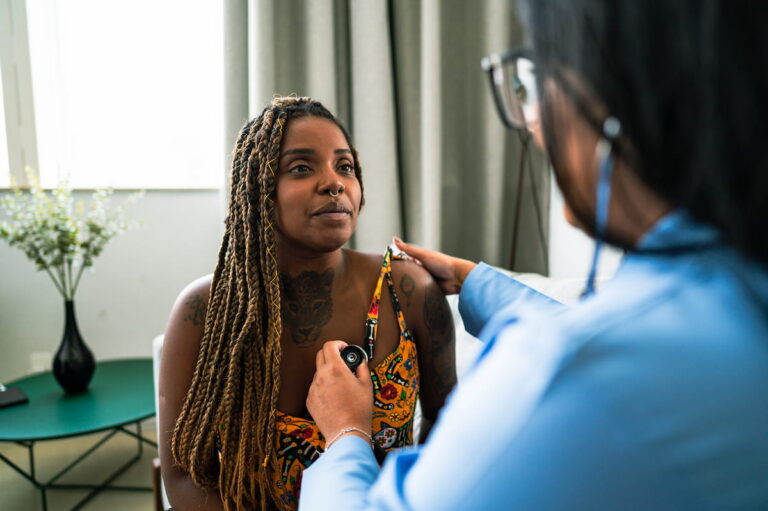
Many Black patients report feeling misunderstood or dismissed by providers who lack awareness of cultural context. This can make therapy feel alienating rather than supportive.
Access remains a major issue. Cost, insurance gaps, transportation challenges, and provider shortages all limit options—especially in underserved communities.
Together, these factors explain why “we don’t do therapy” became less of a belief and more of a protective response.

While that response may have served a purpose, it also carries consequences. Untreated mental health conditions can affect every aspect of life—from relationships and career stability to physical health. Chronic stress, particularly stress tied to racism, can compound these effects.
According to the National Alliance on Mental Illness, untreated mental health conditions can lead to worsening symptoms, increased risk of substance use, and long-term health complications.
Dr. Bryant emphasizes the urgency of addressing this: “Unhealed trauma doesn’t just disappear—it shows up in our bodies, our relationships, and our communities.” The cost of avoiding care is not just individual—it is collective.
RELATED: 5 Signs You Need A Therapist
The good news is that this narrative is shifting—and much of that shift is happening at the community level.
A recent University of Wisconsin–Green Bay panel focused on mental health stigma in communities of color highlighted the importance of open dialogue and education in breaking down barriers. These panels create spaces where people can:
Dr. Bryant underscores the power of these conversations: “Healing begins when we can tell the truth about our experiences—and be met with compassion instead of judgment.” Across the country, similar efforts are gaining traction:
These spaces are helping normalize mental health care and redefine what support looks like.
One of the most powerful shifts happening right now is how therapy is being understood. Instead of being viewed as a last resort, therapy is increasingly seen as a tool for growth, clarity, and empowerment. Dr. Bryant explains: “Therapy is not about something being wrong with you—it’s about giving yourself the support you deserve.” This reframing is especially important for younger generations, who are more open to discussing mental health and exploring different forms of care.
Black therapists and advocates are also expanding the conversation by integrating culturally relevant approaches—honoring spirituality, community, and lived experience alongside clinical practice.
RELATED: 3 Benefits of Seeing a Black Therapist
If we want to close the gap, we have to move from awareness to action.
Expanding the number of Black mental health professionals can improve trust and cultural understanding.
Providing services in familiar spaces—churches, schools, community centers—reduces stigma and increases accessibility.
Policy changes and funding are essential to making mental health care accessible for all.
Education campaigns and public discussions can help shift cultural perceptions.
Training providers to understand the unique experiences of Black patients is critical.
Dr. Bryant reinforces this: “Culturally responsive care is not optional—it is essential for healing.”
The phrase “we don’t do therapy” is not disappearing overnight—but it is evolving. More Black voices are speaking openly about mental health. More communities are creating spaces for healing. And more resources are becoming available.
This shift is about reclaiming something that has always belonged to us: the right to be well. Dr. Bryant captures this transformation powerfully: “We are moving from a culture of survival to a culture of healing.”
Black adults are less likely to receive mental health care—not because they need it less, but because barriers have made it harder to access. But those barriers are being challenged. Through community conversations, culturally grounded care, and the leadership of voices like Dr. Thema Bryant, a new narrative is emerging—one that centers healing, access, and empowerment.
Because this is not just about therapy, it’s about making sure that healing is no longer something we avoid—but something we embrace.


By subscribing, you consent to receive emails from BlackDoctor.com. You may unsubscribe at any time. Privacy Policy & Terms of Service.