 Photo credit: Kelci Nolen
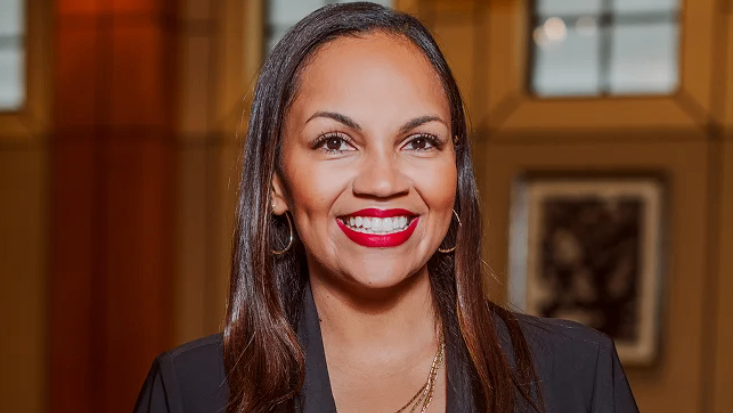
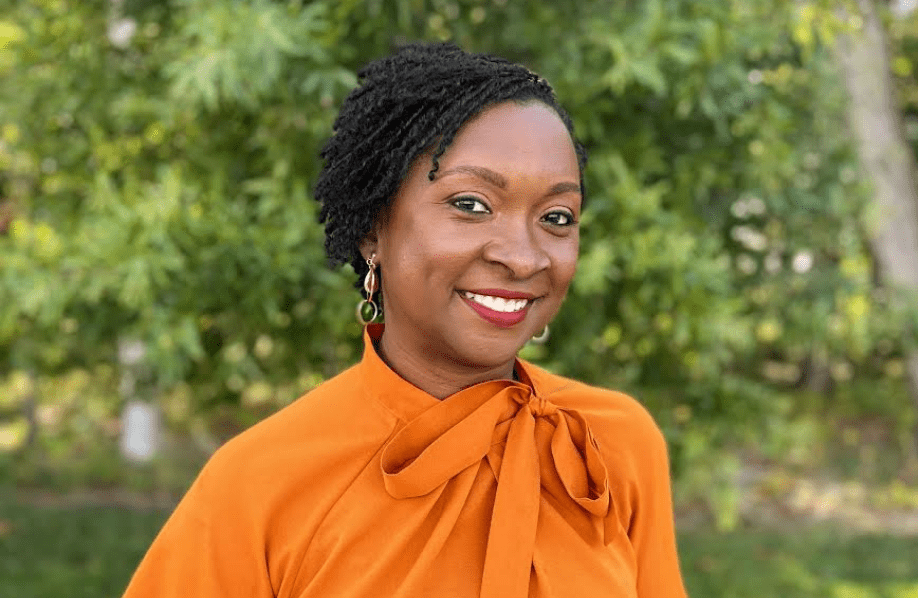
At 32 years old, Katrece Nolan was playing with her son on the floor.
Something felt off to her. One of her breasts felt swollen and strange but when she felt the area, there wasn’t a lump. Katrece went to the doctor the next day and was told that she was likely suffering from mastitis, even though she hadn’t been nursing for over two years. Her doctor gave her antibiotics, but also scheduled her for a mammogram.
But the mammogram didn’t show anything, according to the doctors, except that Katrece had dense breasts.
A few weeks later, Katrece couldn’t even button her shirt because one of her breasts was so swollen. Her doctor sent her to be baselined by a breast surgeon so that she could be monitored moving forward. That breast surgeon knew from the get-go that something was wrong. After several scans and biopsies, Katrece was diagnosed with stage 3 inflammatory breast cancer.
Black women have a higher incidence of inflammatory breast cancer (IBC) than white women. IBC isn’t detected by mammograms—it requires an MRI and a punch biopsy to diagnose. The symptoms of IBC can also present differently for Black women. For instance, orange peel coloring is one of the classic symptoms of IBC, but it is incredibly hard to detect on darker skin. With no lump and the orange peel coloring harder to detect, Black women with IBC are more reliant on noticing both swelling and dimpling symptoms.
RELATED: Lymphedema Can Be Prevented If Caught Early!
Katrece started on chemotherapy right away, before undergoing a surgery called a modified radical mastectomy and then radiation. From there, Katrece’s doctor put her on tamoxifen as an experimental treatment. Shortly thereafter, Katrece decided to undergo an oophorectomy–a surgery in which your ovaries are removed–in order to put her body into menopause so that she could take aromatase inhibitors to further treat her breast cancer and address her risk of recurrence.
Chemotherapy, removal of ovaries, and aromatase inhibitors (hormone blocking agent) all impact your bone health. Katrece’s doctors monitored her and screened her bone density with DEXA scans every two years. On her second scan, she was diagnosed with osteopenia.
Osteopenia is a medical term used to describe the loss of bone mass. It is the step before osteoporosis, meaning that your bones have only begun to lose mass. Essentially, osteopenia is when a body does not rebuild new bone as quickly as it loses older bone. This state of weakened bones puts someone at higher risk for fracture or breaking a bone.
After your first fracture, you’re five times more likely to experience another fracture. It’s extra important for Breasties to monitor their bone health after breast cancer treatment so that they can intervene early and keep their bones as healthy as possible in the following ways:
For more information about osteopenia and breast cancer, you can watch Love Your Bones live on BlackDoctor.org’s Facebook here.
Read more about Katrece Nolan’s story in her book, available here.
Written by Ricki Fairley and TOUCH, The Black Breast Cancer Alliance


By subscribing, you consent to receive emails from BlackDoctor.com. You may unsubscribe at any time. Privacy Policy & Terms of Service.