
Swollen feet, also known as edema, can be caused by various factors, including fluid retention, inflammation, and underlying medical conditions. Common causes include prolonged standing or sitting, pregnancy, being overweight, and injury.
There are many reasons your feet or ankles may swell. It is very important that you figure out the root cause of your swollen feet. There are some serious health implications as to why the foot may be swollen and these include:
Sometimes swelling can indicate a problem such as heart, liver, or kidney disease. Ankles that swell in the evening could be a sign of retaining salt and water because of right-sided heart failure.
Kidney disease can also cause foot and ankle swelling. When the kidneys are not functioning properly, fluid can build up in the body.
Liver disease can affect the liver’s production of a protein called albumin, which keeps the blood from leaking out of the blood vessels into the surrounding tissues.
Inadequate albumin production can lead to fluid leakage. Gravity causes fluid to accumulate more in the feet and ankles, but fluid can also accumulate in the abdomen and chest. If your swelling is accompanied by other symptoms, including fatigue, loss of appetite, and weight gain, see your doctor right away. If you feel short of breath or have chest pain, pressure, or tightness, call 911.
This is a collection of lymphatic fluid in the tissues that can develop because of the absence of or problems with the lymph vessels or after the removal of lymph nodes. Lymph is a protein-rich fluid that normally travels along an extensive network of vessels and capillaries. It is filtered through the lymph nodes, which trap and destroy unwanted substances, such as bacteria.
Untreated, lymph buildup can impair wound healing and lead to infection and deformity. Lymphedema is common following radiation therapy or removal of the lymph nodes in patients with cancer. If you have undergone cancer treatment and experience swelling, see your doctor right away.
Swelling of the ankles and feet is often an early symptom of venous insufficiency, a condition in which blood inadequately moves up the veins from the legs and feet up to the heart.
Normally, the veins keep blood flowing upward with one-way valves. When these valves become damaged or weakened, the blood leaks back down the vessels and fluid is retained in the lower legs, especially the ankles and feet. Chronic venous insufficiency can lead to skin changes, skin ulcers, and infection. If you experience signs of venous insufficiency, you should see your doctor.
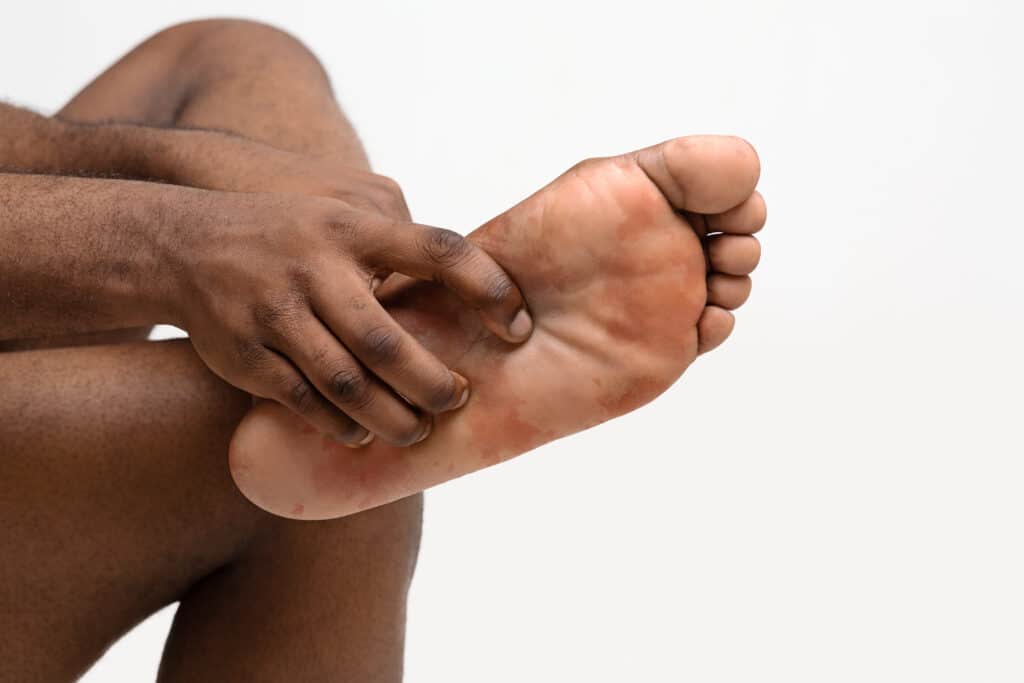
Swelling in the feet and ankles can be a sign of infection. People with diabetic neuropathy or other nerve problems of the feet are at greater risk for foot infections. If you have diabetes, it is important to inspect your feet daily for blisters and sores, because nerve damage can numb the pain sensation, and foot problems can progress quickly.
It is very important that you see a foot doctor (podiatrist) regularly so they can be certain you do not have any of the problems with your feet associated with diabetes. This is why many diabetics end up losing toes, feet and legs. If you notice a swollen foot or blister that appears to be infected, contact your doctor right away.
Blood clots that form in the veins of the legs can stop the return flow of blood from the legs back up to the heart and cause swelling in the ankles and feet. Blood clots can be either superficial (occurring in the veins just beneath the skin) or deep (a condition known as deep vein thrombosis (DVT)).
Deep clots can block one or more of the major veins of the legs. These blood clots can be life-threatening if they break loose and travel to the heart and lungs. If you have swelling in one leg, along with pain, low-grade fevers, and possibly a change in color of the affected leg, call your doctor immediately. Treatment with blood thinners may be necessary.
An injury to the foot or ankle can lead to swelling. The most common cause is a sprained ankle. This happens when an injury causes the ligaments that hold the ankle in place to be stretched beyond their normal range.
To reduce the swelling from a foot or ankle injury, rest to avoid walking on the injured ankle or foot, use ice packs, wrap the foot or ankle with a bandage and elevate the foot on a stool or pillow. If swelling and pain are severe or don’t improve with home treatment, see your doctor.
There are also a host of medications that could cause swelling. If you suspect swelling may be related to a drug you are taking, speak to your doctor. Although the benefits of the drug may be worth enduring some swelling, more severe swelling could make it necessary to change the medication or its dosage.

If you have any questions, don’t hesitate to ‘Ask Dr. Renee’. Follow me on Twitter @AskDrRenee and on my website.


By subscribing, you consent to receive emails from BlackDoctor.com. You may unsubscribe at any time. Privacy Policy & Terms of Service.